A vendor’s tally is not an installation record. Our practical checklist follows a dependency from a proposed fix to the application actually running it, without treating an old version number as the whole answer.
A familiar version number does not settle an update check. We explain how to record the installed security date and distinguish an announcement from a completed installation.
Clear failures matter for an unattended job. We explain the October 5 cutoff, credential checks and a proposed evaluation on an organization’s own service.
A disclosed research incident exposes an important distinction for anyone deploying autonomous tools: detecting a crossed boundary and containing the activity are separate engineering tasks.
Final guidance shifts attention from the sign-in screen to the credentials applications use afterward. Strong authentication still matters—but sessions need protection too.
A September report describes abuse detected on Anthropic's services. The cases deserve attention—but a company's selected investigations are not a worldwide measure of AI crime.
Reporting duties under the Cyber Resilience Act began on September 11. Here is what changes for connected products, why the deadlines matter, and where the promise of safer technology still needs to be proved.
Two Windows flaws were already being exploited when Microsoft issued its September security fixes. Subsequent updates now matter too: this September 23 revision explains what changed, which problems remain, and how to check that patching is actually complete.
NIST’s hardware-security roadmap raises a practical question: what evidence should a buyer ask for? Our worked example separates a software inventory, device identity and evidence of operating state. None is a universal security certificate.
A fictional production studio follows a delayed client message through an interruption. Our explanation separates access to an inbox, evidence about delivery and the business confirmation that still has to happen.
Two fictional publishing workflows show why an approval should follow the whole dependency chain. Our practical analysis separates a recorded software choice from permission to execute it.
Our original policy-and-recovery rehearsal asks what an organization should prove before changing its browser environment. More control needs an accountable operator, not just a reassuring product name.
Anthropic’s October 9 disclosure makes a practical distinction urgent: preparing an action, permitting it and actually executing it are different stages. Our original walkthrough shows where a team should put the checks.
A physical fallback is an interesting addition to a connected home. We separate the announced hardware from the recovery, access and privacy questions readers still need answered before relying on it.
Google’s September 30 announcement brings a million-token output limit and a restricted cybersecurity rollout. We explain the access conditions, introductory versus later pricing and what a longer-running agent still needs to prove.
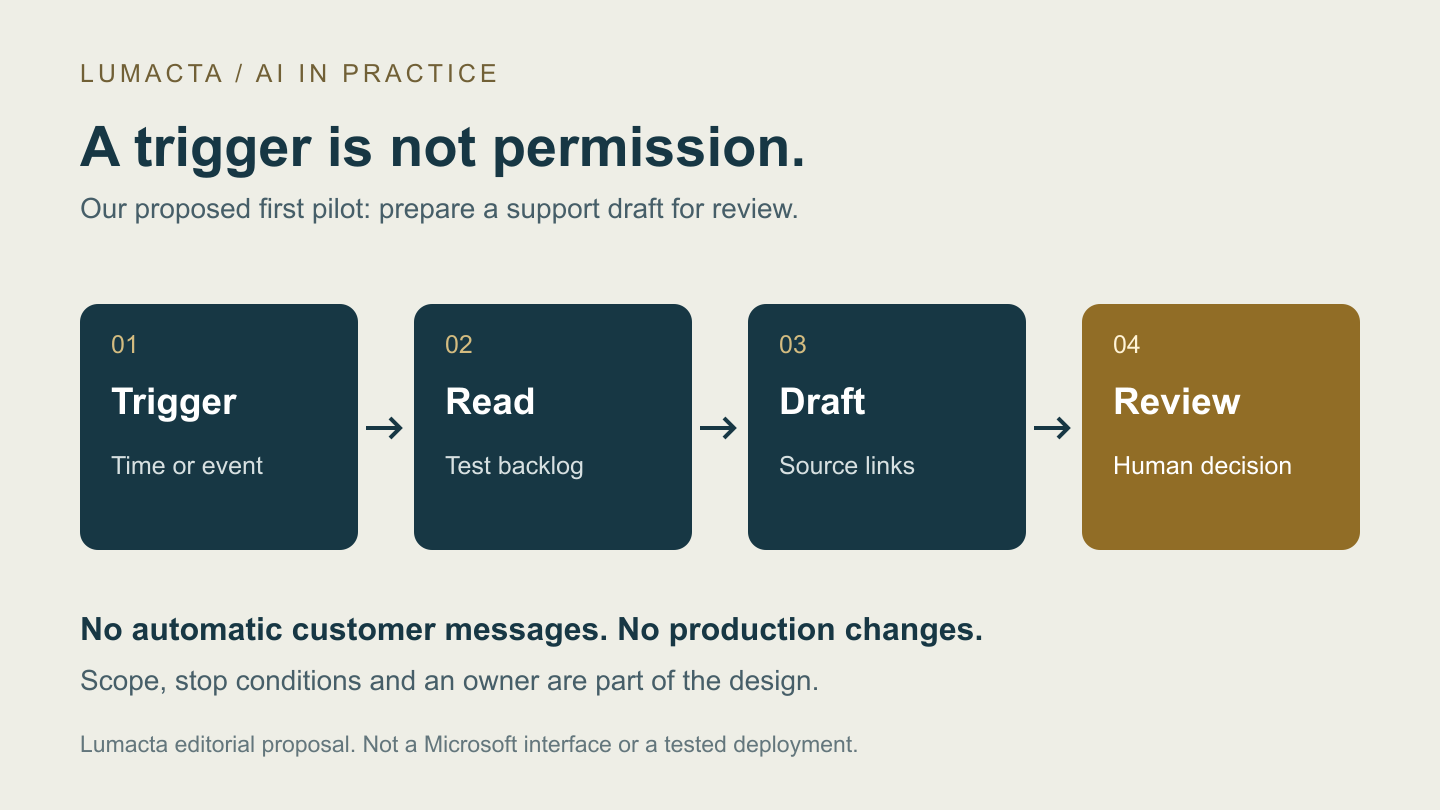
Foundry Routines have reached general availability. We explain the difference between starting an agent, letting it resume later and safely allowing it to change something.
Google is expanding its experimental assistant to families. The useful question is not how much it can remember, but what it should be allowed to see and do.
A September trial combined authenticated navigation data with authenticated ranging. It is a meaningful anti-spoofing milestone—not a promise of unjammable navigation.
The US rollout moves beyond answering questions toward doing tasks. Its promise of saved time comes with a more consequential question: how much access should an AI agent receive?
A camera can help establish a photograph’s history without proving that its caption is true. Canon’s provenance announcement matters most when a publisher can carry that distinction through editing and delivery.