
A warning about misuse, not a global crime census
Anthropic's September 10 threat-intelligence report describes selected investigations involving its services. It includes scams, cyber operations and influence activity, and says the company banned accounts and strengthened safeguards. The observation window stretches from December 2025 to August 2026: these are not all incidents that happened this week.
One described scam operation combined AI-generated personas with human workers on deceptive dating services. Anthropic explicitly cautions that its notable cases do not represent typical use. Lumacta has not independently audited the underlying logs or confirmed every attribution.
That distinction is the starting point for understanding the news. An investigation can reveal a real technique without telling us how common it is. Conversely, the absence of a worldwide total does not make a documented abuse pattern unimportant. The useful questions concern what changed, what evidence supports it and which protections address the resulting risk.
Sources: Anthropic: September 2026 threat-intelligence report; Anthropic: threat-intelligence publication index
The significant change may be the cost of trying
The UK's National Cyber Security Centre, in its assessment of AI's impact toward 2027, expects AI to enhance existing intrusion techniques and lower some barriers to entry. It also warns of a widening gap between well-defended organisations and those less able to keep pace. This is a separate forward-looking assessment about cyber intrusions, not corroboration of every case in Anthropic's report.
Our interpretation is that the most useful lens is often effort per attempt. A criminal operation need not invent an entirely new kind of fraud to become more troublesome. If preparatory work becomes easier, defenders may face more material to inspect. But a larger volume of generated messages is still not evidence that more people believed them.
Consider an illustrative comparison: one operation sends many convincing-looking messages that recipients ignore; another sends fewer messages but persuades a victim to make a payment. Counting generated text alone would rank them in the wrong order of harm. A meaningful assessment needs outcomes, not only production statistics.
Detection and prevention are different measurements
NIST's voluntary AI Risk Management Framework treats trustworthiness as something to address across design, development, use and evaluation. Its generative-AI profile provides a way to identify relevant risks and choose management actions for a particular setting. Neither resource certifies the safety of a provider or validates this report's investigations.
Applied to this story, our assessment is that three questions should stay separate: what activity a provider detected, what it interrupted and what harm was actually prevented. An account ban answers part of the second question. It does not automatically establish that nobody was harmed before the ban, or that the activity did not move elsewhere.
This is also why a rising detection count can be ambiguous. It could reflect more abuse, better detection or a combination of both. Without a consistent denominator and information about the monitoring process, a comparison across reporting periods can suggest more certainty than the evidence supports.
Sources: NIST: AI Risk Management Framework
Ordinary account protection still has a role
CISA's Secure Our World material recommends recognising and reporting phishing, using strong unique passwords with a password manager, enabling multifactor authentication and installing software updates. The linked material is older, archived guidance; we use it for basic defensive principles, not as a new September policy announcement.
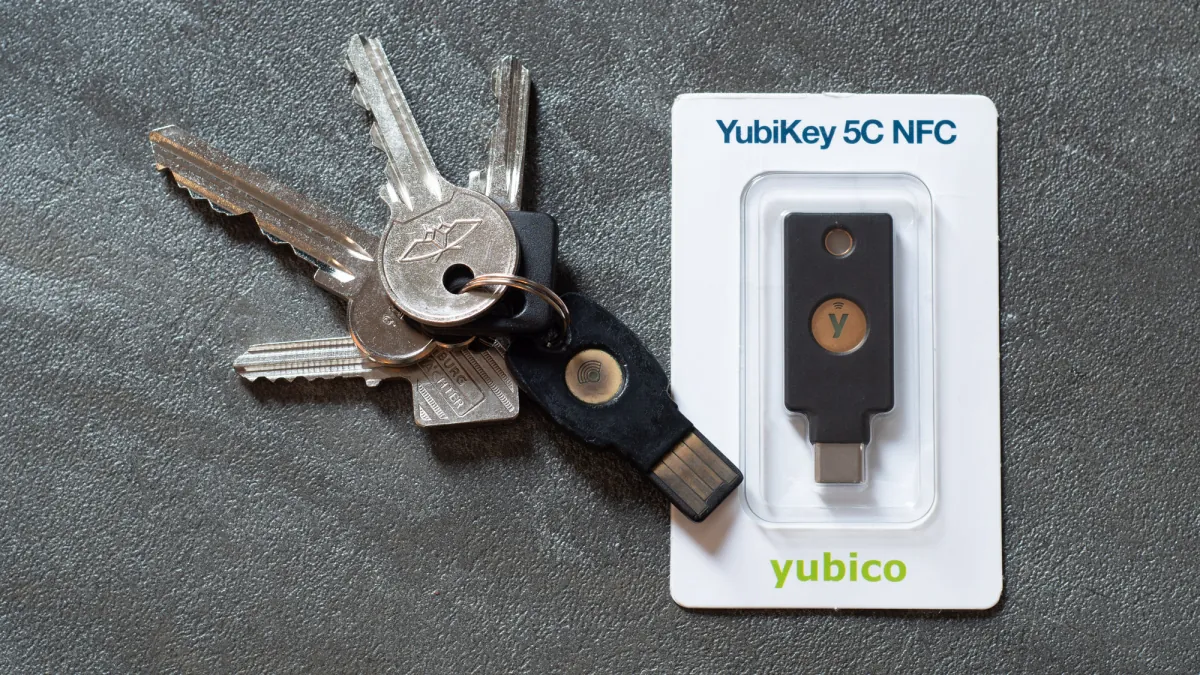
CISA's separate guidance for businesses distinguishes stronger authentication options and describes phishing-resistant MFA as the preferred direction. A physical security key can be one implementation. The archive photograph here is illustrative, not an endorsement of its manufacturer or a claim that one product defeats every scam.
Our practical conclusion is to separate a message's appearance from the authority to act on it. For a sensitive request, a business can require verification through a contact route established beforehand, rather than one supplied in the suspicious message. This is a proposed workflow safeguard, not a detector that can reliably label every piece of AI-generated text.
Account security also has limits. A person can knowingly approve a transaction because a story seems believable. Protecting the login is valuable, but it does not by itself test whether the instruction being followed is genuine. Procedures and human judgement remain part of the response.
Sources: CISA: Secure Our World, archived guidance; CISA: multifactor authentication for businesses
Scientific perspective: measure added capability, not just AI involvement
Lumacta's evidence-based assessment—not an independent forensic investigation—is that identifying AI in an operation is only the first analytical step. A stronger evaluation would ask how the same task performs without it: how much time is saved, what skills remain necessary and whether the completed outcome changes.
That comparison needs a fair baseline. Comparing an AI-assisted operation with no assistance at all could overstate the benefit if ordinary scripts or existing commercial tools already perform much of the work. Equally, testing only a short isolated task could miss a meaningful saving across a longer sequence. These are our proposed research questions, not additional findings from the report.
We would also want unsuccessful attempts, uncertainty in attribution and the limits of provider visibility to remain visible. A carefully described failure can be as informative as a successful misuse case. Responsible reporting should resist turning a selected set of investigations into either proof of inevitable catastrophe or a blanket reassurance that safeguards have solved the problem.
Sources: Anthropic: September 2026 threat-intelligence report; NIST: AI Risk Management Framework
The goal is proportionate protection, not permanent suspicion
Our conclusion is that the report warrants attention because it makes misuse concrete. The next step is not to assume that every unfamiliar message is malicious, or that a polished paragraph must have been written by a machine. Neither shortcut establishes who is responsible or what the recipient should do.
For smaller organisations, the practical challenge is to make verification routine enough that it still works during a busy day. A named person responsible for reviewing unusual requests, a clear way to report concerns and permission to pause a questionable action can matter more than another alarming headline.
The broader lesson is an evidence standard: ask what was observed, whose view of the activity is available and what outcome was measured. Better AI security will depend on those answers, alongside usable protections—not simply on how confidently either an attacker or a technology vendor tells a story.
Sources: Anthropic: September 2026 threat-intelligence report; CISA: Secure Our World, archived guidance
Sources & Methods
Checked September 14, 2026. Anthropic's September 10 report is a provider account, not independently audited by Lumacta. NCSC supplies a separate forecast, not case corroboration. NIST and older CISA material provide methodological and defensive background. No private logs were accessed or incidents reproduced. The scientific perspective, examples and proposed safeguards are Lumacta's editorial analysis.
- Anthropic: September 2026 threat-intelligence report — Provider investigation report
- Anthropic: threat-intelligence publication index — Publication-date verification
- NCSC: AI and the cyber threat toward 2027 — Independent background assessment
- NIST: AI Risk Management Framework — Methodological background
- CISA: Secure Our World, archived guidance — Defensive background, archived
- CISA: multifactor authentication for businesses — Defensive background