
Start with the household task
A household does not experience a lighting system as a collection of protocol badges. Someone presses a switch, expects a room to become usable and wants the same thing to happen tomorrow. The more interesting question behind Matter and Thread is whether the system makes that everyday outcome easier to maintain when a phone, account, controller or internet connection changes.
Our proposed starting point is a short description of the job: which person needs which action, from which place, under which conditions? Turning on a lamp from the sofa, triggering it from a sensor and checking it from another country are different jobs. Write them separately before deciding which equipment is missing. This can reveal that an existing arrangement already meets the important need.
The comparison below follows the whole life of that job: initial setup, ordinary operation, another household member joining, maintenance and eventual replacement. It is a reading and planning framework, not a ranking of products. The examples are hypothetical; Lumacta did not pair devices or reproduce a household failure.
Lumacta analysis. Comparisons and implications are Lumacta’s evidence synthesis; no hands-on smart-home test, interoperability certification or independent benchmark was performed.
Separate the protocol, the network and the controller
The Connectivity Standards Alliance describes Matter as a local control protocol using Wi-Fi, Ethernet or Thread, with Bluetooth Low Energy for setup. It does not replace a smart-home platform.
Thread Group describes Thread as a low-power IPv6 mesh network. It supplies a communication path for constrained devices; the application above that path determines how they are controlled. Treat its range, battery and reliability benefits as design aims unless a relevant measurement is available.
Home Assistant’s Matter documentation explicitly warns that a Thread device need not support Matter. A Thread logo therefore cannot establish the application protocol of a particular product. Check the exact model and its manufacturer’s stated support.
Home Assistant’s Thread documentation distinguishes the border router, which forwards traffic between the mesh and adjacent IP networks, from the application that controls devices. One physical product can perform several jobs, but the jobs remain separate.
That distinction changes the shopping question. Inventory the functions already present rather than counting boxes. If a product description says hub, ask which function that word denotes in this setup. A route for messages and an application that understands the intended action should each have a clear place in the plan.
Source notes: 1, 2, 3, 4. Comparisons and implications are Lumacta’s evidence synthesis; no hands-on smart-home test, interoperability certification or independent benchmark was performed.
Local control needs a stated boundary
Home Assistant documents local Matter control, while warning that some manufacturers require an account to enable it. A local operating connection and a cloud-independent setup process are different claims.
The Alliance allows manufacturers to retain cloud connectivity. For Matter-only devices, it describes away-from-home control through an internet-connected controller at home. Local operation does not establish an entirely local service.
Home Assistant’s offline FAQ says local integrations can continue during an internet outage, while cloud-only devices, its cloud remote-access features, updates and access to the app store still need the internet. This describes the project’s supported paths, not a test of a reader’s home.
For an illustrative lamp, list separate observations: the wall control, the household app while at home, the scheduled action and access while away. If one depends on a remote service, keep that dependency beside the function. A working local button cannot establish that an unrelated cloud notification also survives an outage.
Privacy deserves the same precision. Ask which optional services are enabled, which accounts remain linked and what information each feature uses. The architecture can support a more limited dependency on remote services. The actual configuration and the providers’ policies still need examination; we did not inspect traffic or audit a device.
Source notes: 1, 3, 5. Comparisons and implications are Lumacta’s evidence synthesis; no hands-on smart-home test, interoperability certification or independent benchmark was performed.
Compare the paths available to the same device
Home Assistant’s Hue example describes a native local integration exposing features absent from its Matter bridge route. Both can be local; choosing Matter automatically can therefore miss a useful comparison.
We would compare the operations that matter to the household, rather than award points for the newest label. If a native local integration already performs the required scene, another route should earn its place through a concrete benefit: an additional controller, a simpler handover or a supported replacement plan. Fewer visible apps is only useful if the intended work remains possible.
The Alliance describes Matter bridges for devices using other protocols, without native Matter–Zigbee interoperability. Retaining equipment through a bridge is a particular integration route, not a change to every device’s protocol.
For an existing room, compare keeping the current route, adding a bridge and replacing equipment. Include the actions lost or gained, who maintains each route and what happens when its intermediary is unavailable. Replacement may be reasonable, but a logo alone does not demonstrate a household benefit or justify discarding working hardware.
Source notes: 1, 3. Comparisons and implications are Lumacta’s evidence synthesis; no hands-on smart-home test, interoperability certification or independent benchmark was performed.
Successful pairing can leave the useful action unresolved
Google’s supported-device documentation, updated October 8, 2026, says its ecosystem does not fully support every Matter device type. One concrete example concerns an On/Off Light Switch: it can be commissioned, but Google Home does not expose the binding function needed to configure it to control another Matter device. A developer-provided director is a separate route described in the document.
That is a platform-specific example, not a verdict on every physical wall switch. It shows why a successful joining screen is an incomplete acceptance criterion. The useful question is whether this model, software and controller combination performs the exact action the household wants through the interface it intends to use.
Before buying for an existing setup, check the current support page for that operation and preserve its scope. After installation, record the observed result. A device appearing in a list, reporting a state, accepting a command and participating in a useful routine deserve separate observations. An unsupported operation should remain an unresolved requirement rather than disappear behind the word compatible.
Source notes: 6. Comparisons and implications are Lumacta’s evidence synthesis; no hands-on smart-home test, interoperability certification or independent benchmark was performed.
Sharing a device is one part of sharing a home
Matter’s multi-admin feature, as described by the Alliance, lets users share devices across multiple platforms and choose which platforms can access them. That establishes a device-sharing mechanism; it does not establish that a household’s complete configuration has moved.
Our proposed handover keeps device access, people’s permissions and the routines they rely on in separate entries. Suppose a second controller can switch a lamp. Before removing the first arrangement, ask where the evening schedule is configured, which sensor triggers it and who knows how to change it. Do not assume those answers from a successful second pairing.
Another household member should be able to perform ordinary tasks without depending on the enthusiast who built the system. A useful acceptance check is whether that person can find the right control and recognize an unavailable device. Keep sensitive setup material in an appropriate private place, while making the everyday instructions easy to find.
Source notes: 1. Comparisons and implications are Lumacta’s evidence synthesis; no hands-on smart-home test, interoperability certification or independent benchmark was performed.
Several network routes do not remove every dependency
Thread Group’s November 2, 2022 architecture explanation describes multiple border-router-capable devices keeping a path available when one goes offline. This is historical documentation of a network role, not a new product announcement or an observed failover result for an untested house.
Home Assistant also distinguishes discovering nearby Thread networks from having their credentials. Visible border routers may belong to different networks; the documentation does not justify assuming that every discovered device automatically joins one shared mesh.
Our inference is that redundancy must be evaluated against a named failure. Two network routes could still rely on the same power source, local network or controlling application. Draw the route for the intended command, mark the components it shares and ask which failure the additional equipment actually addresses. More boxes can be useful without making the entire system independent.
A replacement plan needs the same boundary. Identify which configuration belongs to the device, the network and the controller before replacing one of them. Ask the responsible platform documentation how that part can be restored or re-created. Do not begin by resetting every device and hoping that a new discovery screen reconstructs the old arrangement.
Source notes: 4, 7. Comparisons and implications are Lumacta’s evidence synthesis; no hands-on smart-home test, interoperability certification or independent benchmark was performed.
Plan updates and recommissioning before they are needed
Home Assistant’s Matter documentation says Matter over-the-air updating is optional. The Alliance’s FAQ separately allows device updates through Matter or a manufacturer’s own mechanism. A common control protocol therefore does not identify one universal firmware-update route.
For each important component, record the documented update method, the currently installed version and the provider’s stated support commitment, if one exists. Leave an unknown end date unknown. Neither certification nor a device responding today establishes how many years the manufacturer will maintain it. This is a question to ask before expanding a system, not a lifetime guarantee supplied by this review.
Home Assistant warns that recommissioning after a reset requires the device’s setup QR or numeric code. Preserve it beforehand. This review establishes no universal restore or migration procedure.
The practical objective is a recoverable household task. A spare controller has limited value if nobody knows how to restore the required arrangement. Equally, a detailed export file is not proof of a successful restoration. Retain a simple record of what was documented, what was actually exercised and what remains dependent on future support.
Source notes: 1, 3. Comparisons and implications are Lumacta’s evidence synthesis; no hands-on smart-home test, interoperability certification or independent benchmark was performed.
Compare one room before designing the whole house
The table is an original planning aid. It asks the same questions of several possible routes without assigning a winner. Fill it for a specific room and device combination; do not treat it as a certification checklist. The best choice can be the one that adds the least maintenance while meeting the important task.
Start with a modest use case whose existing controls remain available. Write the desired result in plain language, then identify the evidence you would accept for ordinary use, a temporary service outage and eventual replacement. A blank cell is useful: it shows which question should be answered before extending the arrangement to more rooms.
| Route to consider | Function to check | Maintenance question |
|---|---|---|
| Existing local integration | Does it already perform the required operation? | Who owns its update and replacement plan? |
| Matter over Wi-Fi or Ethernet | Can the chosen controller perform the intended action? | What happens when the network or controller changes? |
| Matter over Thread | Which component provides each required role? | Can the household recover the intended arrangement? |
| Existing equipment through a Matter bridge | Which required functions remain available? | What depends on the bridge and its provider? |
Lumacta analysis. Comparisons and implications are Lumacta’s evidence synthesis; no hands-on smart-home test, interoperability certification or independent benchmark was performed.
A bounded check should change one condition at a time
Here is a proposed evaluation sequence, not a report of tests we performed. Begin with the ordinary action and record who performed it, which interface was used and what the device actually did. A displayed confirmation and the intended physical result should both be described. Then ask what evidence is missing for the other household members and their interfaces.
If the household chooses to check loss of internet access, plan a reversible check using the equipment’s normal supported controls. Keep the home network and device power conceptually separate from the internet connection: turning everything off would answer a different question. Record the condition precisely and restore it before evaluating another change. Follow the responsible operator’s procedure rather than weakening network protections to obtain a passing result.
Evaluate recovery as another task. Does ordinary control return through the documented route? Are schedules and permissions still understood? Do not label a factory reset as recovery merely because it produces a setup screen. If a component was not exercised, leave that part of the record untested instead of borrowing confidence from the part that worked.
These observations remain specific to the tested arrangement and time. They cannot establish a general failure rate or promise continued compatibility after every update. Their value is a clear household baseline that makes a later change easier to diagnose, without requiring the next person to reconstruct what used to work from memory.
Lumacta analysis. Comparisons and implications are Lumacta’s evidence synthesis; no hands-on smart-home test, interoperability certification or independent benchmark was performed.
Include the work someone will have to own
A comparison that counts only hardware can miss the work of operating it. Our suggested maintenance column includes account ownership, update decisions, saved configuration, replacement instructions and the time needed to investigate a failed routine. Avoid assigning invented monetary savings to those tasks; describe who will do them and whether that person wants the responsibility.
A managed platform may be a reasonable fit for someone who values a familiar support route. A locally administered system may suit someone who wants to choose more of the operating components and can maintain them. Compare those preferences alongside the required functions. The same protocol does not make the two operating arrangements equivalent.
The useful technological opportunity is a better boundary between equipment and the application chosen to operate it. If a household can change one part while preserving its important tasks, interoperability has delivered something concrete. The evidence for that outcome belongs to the actual transition, including the work it required and the functions it left behind.
Lumacta analysis. Comparisons and implications are Lumacta’s evidence synthesis; no hands-on smart-home test, interoperability certification or independent benchmark was performed.
What this review establishes
We read primary standards explanations and implementing-project documentation on November 2, 2026. Most of the help pages do not display a substantive publication date; the read date is not presented as a product release. The dated Google and Thread Group documents retain their own update or publication context.
Standards bodies describe their intended architecture, while platform projects document their own implementation. Agreement between them helps check the role definitions. It is not independent household reliability evidence. This is a targeted explanatory synthesis, not a systematic review, statistical meta-analysis, radio survey or security audit.
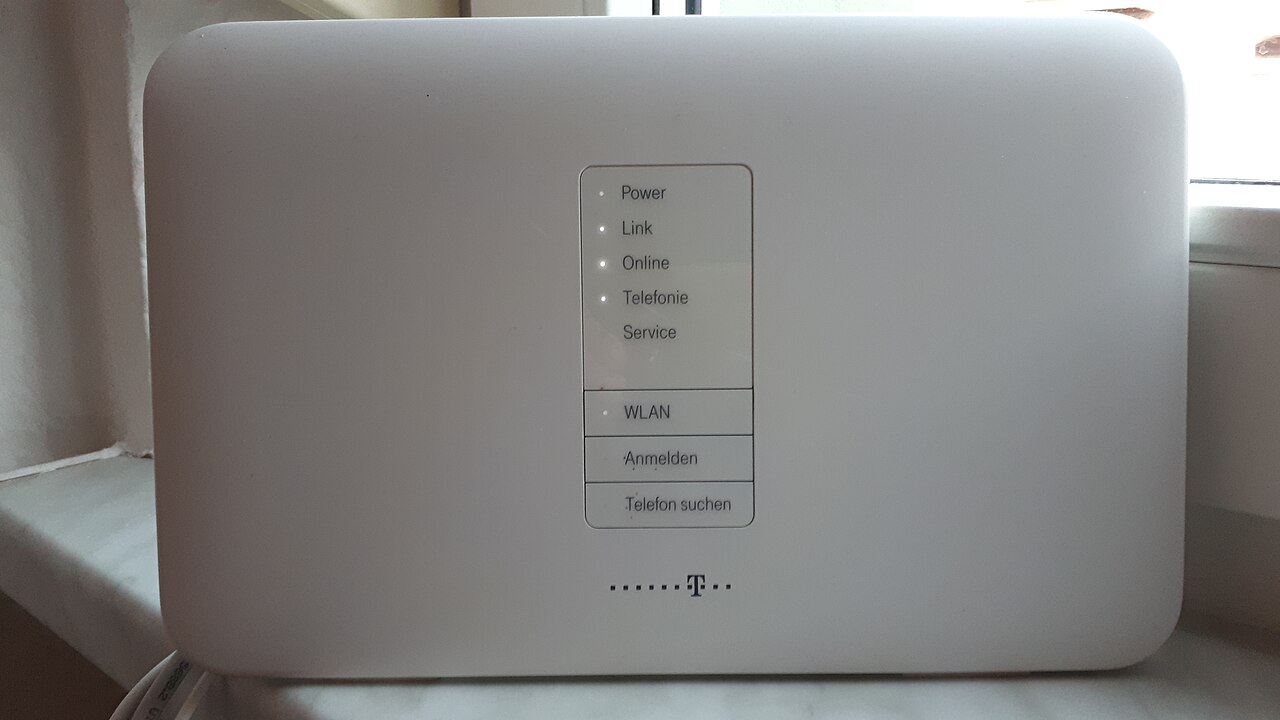
The proposed comparison turns the documents into questions a household can answer for its own setup. We did not rank current products, validate a migration, measure outage survival or verify a support lifetime. The archive router photograph supplies network context only. A useful next decision should follow a documented requirement and a bounded observation, with any remaining dependency still visible.
Source notes: 1, 2, 3, 4, 5, 6, 7. Comparisons and implications are Lumacta’s evidence synthesis; no hands-on smart-home test, interoperability certification or independent benchmark was performed.
Sources & Methods
Primary standards and implementing-project documentation read November 2, 2026. Undated help pages are identified as documentation, not new announcements. Dated historical and current-update sources retain their dates. Related organizations’ descriptions are cross-checked by scope, not counted as independent performance replication. Household examples and tables are proposed original analysis. No device pairing, outage test, radio measurement, security audit or hands-on product comparison performed.
- CSA: Matter FAQ — Primary alliance explanation; undated; read November 2, 2026
- Thread Group: network FAQ — Primary industry-association explanation; undated; relevant sections read November 2, 2026
- Home Assistant: Matter integration — Primary implementing-project documentation; undated; relevant substantive sections read November 2, 2026
- Home Assistant: Thread integration — Primary implementing-project documentation; undated; relevant substantive sections read November 2, 2026
- Home Assistant: offline operation — Primary project FAQ; undated; complete substantive body read November 2, 2026
- Google: Matter device support — Primary platform documentation; updated October 8, 2026; support and switch sections read November 2
- Thread Group: border-router architecture — Historical primary explanation; November 2, 2022; substantive body read November 2, 2026
- Commons: archive router photograph — Own-work camera photograph by Rakoon; capture February 9, 2018; source and pixels checked November 2, 2026
- Creative Commons: CC0 — Primary reuse terms; deed and legal-code limitations read November 2, 2026
