
Two systems, following April’s chip announcement
Google announced TPU 8tx and TPU 8i Max on November 9, extending its eighth-generation family with systems for confidential inference and memory-heavy workloads.
The distinction from April’s announcement matters. Google originally split the generation into TPU 8t for training and TPU 8i for inference. Its earlier explanation describes different architectures serving those jobs, rather than one universal accelerator. November’s additions specialize the surrounding system further: how existing silicon is packaged, connected and protected.
For a business choosing infrastructure, the interesting question is consequently which expensive obstacle the new arrangement removes. A confidential workload and a long-context assistant can demand different things, even when both are described simply as running AI.
Privacy and memory take different hardware routes
Google says 8tx combines TPU 8t silicon, fifth-generation AMD EPYC hosts and Boardfly networking for confidential inference and smaller training jobs. TPU 8i Max combines two 8i chips in one package, with twice 8i’s compute, SRAM and HBM bandwidth. These are new system configurations built around existing silicon.
That makes the two announcements complementary rather than interchangeable. Consider two hypothetical buyers: one must process confidential records within an approved trust boundary; the other needs an assistant to work across a large codebase without repeatedly waiting for context. Buying the largest package does not, by itself, answer the first problem. Adding a security boundary does not, by itself, settle the second.
Source notes: 1.
Confidential processing is about data while it is being used
Google’s general Confidential VM documentation explains the underlying idea: hardware-based memory encryption protects applications and data during processing. It distinguishes isolation from attestation, which checks a machine’s identity and state. This documentation provides context for the security promise; it is not an 8tx configuration guide or a statement that every confidential-computing technology is interchangeable.
Remote attestation adds an evidence step before protected resources are released. Google describes an attester producing measurements, a verifier checking them against policy, and a relying party deciding whether to grant access. The policy therefore matters alongside the hardware: accepting evidence of an environment and deciding that the environment is appropriate are related but distinct responsibilities.
The practical attraction of 8tx is a route to useful processing where the trust requirement would otherwise block the workload. Its value should be judged against that particular requirement, rather than treating the word confidential as a promise about every application or every possible recipient of its output.
A larger context still has to move through the machine
Google’s separately published November 9 TPU Sync engineering report describes a memory hierarchy spanning accelerator HBM, host RAM, storage and the network. The software moves cached model state between those layers while computation continues. Its shared-storage tier and reinforcement-learning integration include experimental components. This is a software approach to keeping accelerators supplied with useful state, alongside the new package’s hardware approach.
For a long-running assistant, the meaningful outcome is a useful answer arriving sooner at the required workload size. A larger context capacity is valuable when it lets the application retain relevant information; bandwidth is valuable when moving that information would otherwise dominate the wait. Those are reasons to investigate a system, rather than reasons to assume that doubling selected resources doubles the speed of every task.
Source notes: 6.
The software’s evidence has its own hardware and version boundaries
The TPU Sync repository currently lists validation on TPU v7x and v6e, identifies a latest-known-good revision, and warns that its main branch can contain temporary instability. It also says published packages are development nightlies before the first stable release, and that the PyTorch release path is not yet gated on end-to-end performance tests. Those details define a more specific adoption decision than the word open-source alone.
Google’s TPU Sync results came from internal July 2026 tests on TPU v7x. That source measures earlier hardware, rather than the newly announced configurations.
A credible deployment comparison would therefore keep the hardware configuration, serving stack and supported revision together. Mixing the newest hardware name with a result from a different platform would obscure what actually produced the improvement.
PyTorch support addresses the cost of changing the software stack
TorchTPU was open-sourced on October 20, before this hardware announcement. Google’s account describes native PyTorch support with minimal code changes, familiar APIs, eager-mode debugging and torch.compile optimization. It also describes integrations with serving engines including vLLM and SGLang. This is part of the existing software foundation being carried into the expanded TPU story, rather than another chip launched on November 9.
That distinction matters commercially. Hardware choice is easier to consider when an engineering team can preserve familiar tools and compare the application it already runs. Portability still has to include the particular model, operators and serving features the team needs. A short migration path can change the economics of a trial even before the eventual throughput winner is known.
Source notes: 8.
A fleet needs capacity that its jobs can actually use
GKE’s dynamic-slicing documentation describes joining pre-provisioned TPU blocks into larger slices or partitioning them into smaller ones at scheduling time. The current requirements specify Ironwood, All Capacity reservations and particular Rapid-channel GKE versions. It is a concrete example of improving how existing capacity is assembled for work; those requirements should not be silently extended to the newly named systems.
Pathways on Cloud addresses coordination at a different level. Its documentation describes one JAX client orchestrating work across large TPU slices, with a unified view instead of separate Python controllers for each group of devices. A resource manager handles allocation and worker health, while accelerator-side workers execute the compiled programs. These are distinct roles within the broader infrastructure stack.
Together, these layers explain why the computer around an accelerator deserves attention. Idle capacity, awkward job placement and unnecessary coordination can erode the benefit of a fast package. The useful comparison is the amount of completed work the whole arrangement supports, including the operational effort needed to keep it running.
The next useful evidence is a complete workload comparison
Our assessment is that Google’s specialization is a more informative direction than a single contest over peak chip speed. Privacy, memory movement, framework support and fleet operation describe different barriers to deploying an application. The stronger choice is the system that removes the barrier that matters for the intended job, with a documented configuration and an acceptable operating cost.
Google’s announcement gives no public price, region list or general-availability date for either new system.
Those details will help turn an architectural promise into a buying decision. A worthwhile comparison should explain what the application can now do, how quickly it does it and what the complete operation costs. The most interesting next result will connect those outcomes to a named configuration, rather than simply attach a larger number to a new hardware name.
Source notes: 1.
Sources & Methods
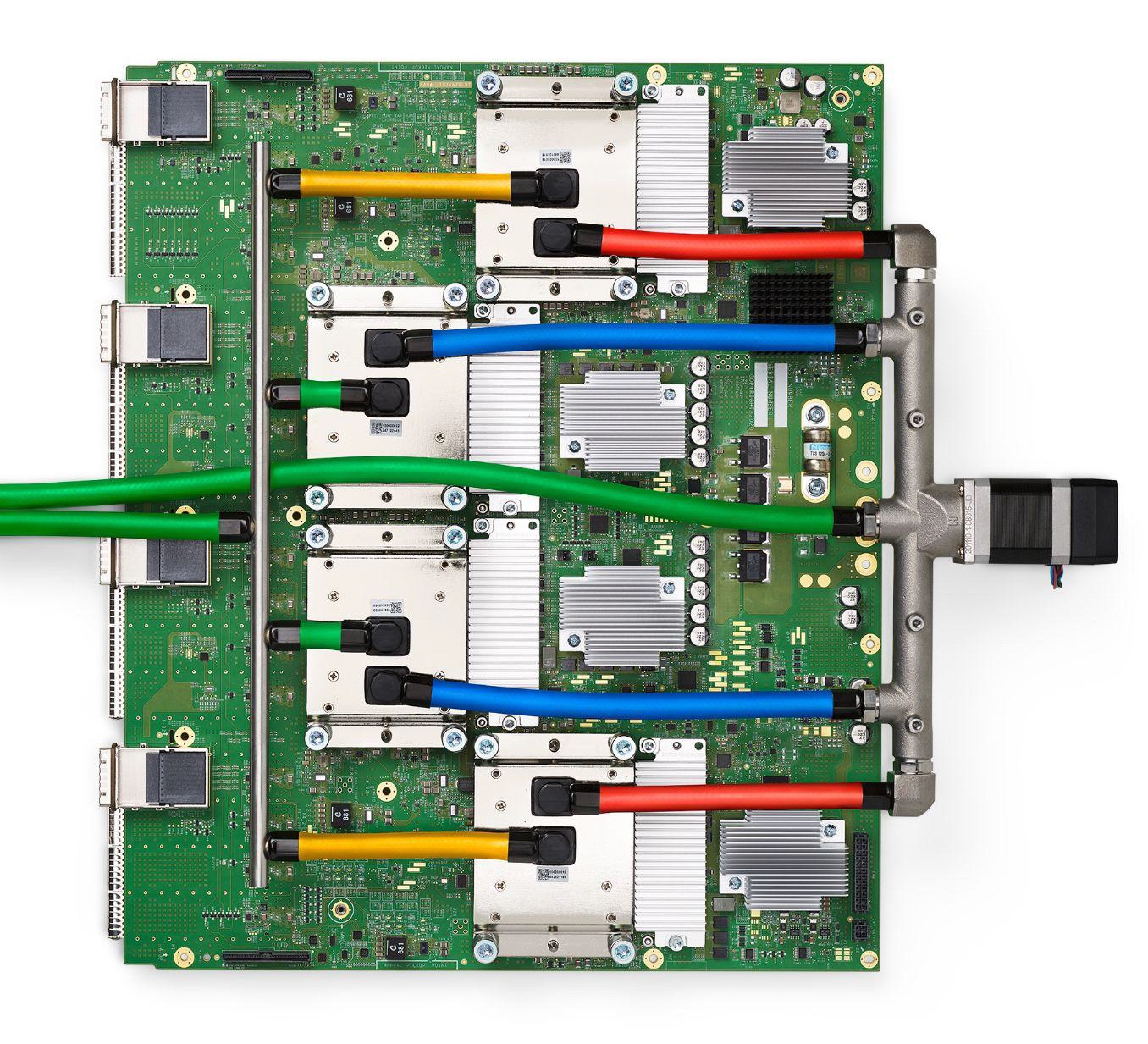
Research refreshed November 10, 2026. Company claims are attributed; technical guides retain their own hardware and version scopes. Photograph: archival TPU v4 hardware from a 2023 paper.
- Google TPU system announcement — Primary company announcement
- DCD reports the launch — Independent trade reporting
- Earlier TPU architecture announcement — Primary company background
- Confidential VM overview — Primary technical documentation
- Remote attestation overview — Primary technical documentation
- TPU Sync technical announcement — Primary engineering report
- TPU Sync repository — Primary software documentation
- TorchTPU announcement — Primary software background
- GKE dynamic slicing — Primary technical documentation
- Pathways on Cloud — Primary technical documentation
- Archive hardware image record — Original image and license record
- TPU v4 paper record — Primary archival provenance
- CC BY 4.0 terms — Primary reuse terms
