
The board divided the work of replacing its founder
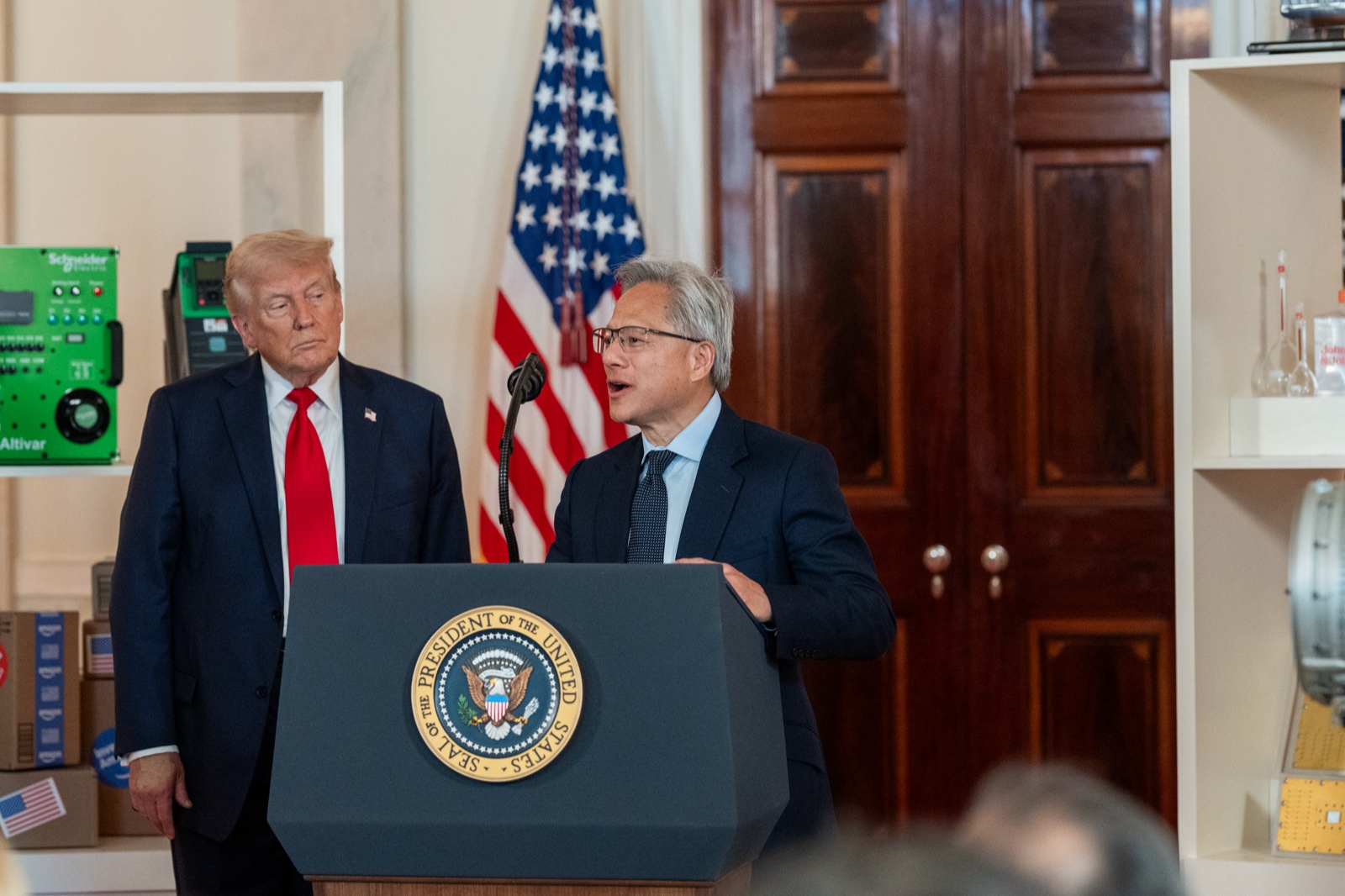
Nvidia’s board accepted Jensen Huang’s resignation as chief executive, president and a director on November 11, with immediate effect, according to its SEC filing. The company announced the handoff on November 12. Colette Kress, its chief financial officer since 2013, took over as interim CEO and kept the finance job. The board will consider internal and external candidates for the permanent role. Harvey C. Jones became the board’s first chair.
That gives the company two points of leadership during the transition. Kress runs the business and continues to oversee its finances. Jones chairs the directors who will pick the permanent chief executive. Axios points out that investors already know Kress from Nvidia’s earnings calls. The appointment puts that familiar finance voice in charge of decisions that now reach beyond the financial report.
The handoff followed reporting on Huang’s personal conduct. Nvidia’s board announced an inquiry on November 8 after reports that Huang had been targeted by a foreign intelligence effort. On November 10, the independent directors named the outside counsel they had hired. The Guardian covered both the inquiry and the resignation. Nvidia’s November 12 statement gave no findings and no reason for the departure.
The rollout already spans more than Nvidia
The board expects operations, customer commitments and the product roadmap to continue. The clearest way to assess that expectation is to follow commitments where another company has to do something too. Nvidia and Oracle said on October 27 that Oracle Cloud Infrastructure had made Vera Rubin NVL72 systems and Vera CPUs generally available. In the same announcement they laid out a larger future expansion and a plan to add smaller Rubin systems. Those plans still have to turn into capacity.
A large deployment needs several deliveries to line up. A rack can arrive before a site has the power and cooling to run it. A cloud provider can list a machine family before a particular customer can reserve a cluster large enough for a training run. The customer’s useful date comes when the machines, network and software are ready together. That is the milestone buyers can ask their provider to confirm.
The scale of the transition matters to Nvidia itself. It reported about $89.0 billion in Data Center revenue out of $96.2 billion in total revenue for the fiscal quarter that ended July 26. That is historical sales, and Data Center includes more than the latest generation of GPUs. The figures explain why a change to large deployments would matter so much to the business.
Cloud buyers can check the commitments they already have
For a team with an existing cloud reservation, the useful questions are concrete. Which region and instance type are reserved? What is the earliest usable start date, how many accelerators will be available together, and who confirms any changes? An account-level answer from the supplier matters more to the deployment plan than a broad statement about production.
A team that can run the same job on older hardware has another useful check. Record the software stack, run the same workload through the intended fallback, and measure the time and cost to complete it at the required scale. Changing suppliers can also mean changing libraries, rewriting deployment scripts or retesting distributed training. Those costs belong in the comparison alongside the hourly accelerator price.
Many smaller teams buy AI through an API and never reserve a GPU directly. Their practical dependency sits with the service provider. The signs they can actually observe are sustained changes in rate limits, latency, regional availability or pricing. A change at Nvidia matters to those teams when it reaches one of those measures or a commitment from the service they use.
Source notes: 6.
The November 17 call is the first public test
Nvidia’s next earnings call remains scheduled for November 17. The results cover the quarter that ended October 25, before Huang stepped down. The forward-looking portion of the call can answer a different question from the financial tables. Listen for specific comments on the pace of Rubin deployment, where the company sees delivery constraints, and whether its outlook changes.
The permanent appointment is a separate milestone. A name will settle who holds the role. The new chief’s priorities will become clearer through decisions about products, capital and customer commitments. Until then, compare Nvidia’s statements with what manufacturers and cloud providers can make available. If both give the same date for a specific deployment and then meet it, that is evidence the handoff is working.
Sources & Methods
We checked Nvidia’s SEC filing and board announcements against independent coverage from The Guardian and Axios. We used Nvidia’s financial disclosure and its joint Oracle announcement to distinguish reported sales, declared availability and future expansion. The operating implications below are Lumacta’s analysis.
- Nvidia’s November 12 CEO transition announcement — Primary · Board announcement
- Nvidia’s November 8 statement announcing an independent inquiry — Primary · Board statement
- Nvidia’s November 10 statement on outside counsel — Primary · Independent directors’ statement
- The Guardian’s reporting on the resignation and board inquiry — Independent reporting
- Nvidia’s fiscal 2027 second-quarter results — Primary · Financial disclosure
- Nvidia and Oracle’s October 27 infrastructure announcement — Primary · Joint announcement
- Nvidia’s notice for the November 17 earnings call — Primary · Investor calendar
- Axios on Colette Kress and her public role as CFO — Independent reporting
- Nvidia Form 8-K, Item 5.02 — Primary · SEC filing