
A new route to a useful robot skill
NVIDIA introduced GR00T 2 at the Conference on Robot Learning on November 9, pitching human video as a way to teach robots more broadly before adapting them to particular jobs.
The attraction is easy to understand. Showing someone how to fold, sort or assemble something is a natural way to pass on a skill. Building a machine that can translate that observation into reliable movement is much harder. A useful robot must do more than recognize the object: it must choose an action that works with its own body, then deal with what happens next.
This is the interesting bet behind the announcement. If more of the general knowledge can be acquired before a robot reaches a specific workplace, teaching the next task could become less dependent on collecting a large new demonstration set. Whether that produces an economical worker depends on the quality of the adaptation, not simply the size of the video library.
Source notes: 1.
Predict the scene and the action together
The research project describes a world-action model: one diffusion transformer jointly predicts future video and robot actions from recent camera views, an instruction and robot state. Its pretraining mix includes 402,730 hours of human video, 10,184 hours of handheld-gripper demonstrations and 23,500 hours of robot teleoperation. Code is listed for December.
That pairing gives the approach a clear purpose. A prediction about how a scene will change can help organize an action; a physical action gives the prediction a consequence. Watching a hand approach an object is still different from controlling a gripper, so the important bridge is between what the model sees and what the actual robot can execute.
The question for a buyer is therefore specific: how much additional teaching is needed for this robot, this tool and this task? A broad model is a starting point. The cost of making it useful at the intended station is the commercially meaningful result.
Source notes: 2.
The public dataset is a subset, not the training total
The separately released PhysicalAI-Human-1M-100K dataset contains 100,000 hours drawn from a larger human-video collection. Its card describes egocentric recordings with language annotations and head-and-hand motion information. Those 100,000 hours should not be confused with either the full collection or the model’s stated human-video training total.
These distinctions matter because hours alone say little about the work an outside team can reproduce. An annotated episode gives a researcher more to work with than an unlabelled clip. Access to a subset allows scrutiny of that material; it does not expose every ingredient in the training recipe.
For prospective adopters, the useful audit trail connects the data to the task. Does it cover the objects, viewpoints and sequence of movements that matter? Can a team investigate a failure and improve the relevant examples? A large total is a reason to look more closely, rather than a substitute for those answers.
Source notes: 4.
Read the success rates with the selection rule
The whitepaper reports average trial success of 40 percent without task-specific Dexter demonstrations, 71 percent after one demonstration and 95 percent after five, using task-specific fine-tuning. Crucially, the 50 tasks were selected from those the model could learn with five examples at a success rate of at least 80 percent. The high five-example result is therefore partly built into the selection. Completing 40 of 50 tasks at least once is a separate statistic.
The progression is promising: a little targeted teaching can make a large difference on that selected task set. It also explains why the headline percentage cannot stand in for the probability that an arbitrary new assignment will succeed. The difficult cases excluded by the selection rule matter to anyone planning a wider deployment.
A strong follow-up evaluation would declare the target tasks before testing, include the failures, and report how often a person must intervene. It should also measure a complete job rather than only its easiest step. That would turn an encouraging learning result into a more useful estimate of operational reliability.
Source notes: 3.
Outside coverage raises the operational question
Unite.AI’s November 9 analysis highlights the benchmark-selection issue and the time spent waiting in an agent-driven demonstration. The publisher labels the article as AI-generated and editorially reviewed. It offers a useful comparison of the announcement and paper, rather than a separate laboratory replication.
Our assessment is that recovery and speed must be evaluated together. A robot that can reconsider a failed attempt may be more useful than one that stops immediately, but the extra reasoning has a cost if a person or the next station is waiting. The meaningful unit is completed work over a shift, including retries, teaching and interruptions.
This is also where an impressive video can leave the most important question unanswered. A single successful sequence shows that a behavior is possible. An operating decision needs to know how consistently the same sequence works when the object arrives in a different position or the previous step leaves an awkward starting state.
Source notes: 6.
Simulation is part of the existing toolchain
Isaac Lab 3.0, also featured in NVIDIA’s conference announcement, was released on October 20. Its release record describes a common interface for multiple physics backends, including Newton and PhysX, with broader rendering and visualization choices. November’s showcase is not a new general-availability date for that release.
Simulation gives engineers a place to vary a setup deliberately. The practical value comes from choosing variations that expose likely failures, then checking how well the lessons transfer to the real station. A more convenient toolchain can make that work easier; it cannot decide which risks a particular operation should tolerate.
GR00T 2’s next important test is consequently not another isolated success clip. It is a transparent account of a new task: the preparation required, the adaptation performed, the unsuccessful attempts and the useful output that followed. That is where the human-video idea can begin to earn its place in a working system.
Source notes: 5.
Sources & Methods
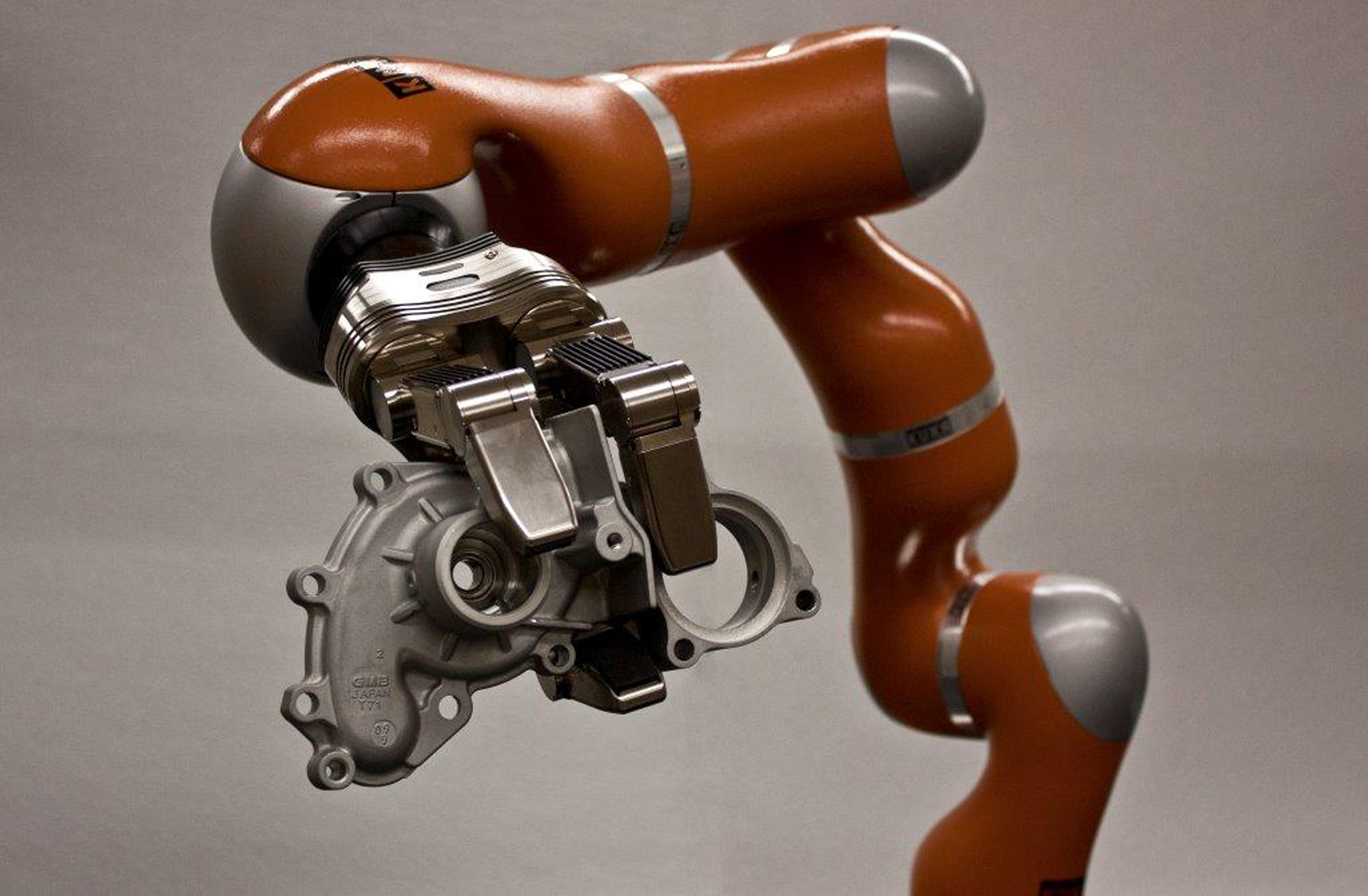
Research refreshed November 10, 2026. Model results are NVIDIA’s evaluations; the paper’s task-selection rule is included. Archive robot photograph provides context.
- NVIDIA CoRL announcement — Primary company announcement; read
- GR00T 2 research project — Primary research description; read
- GR00T 2 whitepaper — Primary evaluation methods; relevant sections read
- Human-video dataset card — Primary dataset documentation; read
- Isaac Lab 3.0 release — Primary release record; read
- Outside analysis of GR00T 2 — Independent publisher; disclosed AI-written analysis, read
- NIST archive photograph — Primary image record; date and credit read
- NIST reuse terms — Primary image reuse guidance; read