
The crossing is scheduled for later this month
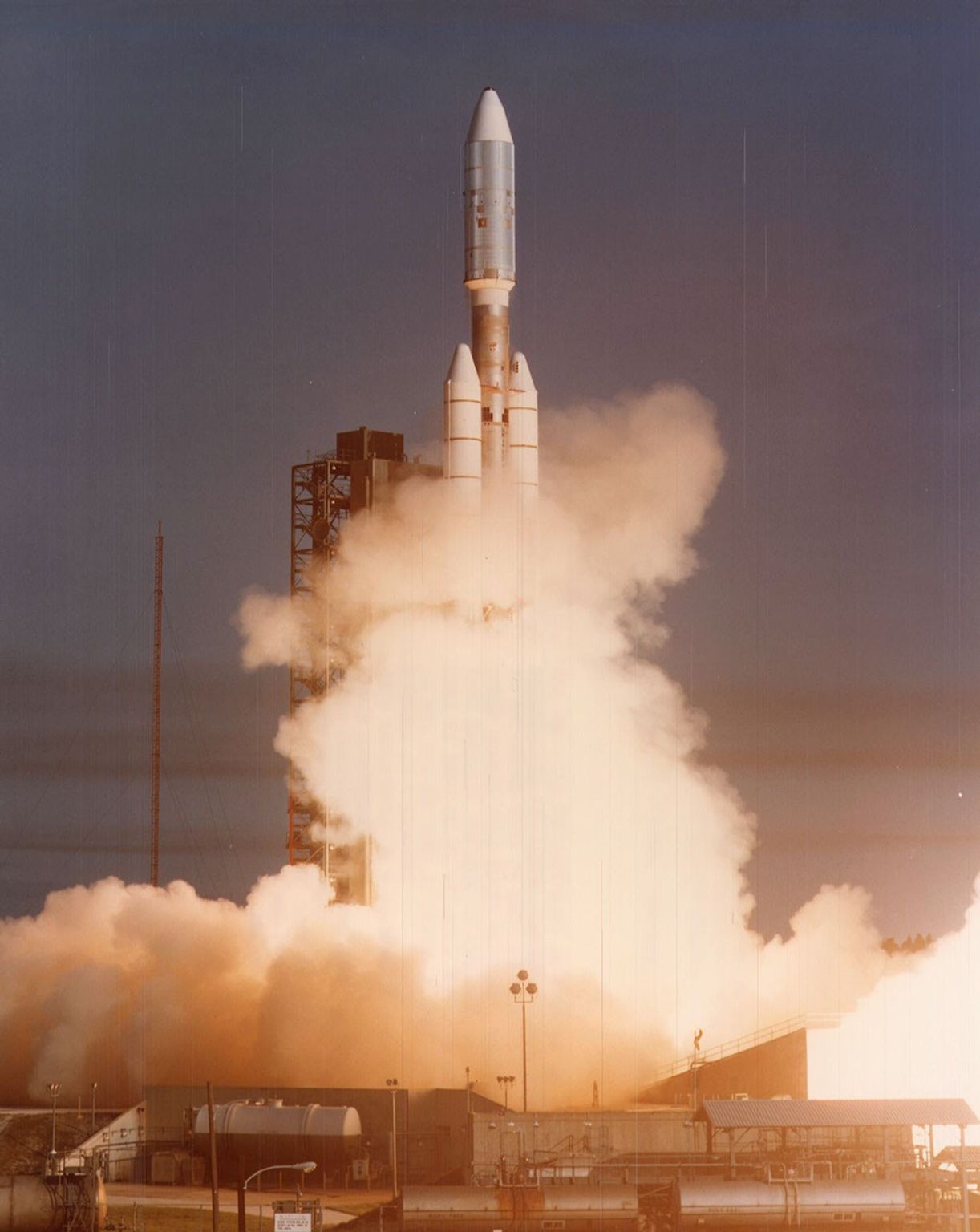
NASA put Voyager 1 in its November 2 skywatching update for a reason that has nothing to do with spotting the spacecraft through a telescope. Its tracking page puts the probe one light-day from Earth at 10:16 UTC on November 18, 2026, roughly 25.9 billion kilometres away. The agency has a separate public event on November 17. That is a celebration date, while the later date is NASA’s forecast for the distance milestone.
A light-day is a unit of distance. Multiply the speed of light by 86,400 seconds and the result is about 25.9 billion kilometres. The reference point here is Earth. The spacecraft does not enter a new region of space when it reaches that distance, and no instrument needs to switch modes for the milestone. What changes continuously as the range grows is the time it takes to exchange information.
That makes the most useful comparison a communications timeline. A command sent at noon would arrive around noon the following day at this distance. If the probe could respond immediately and a ground antenna could receive that response at once, confirmation would come back around noon the day after that. Processing, the spacecraft’s state and the timing of the next usable contact can extend the real wait.
Source notes: 1, 2. Original editorial examples and interpretations are identified separately.
October’s silence shows what a missed contact can tell us
JPL reported on October 29 that the Deep Space Network missed Voyager 1’s signal in two scheduled attempts separated by a day. The signal returned on October 20, one day after the second attempt. Engineers found that one set of thrusters had stopped operating and a backup set had switched on. JPL described that as a programmed fault-protection response and said it was still investigating the cause of the loss of communication.
There are three separate observations here. The antennas initially heard nothing in their scheduled windows. The signal was later reacquired. The team subsequently established that the thruster configuration had changed. Even taken together, those observations leave room for more than one explanation of the interruption. The account does not give a demonstrated sequence from an initiating fault to the missed contacts.
That distinction matters when a team can see only the data the spacecraft sends. An unexpected silence gives operators a symptom before it gives them a diagnosis. If the next useful step requires a command and new telemetry, the answer can arrive days after the question. A well-designed safe state buys time by preserving the spacecraft’s ability to survive and communicate while the team builds a better picture from incomplete evidence.
Source notes: 3. Original editorial examples and interpretations are identified separately.
Distance changes which decisions can wait
Compare a ground-led response with an onboard response. On Earth, a team can examine what the spacecraft sent, compare the behaviour with earlier records and decide whether a corrective command makes sense. An onboard controller has a narrower view and has to follow its programmed rules, but it can act before the ground team even knows there is a problem. The thruster swap illustrates the value of that immediate response while the cause of the interruption remains unresolved.
A useful division of labour puts urgent protective steps aboard the spacecraft and leaves more ambiguous diagnosis to people who can take time to study the evidence. That has a trade-off. A rule has to act on the indicators available at the spacecraft, which can be incomplete. A ground decision can use more context, but even a fast decision can only be based on information from the past. Light-time sets a delay that faster computers on either side cannot remove.
Source notes: 1, 3. Original editorial examples and interpretations are identified separately.
Keeping the signal and keeping the science are separate jobs
JPL reported a different intervention in the same update. In early September, engineers turned off three devices and substituted three alternatives that use less power. They had made the corresponding change on Voyager 2 weeks earlier. The purpose was to give Voyager 1’s remaining science instruments a longer operating window. October’s thruster change was a separate event.
NASA’s instrument table lists Voyager 1’s magnetometer and plasma wave subsystem as on. Those instruments help researchers study the magnetic environment and plasma outside the heliosphere. The cameras have long been off. Receiving a carrier signal tells a team that a transmission has reached Earth. Keeping instruments supplied with power, collecting measurements and successfully returning those data takes more than recovering that signal.
Those distinctions give readers a better way to follow the mission after November 18. Ask whether an update is about contact, about spacecraft health or about science data. An improvement in one category can make the others possible, but each has its own evidence. A restored radio link can give engineers access to telemetry. It does not supply additional electrical power or establish that every planned measurement was collected.
Source notes: 2, 3. Original editorial examples and interpretations are identified separately.
What a later mission update could establish
Tom’s Hardware covered the forecast on November 1, using NASA’s published estimate. Its account gives a separate publication date and confirms how the estimate was reported publicly. NASA’s tracking page remains the source for the crossing time. A more useful follow-up on October’s interruption would be a dated mission account that identifies the trigger and the evidence linking it to the change in thruster state and the missed communications windows.
For the distance milestone itself, the date to follow is November 18. Beyond it, an account of a contact attempt is most informative when it says what the team was trying to measure, whether a signal was received, and what the returned data actually established. Voyager 1 has made the wait unusually visible. The engineering achievement is keeping enough of the spacecraft working for the answers to keep coming back.
Source notes: 2, 3, 4. Original editorial examples and interpretations are identified separately.
Sources & Methods
We read the dated NASA skywatching update, NASA’s mission status and JPL’s engineering report. Tom’s Hardware independently covered NASA’s forecast without independently measuring the range. The simplified signal timeline is our calculation from the stated light-time, not a record of a Voyager command session.
- NASA’s November skywatching update — Primary preview, November 2, 2026
- NASA Voyager mission status and countdown — Primary crossing forecast and instrument status
- JPL report on power and communications — Primary engineering report, October 29, 2026
- Tom’s Hardware coverage of the forecast — Independent coverage by Jowi Morales, November 1, 2026