
October 23 is the announcement date, not the final observation
NASA’s October 23 operations update says Swift entered safe mode on October 20 at about 275 kilometres altitude. An end-of-operations command followed; re-entry was expected in the following weeks. The retrospective separately dates the final observation to October 20.
The distinction is more than calendar housekeeping. A spacecraft can stop producing observations while remaining in orbit; a prediction can remain uncertain after science operations end. Conflating the two encourages a false sense of precision about both the science and the descent.
Our earlier report followed Swift’s continuing science after the planned orbital rescue was cancelled. The new announcement resolves a different question: whether those observations could continue. It does not retroactively turn a September detection into evidence that the rescue worked, nor does it provide a new observation of the final descent.
Source notes: 1, 2. Original editorial examples and interpretations are identified separately.
An observatory needs a usable pointing environment
The operations update links accelerated orbital decline to solar activity and says the return to observing increased drag after an earlier low-drag pause.
The important engineering distinction is between having functioning equipment and being able to make the intended measurement. A sensor does not work in isolation from its platform. If the required view cannot be maintained, a functioning detector alone does not restore the observation.
This is our systems interpretation, not a reconstruction of the spacecraft’s control software. We have no drag model, attitude history or error budget with which to calculate a fresh lifetime. The evidence supports explaining the operational limit, not assigning a precise countdown. A number with extra decimal places would not compensate for missing inputs.
Source notes: 1, 2. Original editorial examples and interpretations are identified separately.
The August decision did not become an October rescue
NASA’s August 19 release said LINK would not capture or boost Swift because of an ongoing attitude-control problem with the servicing spacecraft. Rendezvous and proximity work remained a technology-demonstration objective. That was the historical decision, not an October announcement of a successful orbital lift.
Different milestones answer different engineering questions. Approaching an object does not establish a mechanical connection; establishing a connection would not by itself establish a safe change of orbit. A useful account preserves the demonstrated step without promoting it to a later step that did not occur.
It is therefore possible to recognise value in a demonstration while also recognising that the intended extension of observing time was not achieved. The shutdown should not erase that distinction. Nor should an appealing servicing narrative obscure what readers actually need to know now: this observatory is no longer collecting the next dataset.
Source notes: 3. Original editorial examples and interpretations are identified separately.
The lost capability is a sequence, not just a telescope
The mission retrospective describes a chain in which Swift detected a burst, reported its position and repointed its instruments, typically in about a minute. This is an agency description, not a performance measurement made by Lumacta.
For a changing source, when an observation is made is part of the observation. A later, sharper measurement can be excellent without recovering an earlier state that nobody recorded. That makes reaction time scientifically different from an ordinary image-quality ranking.
Consider an explicitly invented teaching example: a signal has 100 units at one minute and 10 units at ten minutes. An instrument starting at ten minutes cannot determine the first value merely by measuring the second perfectly. An assumed model might estimate it, but an estimate and a recorded measurement are different evidence. These invented values are not Swift data, a universal burst-decay law or a forecast for another observatory.
Source notes: 1. Original editorial examples and interpretations are identified separately.
The surviving archive is an active research resource
NASA’s archive documentation provides observation-log searches, direct retrieval routes, calibration resources and an as-flown timeline. Those are practical entry points for research, not proof that every download produces a new result. The archive’s value is the evidence it preserves and the questions that can still be asked of it.
The difference between an archive and a collection of attractive pictures is context. Which target was selected? What time interval was observed? What instrument state and calibration apply? Without those questions, an apparent change can be misread or an incomplete comparison mistaken for a physical effect.
Our assessment is that preservation has to include the ability to interrogate a measurement, not merely to view it. The existence of a download link is a necessary convenience, not a substitute for understanding the product. We checked the documentation and access interfaces; we did not retrieve a scientific dataset or independently validate its calibration.
Source notes: 1, 4. Original editorial examples and interpretations are identified separately.
How to approach old Swift observations responsibly
The UK Swift Science Data Centre distinguishes its simple target download portal from a fuller catalogue query interface. The latter supports more detailed observation searches; its documentation also distinguishes quick-look products from the main archive. These are documented workflows, not a claim that new observations continue after shutdown.
A sensible starting workflow is to define the question first, identify the target and observation interval, read the relevant product and calibration documentation, and only then choose a retrieval method. Record the identifiers and processing assumptions so that another researcher can understand what was compared.
For a non-specialist reader, the same principle is useful when judging a future headline based on archive data. Ask what was newly measured in the original observation and what has now been newly inferred. Both can matter, but the dates describe different events. A new paper is not necessarily a newly captured sky image.
Source notes: 5. Original editorial examples and interpretations are identified separately.
Replacing the name is easier than replacing the capability
Our reporting does not rank proposed missions or certify that existing instruments close every gap. A mission farewell and a replacement announcement are different kinds of news. Even an announced successor would still need evidence that its promised observing capability was available under the required conditions.
A useful comparison would examine the whole chain: sky coverage, detection, position information, communication, repointing, useful observing bands and the conditions under which each stage works. Matching one specification would not settle all the others. A different design may offer a valuable new capability while leaving a different limitation.
That is an analytical checklist, not a procurement recommendation or a scored comparison. Readers should be wary of both extremes: assuming that every other telescope is interchangeable, or declaring that no worthwhile transient science can happen without this one. The real question is which observations can still be made, and which combinations of timing and information become harder to obtain.
Source notes: 1, 4, 5. Original editorial examples and interpretations are identified separately.
Our assessment: two legacies, two different responsibilities
Swift’s shutdown creates two separate responsibilities: retain the evidence already collected and account honestly for the observing capacity that has ended. An accessible archive supports the first. It cannot, by itself, satisfy the second.
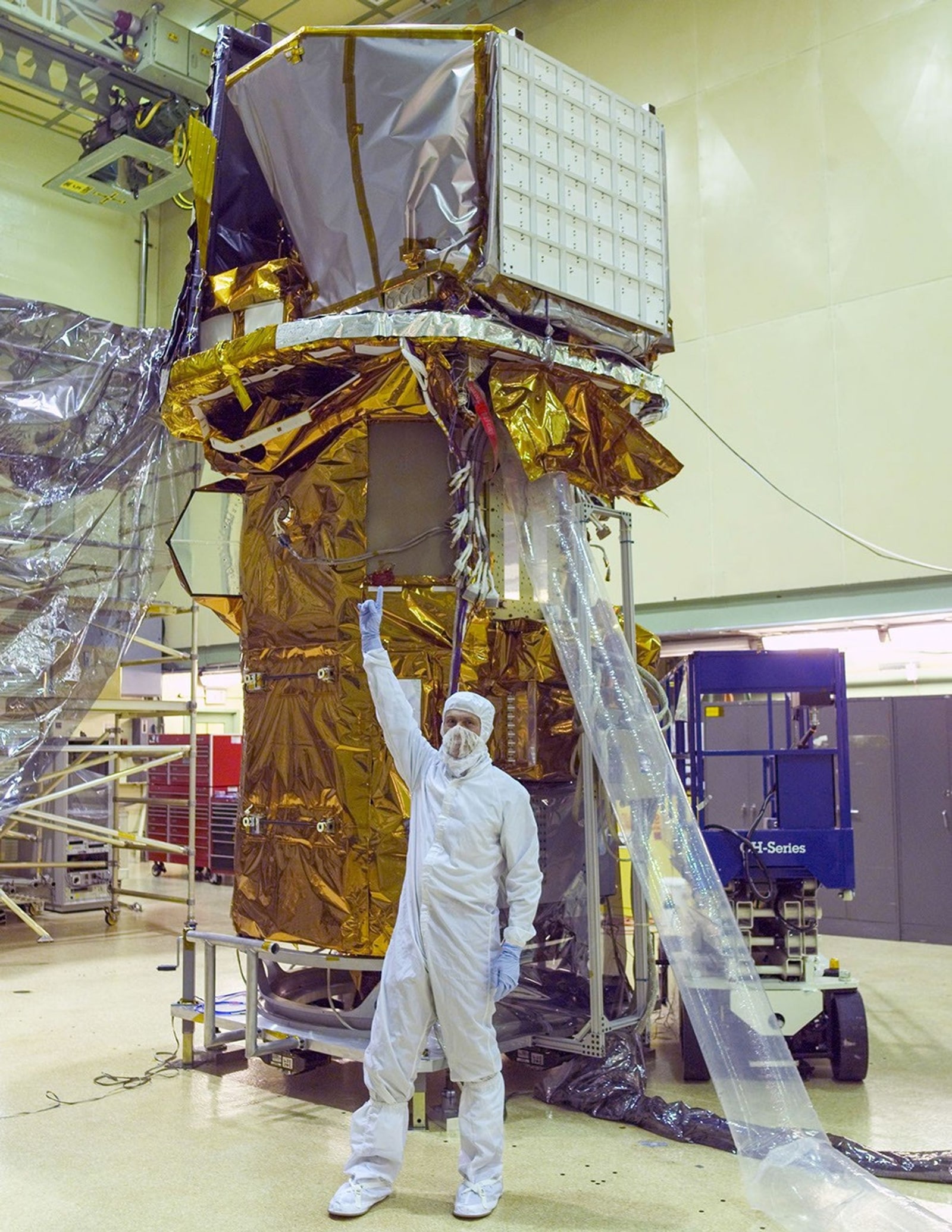
The accompanying photograph is explicitly archive context, not a picture of the current orbit, shutdown or re-entry. A real image can still mislead if its time and purpose are allowed to drift. A documentary-looking frame is not evidence for an event it never recorded.
The strongest future updates will state which capability has changed and provide evidence at the appropriate level. For the descent, that means an explicit current status rather than a recycled forecast. For the science, it means describing what an analysis actually shows. Neither the observatory’s longevity nor the emotional force of its farewell removes those obligations.
Source notes: 1, 2, 4, 5. Original editorial examples and interpretations are identified separately.
Sources & Methods
Prepared October 25, 2026 from the complete bodies of the October 23 NASA mission-end and operations reports, the August 19 servicing release, NASA archive documentation and the UK Swift Science Data Centre data-access documentation. The latter is an operational partner’s primary documentation, not independent confirmation of the shutdown. Announcement, last-observation and expected re-entry dates are separated. The signal example is original reasoning with invented inputs, not a Swift measurement or physical decay model. No interview, hands-on instrument test, telemetry inspection, orbital calculation or science-data reprocessing was performed. The real photograph is explicitly archive context. AI assisted research and drafting under delegated editorial authority; no personal source-by-source owner certification or NASA review, permission for this article, or endorsement is implied.
- NASA: October 23 mission-end retrospective — Primary agency report; complete body and photo captions read; final observation dated October 20, 2026
- NASA: October 23 operational end and re-entry outlook — Primary operations report; complete body read; re-entry forecast is not confirmation
- NASA: August 19 revised commercial servicing plan — Historical primary release; complete body read; cancelled boost distinguished from proximity demonstration
- NASA HEASARC: Swift archive access and documentation — Primary archive documentation; complete page read; last-updated August 12, 2025; not a current mission-status bulletin
- UK Swift Science Data Centre: data access — Primary operational-partner documentation; complete page read; workflows, not an independent October shutdown observation