
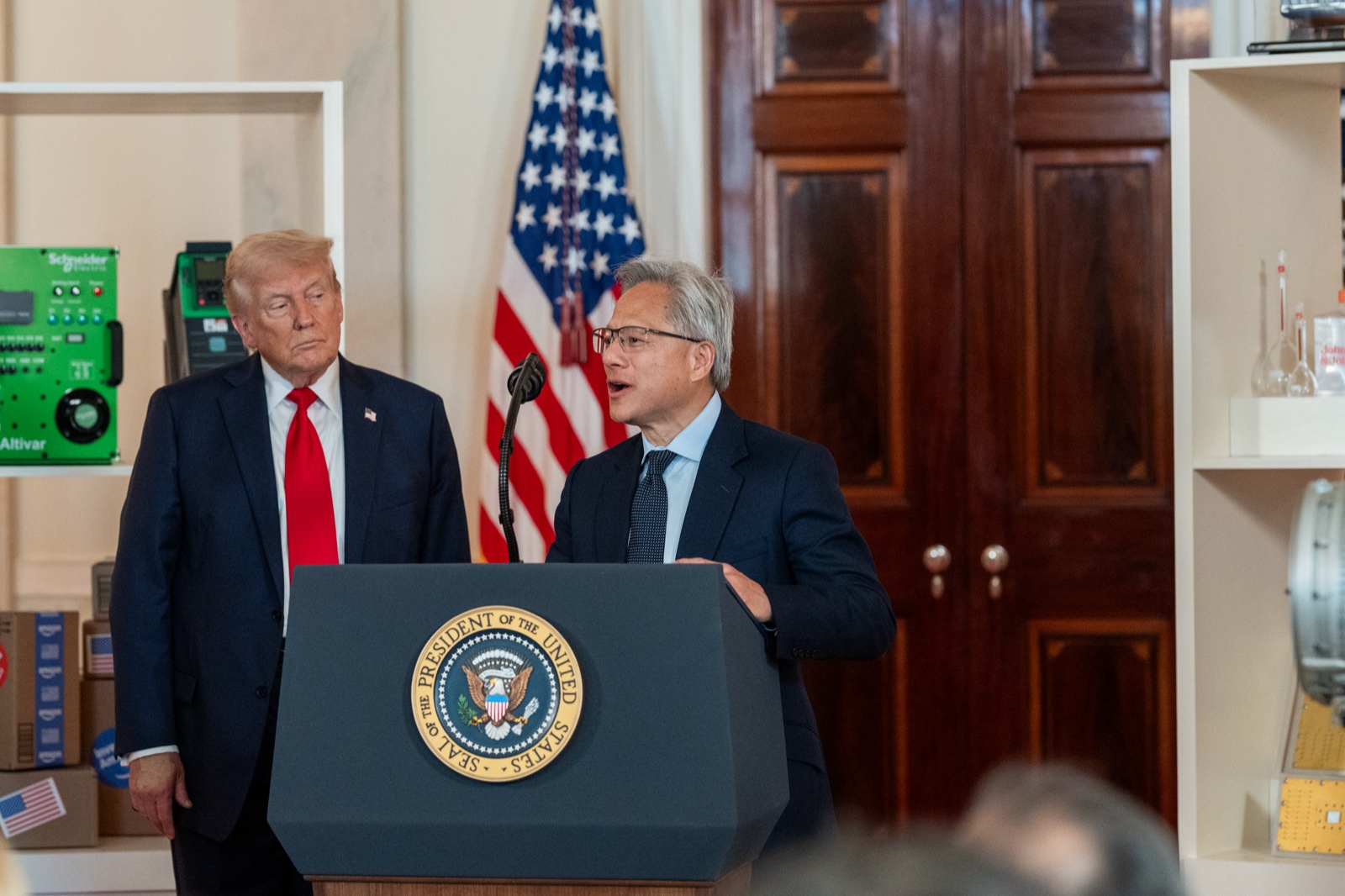
The filing puts the decision a day before the announcement
Jensen Huang is back as Nvidia’s chief executive, president and a member of its board. The company announced his return on Monday, November 23. Its securities filing puts the board’s action on November 22 and says it was effective immediately. That distinction matters because the release describes the news as immediate without putting a separate date on the vote. Colette Kress, who led Nvidia in the interim, continues as chief financial officer and executive vice president. Harvey Jones remains board chair.
Nvidia’s previous filing follows a similar pattern. It dates the acceptance of Huang’s resignation to November 11, one day before the company publicly announced the leadership transition. The two filings trace a short handover in which Kress kept her finance responsibilities and added the chief executive’s duties, then returned to the finance role alone. The latest filing records the personnel change. It leaves the company’s customer contracts, product delivery dates and export permissions to other documents and decisions.
The board reversed a position it had stated in public
At the November 17 earnings call, Jones told investors the board had accepted the resignation and did not intend to bring Huang back as chief executive. He also said Nvidia had hired a search firm to assist with finding a permanent CEO. The Associated Press independently reported that public refusal as part of the sequence leading to Monday’s announcement. The relevant comparison is between a board that had begun looking for a replacement and the same board publicly explaining its decision to restore the founder.
In its latest statement, Nvidia says the directors voted unanimously after meetings and discussions with Huang. It also says their assessment took into account input from senior US government officials. Nvidia published the board’s assessment of the risk associated with reinstatement. The statement gives few specifics about the government advice or the people who provided it. The board took responsibility for the appointment and gave a limited account of how it reached the decision.
That change matters beyond the chief executive’s name. Companies plan through periods of uncertainty by deciding who can make commitments and who reviews them. Nvidia has now answered the first question for its executive leadership. The board’s ability to explain how it reviews difficult decisions is a separate part of the story, especially when an announced position changes within days. A governance structure earns its value through the decisions directors can document and defend over time.
The investigation and the compliance changes have their own timelines
Nvidia says its independent-director investigation continues and that the committee retained outside counsel. The board also describes a separate committee, made up of independent directors, with responsibility for export compliance and national-security oversight. Nvidia’s November 17 announcement named Suzanne Nora Johnson as the oversight committee’s chair and set a minimum of quarterly meetings. In its reinstatement announcement, Nvidia said it was starting a search for a company-wide compliance chief who would report to the board’s nominating and governance committee. The inquiry is in progress. The board has assigned the oversight responsibility to directors, and the executive role remains open while Nvidia searches.
A company can make a leadership decision while evidence gathering continues. The paperwork here supports exactly that reading. The company’s account of the directors’ confidence in the appointment leaves room for the independent committee to continue its work and for the board to disclose what it learns. It also leaves the appointment of a compliance chief to a later step. An announcement of a search establishes an intended reporting line. An appointment and any subsequent public description of the officer’s remit would show how the board put that plan into practice.
What a customer can check
A customer deciding whether to use a particular Nvidia accelerator can read the leadership decision and keep working from the evidence relevant to its order. For a project already planned around an Nvidia stack, the practical documents are supplier availability, support terms, expected delivery and deployment requirements. A team working across borders should establish the product and destination in writing and rely on the applicable rules and approvals. An account of discussions with officials about a CEO’s return offers no order-specific answer on those points.
The practical test is to ask which decisions actually depend on the chief executive. An executive sponsor can make a difference in negotiations over a large infrastructure agreement. Rack readiness still depends on the equipment, power and installation work on the ground. A software team’s choice depends on its deployment environment, dependencies and support agreement. Those constraints operate at different levels, and a large customer has little to gain from collapsing them into a single prediction about Nvidia’s direction.
It is also worth following what the finance team says when it next updates investors. Kress has served through both leadership changes and remains in the finance job. Her position gives analysts continuity in who presents the company’s financial account, while the company can still revise guidance or priorities through the ordinary disclosure process. The November 23 materials settle the question of who runs Nvidia now. They provide limited information about changes to future spending, supply or customer access.
What would change the picture
The next substantive records will be the ones in which Nvidia shows how this arrangement operates. An appointment to the compliance role would fill a position that is currently a plan. A description of the export committee’s work, or findings from the independent investigation, would add evidence that the reinstatement announcement does not contain. Updated delivery commitments and regulatory decisions would speak more directly to customers than a statement about the board’s leadership choice. Follow each of those on its own timetable. It is the clearest way to see which part of Nvidia’s brief transition is over and which questions are still open.
Sources & Methods
We compared Nvidia’s filings and public statements with Associated Press reporting. The article focuses on the board’s actions and distinguishes those from its pending work.
- Nvidia’s announcement of Huang’s reinstatement — Company statement issued November 23, 2026.
- Form 8-K on Huang’s reinstatement — Nvidia filing dated November 23 with the November 22 board action.
- Form 8-K on the November leadership transition — Nvidia filing dated November 12 with the November 11 board action.
- Nvidia’s November 17 earnings call transcript — Investor-relations recording transcript of the chair’s then-current position.
- Associated Press on the leadership reversal — Independent timeline and context by Kelvin Chan and Barbara Ortutay, November 23.
- Official White House archive photograph — Source caption, photographer, May 1 upload, April 30 capture and government-work designation.
- White House copyright policy — Official government work and attribution guidance.
- Nvidia’s export oversight committee announcement — November 17 investor-relations release on the committee’s remit, membership and schedule.