
The new commitment is development and delivery
NASA said on November 7 that it is moving forward with PROMISE, a nuclear-powered lunar rover. It targets a late-2028 launch and an 18-month mission. Blue Origin received a $94 million base contract for delivery, with a performance-based option worth another $140 million.
Those figures establish an announced procurement decision and a target, rather than a completed spacecraft or a successful landing. The useful next question is which evidence will connect the award to an integrated vehicle, an accepted delivery system and a functioning surface mission. Lumacta reviewed the published announcement and technical descriptions; we did not inspect the award instrument or test hardware.
Source notes: 1.
Hardware heritage starts a qualification question
NASA's mission page says the vehicle will combine a Curiosity test-bed structure and mobility system with additional Curiosity and Perseverance parts and a flight-spare multi-mission radioisotope thermoelectric generator. Its destination is the lunar South Pole. The planned payload includes a roughly one-metre drill, spectrometers, environmental sensors, cameras, radiation-tolerant computing and autonomy technology.
NASA says it has assessed the hardware's compatibility with the lunar environment; that is an agency assessment, not Lumacta testing.
For a reader assessing that approach, the component history and the new mission requirements should be separate columns. A previously built part can offer useful design knowledge without documenting every condition of the new assembly. Which pieces are retained, which are modified, and which checks must be repeated are more informative questions than whether the rover is simply 'reused'. That is an engineering review framework, not a finding that this vehicle has passed or failed a particular test.
Radioisotope power needs a precise description
The U.S. Department of Energy explains that radioisotope systems convert heat from the natural decay of plutonium-238 into electrical power. Thermocouples provide that conversion in an RTG. NASA's technology overview distinguishes these generators from other space nuclear technologies, including reactors and propulsion concepts, and describes MMRTGs as sources of both electricity and useful heat.
That distinction keeps the power source from becoming a vague performance claim. A review should ask how the available electricity is allocated, which activities can run together, how the thermal design is verified and what happens when the operating plan changes. The word 'nuclear' does not answer those questions. Nor should a familiar generator name be treated as a complete specification for the surrounding vehicle.
A delivery award and a rover are different responsibilities
The announced delivery uses Blue Origin's Mark 1 lander. NASA places the mission within its initial Moon Base activity. The delivery award is not a disclosed all-in price for building and operating every part of the rover programme. Likewise, a conditional option should remain visibly conditional when describing the public figures.
A practical way to follow the project is to keep a responsibility map: who supplies the rover, who integrates the payload, who provides the lander, and who accepts each interface. If one milestone changes, readers should look for the effect on the neighbouring milestone instead of assuming that every part of the programme moved together. This is an analytical reading method; it is not a prediction that any named supplier will miss an obligation.
Source notes: 1.
The measurements matter more than the rover label
The mission description makes surface and subsurface characterization and resource prospecting its objectives. An objective is the question a mission intends to investigate. It should not be rewritten as a finding that a resource has already been mapped, measured at a landing site or shown to be economical to use.
For the computing and autonomy work, useful future evidence would connect an observed capability to its test conditions. What terrain was represented? Which failure cases were considered? When would the vehicle stop and wait for instructions? What records would allow the team to reconstruct a decision? These questions make an autonomy demonstration easier to assess without inventing a speed, reliability figure or level of human independence that the reviewed announcement does not establish.
Source notes: 2.
How to read the next progress report
Keep four kinds of update distinct. A design decision defines what the team intends to build. An integration report describes what has been assembled. A qualification result explains what was examined and under which conditions. An operations report describes what happened during use. Each is useful, but evidence from one category should not silently become proof in another.
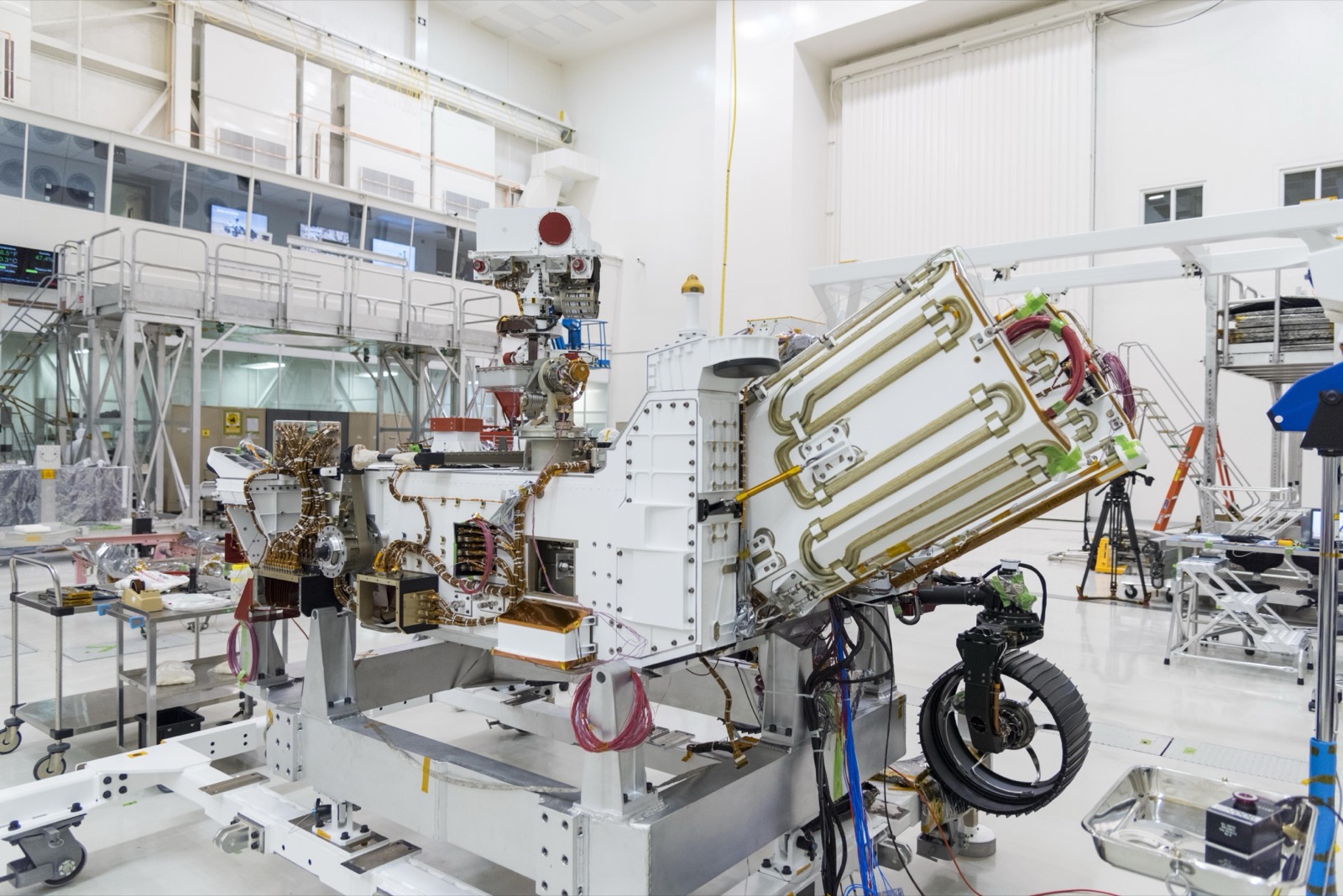
A concise progress record would preserve the original target, the newly reported milestone, the supporting document and any remaining limitation. If an update supplies a photograph, check what equipment it actually depicts and when the image was made or released. The archive photograph accompanying this article illustrates earlier rover engineering; it is not an image of the future lunar vehicle or a test of the new mission.
For now, the defensible conclusion is bounded: an important agency commitment has been announced, while the evidence for completed PROMISE integration, delivery and surface performance remains ahead. Following those separate steps will tell readers more than treating a target date as an accomplished result.
Sources & Methods
Lumacta read the November 7 agency release and mission page, checked the power-system explanation against Department of Energy documentation, and verified the archive photograph separately. The two agencies corroborate the general technology, not a completed mission. We did not inspect contract instruments, visit a test facility or independently validate hardware. AI assisted source research, explanatory analysis and drafting.
- NASA, Moon Base transportation and technology awards — Primary agency announcement dated November 7, 2026; award, delivery and target statements
- NASA, PROMISE mission description — Primary mission scope, hardware heritage and payload description; updated November 7, 2026; future mission
- U.S. Department of Energy, What is a Radioisotope Power System? — Independent institutional technical cross-check, February 16, 2021; not a verification of the new contract or flight hardware
- NASA Science, Radioisotope Power Systems technology overview — Official technical background, updated April 28, 2025; distinguishes generation, heating and other nuclear technologies
- NASA/JPL-Caltech, Power for Mars 2020, PIA23305 — Exact archive-photo provenance, released July 24, 2019; capture date is not asserted