
The central question
Elon Musk says Cybertruck orders are arriving faster than Tesla can build the vehicle before its planned production-line shutdown. In a November 9 post, he said the company would try to complete as many orders as possible over roughly eight months and expected to return many deposits.
The statements create a striking final act: an intended production increase ahead of an intended exit. The useful question is how a finite run of remaining orders fits into a much larger manufacturing ambition. That distinction matters more than choosing between celebratory and hostile reactions to the truck.
This is a planned change to a specific production line. It is not an immediate shutdown, a closure of the entire Texas factory or evidence that every owner will lose support. Those stronger claims would require their own announcements.
Source notes: 17.
What readers still need to know
Tesla is preparing to wind down Cybertruck production at Gigafactory Texas around mid-2027 to expand Cybercab output, Elon Musk said on November 6.
A day later, Musk proposed an additional shift, saying outstanding orders exceeded what Tesla could build before dismantling the line around June or July. He did not publish an order count.
Reuters also reported the November 7 extra-shift plan. Its story describes an attempt to complete outstanding orders before the Cybercab expansion, rather than a reversal of the earlier wind-down announcement.
The November 9 post describes an order rate and a production rate. It supplies no figures for either. A rate is not the size of the outstanding queue, and an expectation of deposit returns does not establish that refunds have already occurred.
A backlog is a stock measured at a moment; sales are a flow measured over a period. Neither tells the whole story alone. A queue can be meaningful for a short remaining production window without establishing demand for a very large factory operating indefinitely. Equally, earlier outcomes do not determine whether a new queue is real.
For a useful follow-up, Tesla would need to disclose how many orders are firm, which configurations they cover, the planned build rate and the cancellation rules. Without those details, readers cannot convert the backlog statement into months of work, a guaranteed final delivery or a new annual sales forecast.
A proposed extra shift is an operational intention. We have not verified that a new shift has begun or measured its output. The future calendar should therefore remain visible throughout the story: a target can guide planning without becoming an accomplished result.
The “10%” headline combines different kinds of numbers
Electrek’s roughly one-tenth framing compares an estimated annual pace with an earlier 250,000-unit ambition. The outlet estimates 7,000–8,000 Cybertrucks within Tesla’s latest quarterly aggregate, then annualizes that estimate to about 30,000. That is Electrek’s reconstruction, not a company model-specific delivery disclosure.
Contemporaneous Reuters reporting from October 2023 described Musk’s potential annual capacity of 250,000 in 2025. It is useful as a historical ambition. We have not independently audited the original earnings-call audio for this article.
Tesla’s Q3 2026 update lists installed annual Texas capacity above 125,000 for Cybertruck, with a separate above-125,000 Cybercab entry. The company explicitly distinguishes installed capacity from its current production rate.
The October 2 delivery release reports 8,295 vehicles in Other Models. That company-wide category is not a Cybertruck-only count and is not an estimate of US retail sales.
The difference is not a technicality. An aspiration asks how large a program might become. Installed capacity describes facilities and equipment under stated assumptions. Production records what is built. Deliveries and retail estimates describe different paths into customers’ hands. A percentage becomes informative only after the numerator and denominator describe compatible things.
A factory utilization graphic would need actual line output and an appropriate capacity measure for the same period. An illustrative chart dividing partial-year sales in one country by annual factory capacity would look decisive while mixing geography, duration and measurement. We are not presenting that calculation as evidence.
Reading estimates responsibly
Cox/Kelley Blue Book estimates Cybertruck US sales of 4,323 in Q3 and 11,586 in January–September 2026, down 19.7% and 28.0%, respectively; the overall Q3 battery-electric market fell 39.5%.
Broader weakness complicates a Cybertruck-only explanation without validating the program’s original scale ambition.
Reuters quoted former Aston Martin chief executive Andy Palmer judging the wind-down rational if a model misses its targets. In the same report, analyst Felipe Munoz placed Cybertruck within a wider electric-pickup problem. Those are expert interpretations reported by Reuters, not interviews conducted by Lumacta.
A useful comparison should show its measurement boundaries. Matching geography and periods makes a stronger argument than an oversized headline percentage.
What “making room” can mean—and what it does not prove
Musk also disputed the idea that Cybertruck is unprofitable. He described the switch as a choice about the incremental value of Cybercab production. That is his explanation of the decision, not an audited model-level financial result.
Electrek argues that insufficient demand, rather than literal floor space, explains the decision. That is an attributed interpretation. It is not an independently demonstrated account of Tesla’s internal capital-allocation decision.
Consider a generic factory decision. Available space is only one resource. Two projects may compete for installation time, specialist tooling, maintenance teams, component supply, engineering attention and the money needed to keep each line viable. These are possible decision variables, not a report that we have inspected Tesla’s bottlenecks.
There is also a difference between the attractiveness of the next vehicle built and the attractiveness of keeping its program alive for years. A manufacturer might accept remaining orders while declining the next round of investment. Filling a queue and abandoning a long-term volume ambition can coexist without requiring either statement to be false.
The same reasoning cuts the other way. Redeploying a line does not demonstrate that its replacement will earn more. It establishes a choice of opportunity and risk. To assess that choice, readers need results from the replacement, rather than an assumption that a newer technology label guarantees a better business.
We cannot calculate Cybertruck’s lifetime profit or loss from the reviewed disclosures. A precise multibillion-dollar program loss would require model-level revenue, cost and investment information that this investigation has not established. It would be misleading to dress an estimate or opinion as an audited result.
Cybercab changes the question Tesla must answer
Tesla says its Cybercab robotaxi rides began in Austin on September 3. That is the company’s account in its Q3 update; this article does not independently measure the service’s safety, utilization or profitability.
A personally owned truck is evaluated around the work and travel of its owner. A transport service must also be assessed through the operation of a fleet. A proposed evaluation would ask how often vehicles carry paying passengers, how long they remain unavailable and what it costs to support each useful trip.
Those questions include cleaning, charging, maintenance and handling situations in which a trip cannot proceed normally. They are analytical questions for judging a service, not claims that we have observed a particular Tesla intervention rate or cost structure. A factory plan answers none of them by itself.
The strongest evidence for the pivot would connect manufacturing milestones to repeatable service outcomes: documented deployment, clearly described operating conditions, transparent incident reporting and economics that can be assessed over time. None should be inferred merely from a promotional demonstration or a capacity table.
Source notes: 3.
A regulator’s file makes the next bet more concrete
NHTSA announced its Cybercab self-certification investigation on September 4. The agency said it would assess the technical basis for compliance with federal vehicle standards, including Tesla’s treatment of requirements designed around human controls.
Question 8 of the September 10 special order asks how compliance with each applicable standard was determined, including whether Tesla used engineering analysis, physical tests, simulations or other methods.
A public file note created October 30 says the remaining documents responsive to that question carry a manufacturer confidentiality request covering each document in full. A Tesla letter dated the same day marks its entire file confidential.
SDV Sector highlighted these filings on November 6. We followed its links and read the underlying records. The public note establishes a limit on what readers can inspect; it does not establish that Tesla lacks evidence, that the agency accepted its case or that the vehicle violates a standard.
That distinction gives the factory pivot a concrete second test. A bigger manufacturing commitment is one decision; resolving the questions in a certification file is another. This article makes no finding of illegality and does not treat an inquiry as a final enforcement outcome.
For owners, a dated record is more useful than a prediction
There is a concrete quality record to examine. Tesla’s March 18, 2025 recall report, campaign 25V-170, covered 46,096 potentially involved Cybertrucks for exterior cant-rail panels that could detach. The report describes replacement assemblies as the remedy. This is historical context, not a newly announced November recall.
A recall population is not a count of confirmed failures or proof that an individual vehicle remains unrepaired. Adding overlapping campaigns together would not produce a count of uniquely defective trucks either. An owner needs the status of the actual vehicle, rather than a total assembled for a dramatic headline.
Tesla’s current warranty page lists basic coverage of four years or 50,000 miles, and Cybertruck battery/drive-unit coverage of eight years or 150,000 miles, whichever comes first in each case, subject to its terms. The page directs owners to the warranty supplied with their vehicle as authoritative.
For an ownership check, collect that vehicle-specific document, the recall completion record, a current repair estimate and the written delivery terms for any pending order. Ask specifically about the parts and service work relevant to that vehicle. These are practical questions, not a promise of future parts availability or a conclusion about the value of keeping or selling a truck.
Editor's view: what would change our assessment
Our assessment is that Tesla should be judged by the value its next investment can deliver, rather than by defending the scale once promised for a single vehicle. Redirecting resources could be a sensible decision. It would become persuasive if it produces a useful service while treating existing buyers responsibly. We would not award the replacement a commercial victory in advance. That is our editorial judgment, not knowledge of Tesla’s internal calculations.
One possible path is execution of the stated exit plan. If that happens, dated operational evidence and clear outcomes for remaining orders would be the next useful tests. Completing that transition would demonstrate delivery against a plan; it would leave the replacement’s business case to be assessed.
Another is a changed timetable or production arrangement. A new, specific company statement followed by observable manufacturing activity would justify revising this assessment. Rumours about another factory or an unnamed reprieve would carry less weight.
The third concerns the next bet itself. Even if Cybercab manufacturing grows, we would still want documented operating conditions, service outcomes and economics that can be examined. A successful factory ramp would answer a manufacturing question. It would not settle every question about the service or the consequences for truck owners.
The proposed final shift and expected deposit returns sharpen the immediate question: which remaining orders can actually be fulfilled? The larger question is whether resources committed to the next project produce a stronger result. Both deserve evidence after the headlines move on.
Sources & Methods
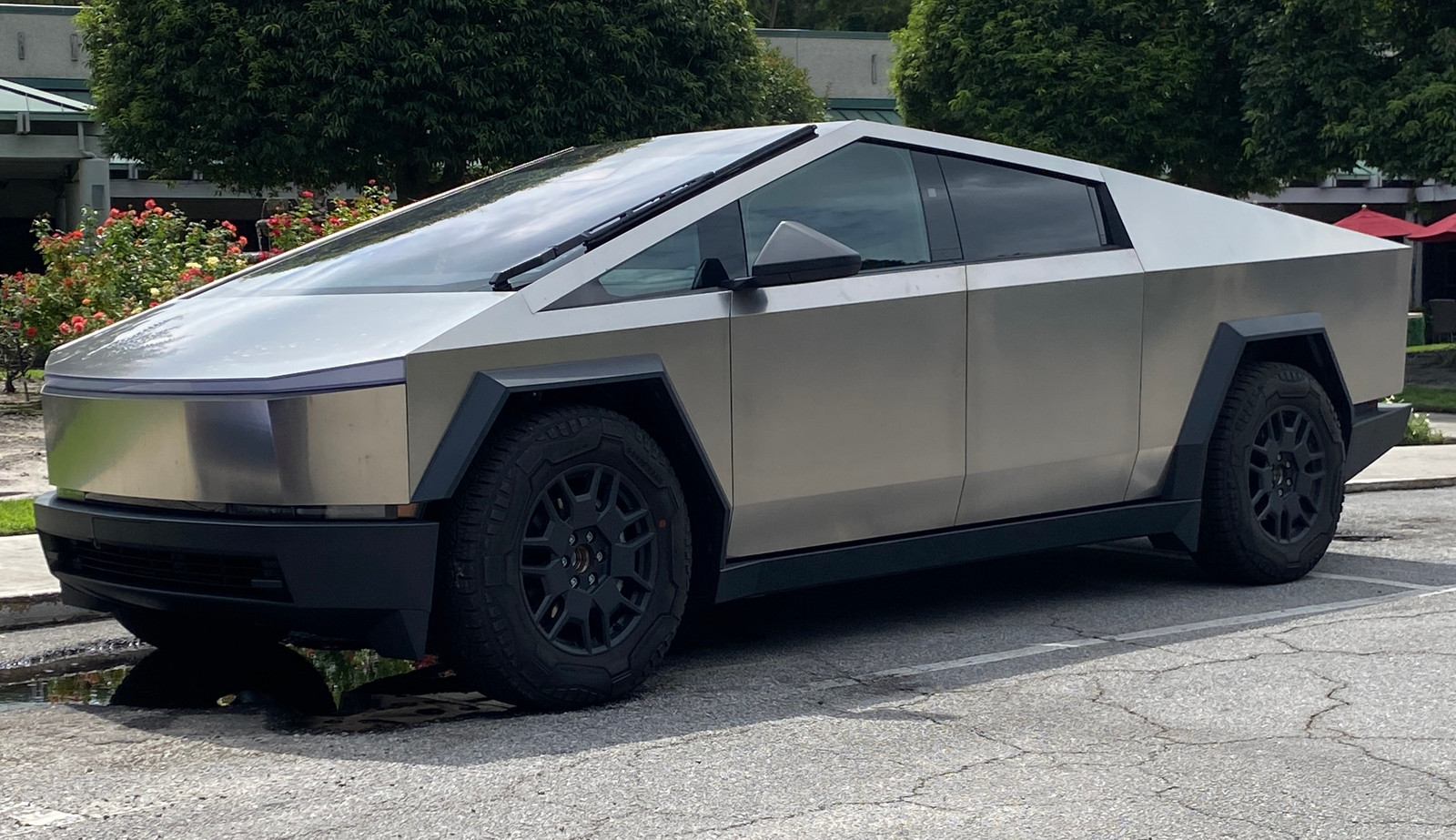
AI-assisted reporting and analysis, checked November 9, 2026. Original management statements are attributed claims; corporate disclosures, independent estimates and regulatory records retain their distinct scopes. Lumacta conducted no vehicle test, factory visit or interviews. The final section is editorial judgment and conditional scenarios. The archive photograph is context, not a current production image.
- Musk: November 6 — Primary statement
- Musk: November 7 — Primary statement
- Tesla Q3 update — Company disclosure
- Tesla delivery release — Company disclosure
- Cox/KBB US estimates — Independent estimates
- Electrek analysis — Secondary reporting
- Reuters: November 7 — Secondary reporting
- Reuters: October 2023 — Historical reporting
- Tesla recall 25V-170 — Regulatory filing
- Tesla warranty — Company documentation
- Reuters: November 6 — Secondary reporting
- NHTSA investigation — Regulator announcement
- NHTSA special order — Regulatory record
- NHTSA file note — Regulatory record
- Tesla confidentiality letter — Public filing
- SDV Sector reporting — Secondary lead
- Musk: November 9 — Primary statement