
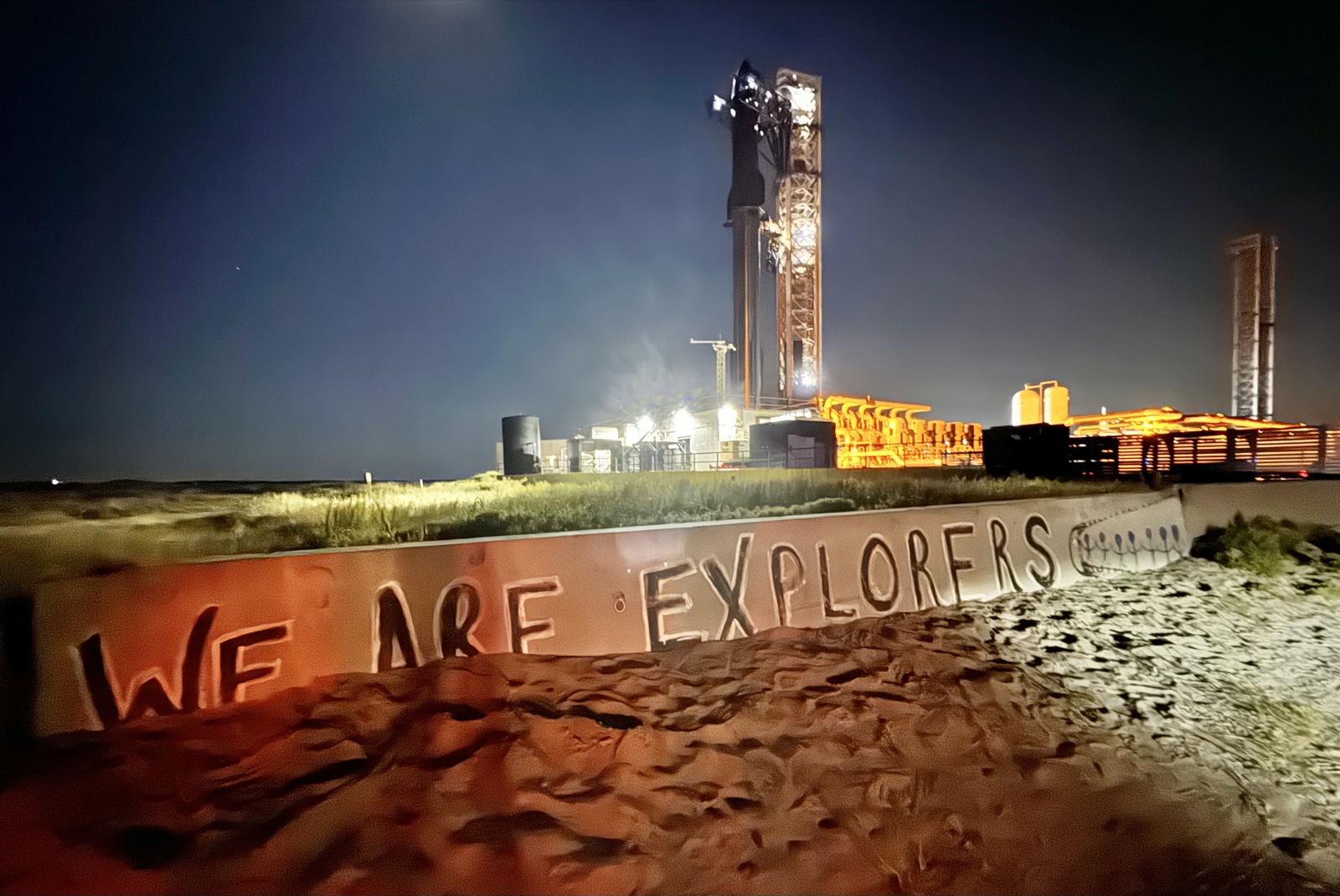
Starship comes back to Starbase
SpaceX caught the upper stage of its Starship rocket at its launch tower in South Texas on Saturday, November 14. Flight 15 put the spacecraft into orbit, released 26 Starlink satellites and brought the upper stage back to Starbase roughly 22½ hours after liftoff. The Super Heavy first stage diverted offshore minutes after Friday’s launch and was lost, leaving the test with one of the two planned recoveries.
The milestone belongs to the ship above the booster. SpaceX has previously caught Super Heavy, which separates early in flight and heads back without going into orbit. The upper stage completed 14 circuits of Earth, then had to shed orbital speed, make a controlled descent and reach a precise point beside the tower. Its recovery means engineers can inspect flight hardware exposed to an orbital return.
Flight 15 lifted off at 4:47 p.m. Central time on November 13, or 22:47 UTC, according to Aerospace America and Space.com. SpaceX announced the catch shortly after 21:20 UTC the following day. AP photographer Eric Gay documented the ship’s return at Starbase.
What the tower catch proved
Flight 14 in September had taken Starship to orbit and delivered the same number of next-generation Starlink satellites. Its upper stage ended that mission in the Pacific. Flight 15 repeated the orbital delivery and carried the next test through to a tower catch.
The ship lit a single engine to leave orbit. As it descended, the heat shield faced the airflow. Near the ground, the ship used its engines to swing upright and slow down before the two tower arms took its weight. On the ground, engineers can test the heat shield, flight control and tower hardware separately. The return made all three work in sequence on one spacecraft.
The catch changes the quality of the evidence available after landing. Cameras can show a patch of missing tiles or visible damage. With the hardware back, technicians can compare telemetry with physical evidence and measure damage that exterior cameras miss. They can look at the fasteners beneath tiles, inspect joints around moving surfaces and check whether the engine bay and wiring stayed within acceptable temperatures. What they find will determine how much work the ship would require before a second flight.
The booster’s abort kept it away from the tower
Super Heavy started its return maneuver after separation. SpaceX said during Saturday’s webcast that preliminary indications pointed to a low fuel mass alarm ending the boostback burn early. The company said the guidance system then detected the booster was out of position for the approach and aborted the catch. The booster took an offshore trajectory and was lost in the Gulf.
The alarm gives investigators a place to start. The explanation remains provisional until investigators can trace why the signal appeared. A useful follow-up from SpaceX would explain why the burn stopped early and which flight data support that conclusion. It would also clarify what the vehicle would do if it saw the same signal again.
A catch attempt sends a rocket toward the structure used for launches. Diverting offshore protects the tower when the booster’s position falls outside the conditions required for recovery. The launch site remains a resource each stage depends on. A recovery sequence that works on a quiet test day also has to hold up when a flight is delayed, one stage is diverted or the landing hardware needs inspection.
The next milestone is a second flight
A tower catch ends a flight and starts a maintenance job. The operating question is how many hours that job takes, what has to be replaced and which checks still require specialist crews. A ship that takes months to inspect can produce valuable engineering data. A ship that can fly on a predictable schedule opens a different commercial case, especially when a customer needs to launch again after a delay.
Look at the sequence over several missions. First, can an upper stage repeat the orbital catch? Then, can SpaceX launch a previously caught ship again and describe the repairs between its flights? Finally, can the company recover both stages from the same mission while keeping the tower available for the next launch? Those milestones would connect a single successful landing with repeatable service.
A launch provider would measure the time from landing to clearance for another flight. That interval includes access to the ship while it hangs on the tower, the time it takes to inspect it and any work needed to release the tower for another vehicle. The inspection log would also reveal which repairs recur across flights. A single short turnaround would be encouraging, especially if a second vehicle could repeat it with the same maintenance procedure.
For Starlink, the deployment was already useful because satellites were placed in orbit even though the booster was lost. For customers judging Starship as a reusable transport system, the recovery record matters alongside performance in orbit. The most revealing details from the next test could come before liftoff, when SpaceX identifies which hardware has already flown and how long it took to prepare it.
Sources & Methods
We compared SpaceX’s updates for each recovery attempt with reporting from Aerospace America, the Associated Press and Space.com. SpaceX’s Flight 14 report establishes which orbital milestones preceded the catch.
- SpaceX announces the Flight 15 upper-stage catch — Primary mission operator update
- SpaceX announces the Super Heavy diversion — Primary mission operator update
- Aerospace America reports the catch and mission sequence — Independent aerospace reporting
- AP reports the catch with on-site photographs — Independent reporting and photographic confirmation
- Space.com’s live coverage of Flight 15 — Independent reporting with launch and landing updates
- SpaceX’s summary of Flight 14 — Primary mission operator report
- We Are Explorers by Steve Jurvetson — Original archive photograph and attribution