
A new paper reports an earlier experiment
SLAC announced on October 29 that a team led by Daniel Jost had found a chiral magnetic signature in manganese telluride, or MnTe. The laboratory presents the finding as experimental confirmation of altermagnetism. Its account dates the first experiment to 2024 and a repeat to early 2025; October 29 is the reported Science publication date.
The distinction matters when reading a discovery headline. A paper can be new while its measurements are older. Here, the timely development is the published research and the institutions’ explanation of its significance. It is not a claim that an experiment happened this week, or that an industrial component has just become available.
Source notes: 1, 2. Original editorial examples and interpretations are identified separately.
Magnetic order can exist without an overall magnetic moment
The 2022 Physical Review X perspective by Libor Šmejkal, Jairo Sinova and Tomas Jungwirth provides the useful starting point. It describes materials that combine antiparallel magnetic order and vanishing net magnetization with spin-dependent electronic behavior more commonly associated with ferromagnets. A classification based on spin symmetry identifies altermagnetism as a distinct phase.
This is a statement about internal organization, rather than how strongly a specimen attracts an everyday object. Adding the magnetic contributions together and asking how electrons behave are different questions. A zero total need not tell the complete story about the arrangement underneath it.
For a technology reader, that distinction helps separate a materials classification from a device specification. The category describes which responses may be possible. A particular memory, sensor or information-processing element would still need an implementation, a defined operating condition and a measured result.
Source notes: 3. Original editorial examples and interpretations are identified separately.
The measurement asks a question ordinary inspection cannot answer
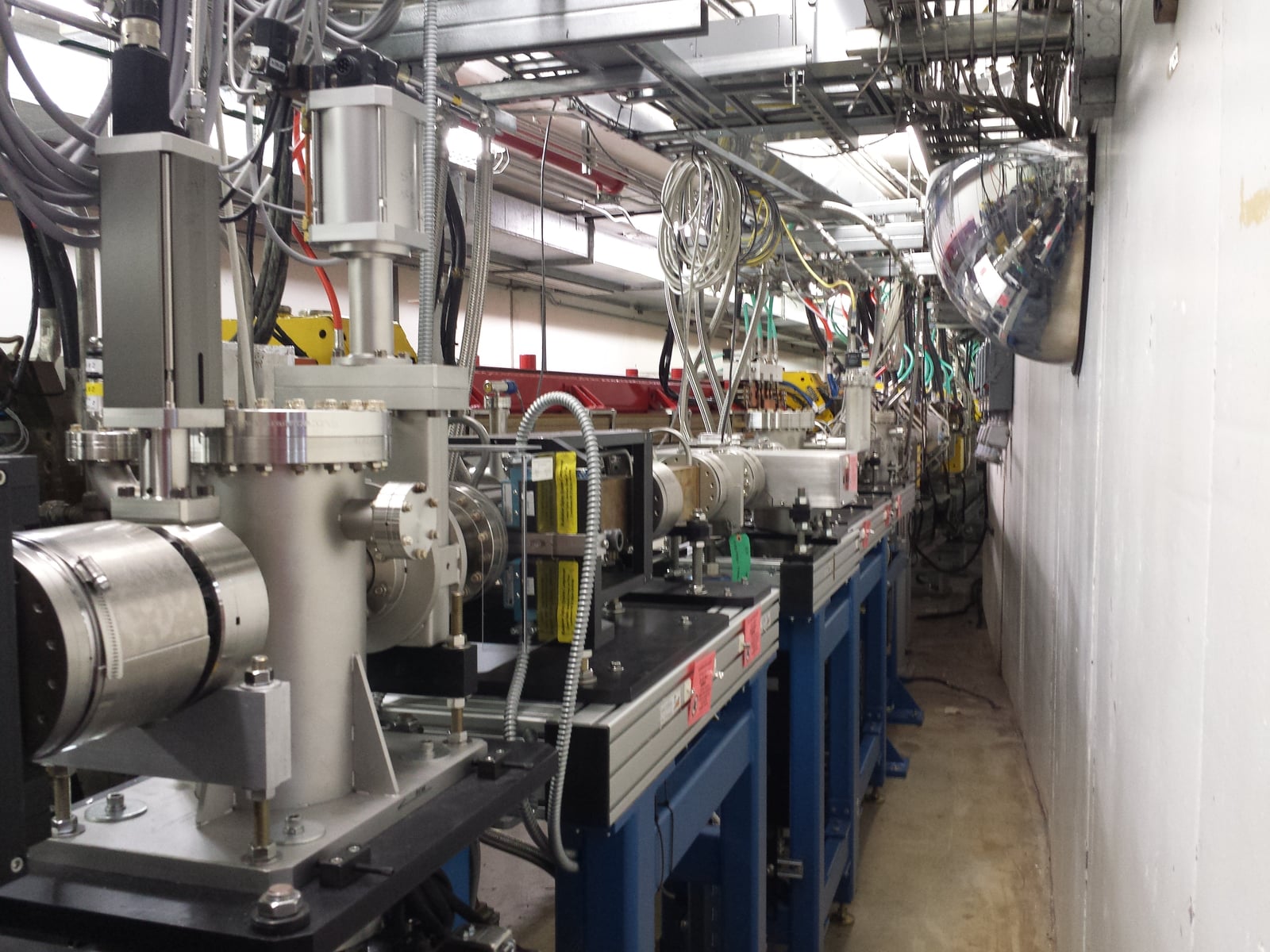
The SLAC and ESRF accounts describe comparing MnTe’s response to left- and right-circularly polarized X-rays at ESRF’s ID32 beamline in France. They attribute the observed difference to chirality associated with the proposed magnetic order. The claim concerns a distinguishing physical signature, not a photograph of a finished electronic circuit.
ESRF’s separate instrument documentation explains why ID32 is suited to this kind of question. It supplies controllable polarized soft X-rays and supports measurements of electronic structure and magnetism. Its resonant inelastic X-ray scattering description emphasizes that incoming and outgoing photons can probe magnetic and other excitations.
Our reading is that experimental selectivity is central to the story. A convincing classification needs a measurement that distinguishes competing explanations, rather than a striking signal alone. Understanding what an instrument is sensitive to helps identify what its result can establish and which further conclusions require other measurements.
Source notes: 1, 2, 4. Original editorial examples and interpretations are identified separately.
A separate electrical result addresses a different part of the problem
An October 28 CIC nanoGUNE report offers relevant context without independently repeating the MnTe experiment. It concerns manganese silicide, Mn₅Si₃, and a different Nature paper. That team reports generating a spin current and detecting the associated magnetic information electrically, using a device with a 300-nanometer separation between the altermagnet and detector.
The nanoGUNE account says reversing the material’s magnetic order also reversed the detected signal. It identifies lower-energy electrical switching and room-temperature device operation as remaining challenges. Those details belong to that device and that material; they cannot be imported into the MnTe study as though they were one combined demonstration.
The comparison shows why a field can advance through different experiments. Establishing a material’s magnetic character, extracting a signal and controlling a useful state answer connected but separate questions. Progress on one strengthens the research program without automatically completing the others.
Source notes: 5. Original editorial examples and interpretations are identified separately.
A strong institutional claim still has a defined evidence boundary
Lumacta read the SLAC account, the ESRF collaborator account, instrument documentation, the earlier theoretical perspective’s abstract and nanoGUNE’s report. The current Science full text was inaccessible during our check. We therefore cannot claim to have independently assessed its complete methods, controls or raw data.
The Stanford republication and ESRF description are accounts of the same collaboration, rather than independent replications. Likewise, a news page repeating a laboratory statement adds visibility, but does not become an additional experiment. Readers should count distinct measurements and research teams, not the number of websites carrying the announcement.
A useful next reading step is to examine which alternative explanations the paper tests, which observations depend on its chosen conditions and what another group would need to reproduce. These are questions we would put to the evidence, not deficiencies we have established in an inaccessible paper.
Source notes: 1, 2, 3, 4, 5, 6. Original editorial examples and interpretations are identified separately.
The practical test is a complete operation, not a promising label
Our technology assessment would begin with a task: store a state, change it deliberately and recover the correct information afterward. The requirements should be declared before selecting the most attractive demonstration. A material’s classification is one input to that assessment, alongside the surrounding equipment and the way the state is addressed.
For any claimed energy advantage, we would ask what was included in the measurement boundary. Preparing the state, controlling its environment and reading the result should be distinguishable from the material’s response alone. Without a comparable task and boundary, a promising mechanism cannot supply a meaningful system-level saving.
Reliability would require its own evidence. A useful comparison would report repeated operations, unsuccessful outcomes and variation between specimens, rather than only a favorable trace. These are proposed evaluation criteria, not tests Lumacta performed or results reported for this MnTe experiment.
The immediate value of the announcement is a more specific experimental case to investigate. It gives researchers and technically interested readers something better than an application forecast: a physical claim, an identified material and a measurement to scrutinize. Faster or lower-power products remain a separate engineering proposition.
Source notes: 1, 5. Original editorial examples and interpretations are identified separately.
Sources & Methods
Prepared October 31, 2026. We independently read the primary institutional accounts and background sources listed below. Stanford and ESRF reproduce the same collaboration’s account and are not independent replications. The current Science full text returned an access error; the separate Nature paper also redirected to an inaccessible identity endpoint. No full-paper, raw-data or laboratory review is claimed. The comparison of evidence stages and proposed evaluation criteria are Lumacta analysis, not new experimental results.
- SLAC: MnTe altermagnetism announcement — Primary institutional account, October 29, 2026. Measurements in 2024 and early 2025; current paper full text inaccessible
- ESRF: collaborator account of the same experiment — Account from a collaborating institution, October 29, 2026; method provenance, not independent replication
- Šmejkal, Sinova and Jungwirth: Emerging Research Landscape of Altermagnetism — Theoretical perspective, December 8, 2022; abstract and publication metadata checked
- ESRF ID32: instrument overview — Official beamline capabilities; background only, not a substitute for the current paper’s methods
- CIC nanoGUNE: electrical readout in a different altermagnet — Primary institutional report, October 28, 2026; different Mn5Si3 study, not MnTe replication. Nature full text inaccessible
- Jost and colleagues: Chiral altermagnon in MnTe — Science DOI linked by primary institutions; October29,2026. Full text accessfailed; not represented as read