
Three different kinds of language support
Samsung’s October 14 announcement adds Hungarian and Malay to Call Assist, Note Assist, Interpreter and Transcript Assist. Now Nudge adds Dutch, Filipino, Gujarati, Hungarian, Malay, Romanian, Swedish and Turkish. Bixby adds Polish, Thai and Vietnamese—not Romanian.
That last distinction is the useful starting point for a Romanian reader. A language appearing beside one feature does not make it a universal switch for everything the phone calls AI. Before deciding that an assistant has become relevant to you, identify the job you actually want it to do.
Reading a message, discussing something aloud and turning an intention into a completed action are different experiences. Our interpretation is that a more modest promise can still be valuable: remove an awkward handoff between two tasks, without pretending the entire conversation has been understood. Judge the particular handoff, rather than the number of languages in a headline.
Source notes: 1. Original editorial examples and interpretations are identified separately.
The appointment is not finished at the prompt
Samsung’s April 2 UK guide, written for Galaxy S26, shows Settings → Galaxy AI → Now Nudge. Its calendar flow requires choosing Calendar, entering details and pressing Save: a suggestion is not already a saved appointment.
Consider this invented scenario, not a test: a photographer receives a client’s message asking to meet next Thursday at four, at the same place as last time. Opening an appointment editor would remove some navigation. It would not settle which Thursday, whether four means afternoon, or whether the old meeting place is still correct.
The worthwhile moment is the review screen. Read the date aloud to yourself, inspect the destination and add any travel time you need. These are our suggested habits, not functions we measured. A shorter path to a wrong appointment is not an improvement.
There is also a pleasantly ordinary alternative: type the entry yourself. If a suggestion appears after you have already finished, or requires more correction than manual entry, ignore it. Convenience should earn its place in your routine; the presence of a new button creates no obligation to use it.
Source notes: 2. Original editorial examples and interpretations are identified separately.
Do not confuse a rollout with a purchase entitlement
Bixby’s new-language rollout begins October 14; the Galaxy AI additions follow in coming weeks. Features and timing vary by device and country. This is not confirmation that every eligible reader has received them today.
The older support page lists 13 languages and warns that menus vary with model, software and app version. Read its navigation as guidance, not as an up-to-date list of every supported language.
For your own phone, note its exact model, region and installed software before looking for the named feature. If you cannot find it, ask support about that combination instead of treating a different phone’s demonstration as proof that your installation is broken. We have not verified an individual device’s eligibility.
Buying a replacement to solve an uncertain rollout is particularly hard to justify. First establish what the current handset cannot do, whether the proposed replacement genuinely fixes it, and whether that benefit matters enough to pay for. An announcement is a reason to investigate, not a delivery receipt.
Source notes: 1, 2. Original editorial examples and interpretations are identified separately.
A mixed-language conversation is the real use case
Return to our fictional photographer. The client’s conversation could contain a Romanian sentence, an English venue name and an address copied from a booking. This example makes no claim about how the software handles mixed-language text. It illustrates why judging an assistant only with neatly isolated phrases can miss the reader’s actual task.
Keep the original message available while you finish the entry. Do not rewrite a venue name merely to make it resemble the surrounding language, and do not silently choose between two similarly named locations. When meaning is missing, asking the client is more useful than polishing an uncertain guess.
The same distinction applies to sharing photographs. Deciding which image belongs in a conversation is an editorial choice: the selected frame, intended recipient and purpose matter together. Our recommendation is to inspect those three things, rather than assuming that a convenient suggestion makes the selection appropriate. This is practical advice, not a claim about the update’s accuracy or an observed incident.
Source notes: 1, 2. Original editorial examples and interpretations are identified separately.
Personal help should not mean collecting everything
For Personal data intelligence, Samsung’s guide says processing stays on the phone unless you consent to sharing with Samsung or its partners. That statement concerns this feature; it is not a blanket promise that every Galaxy AI operation is offline.
Our starting point would be a concrete inconvenience, not a complete personal dossier. If repeatedly entering an email address bothers you, consider that need on its own. A desire for easier appointment entry does not, by itself, explain why you would want unrelated personal details stored for suggestions.
A shared household or work phone deserves a separate conversation. Who will see a proposed contact detail? Is the person using the handset entitled to share it? We are not reporting a leak or offering a legal assessment. We are distinguishing convenient recall from an intentional disclosure, something the owner should decide even when the interface feels effortless.
Source notes: 2. Original editorial examples and interpretations are identified separately.
Keep the handset decision separate from the language update
Our editorial verdict is to evaluate one recurring task before considering another handset. Choose something mundane enough to recognize when it is actually finished: an appointment with the right time and location, or a message containing the intended photograph. Do not invent a new workflow merely to give the assistant something to do.
If the feature later proves helpful on your device, the benefit may simply be a reason to keep using that phone. If it is unavailable or unhelpful, identify another genuine limitation before spending money. Neither conclusion requires assuming that an AI label changes the value of the hardware overnight.
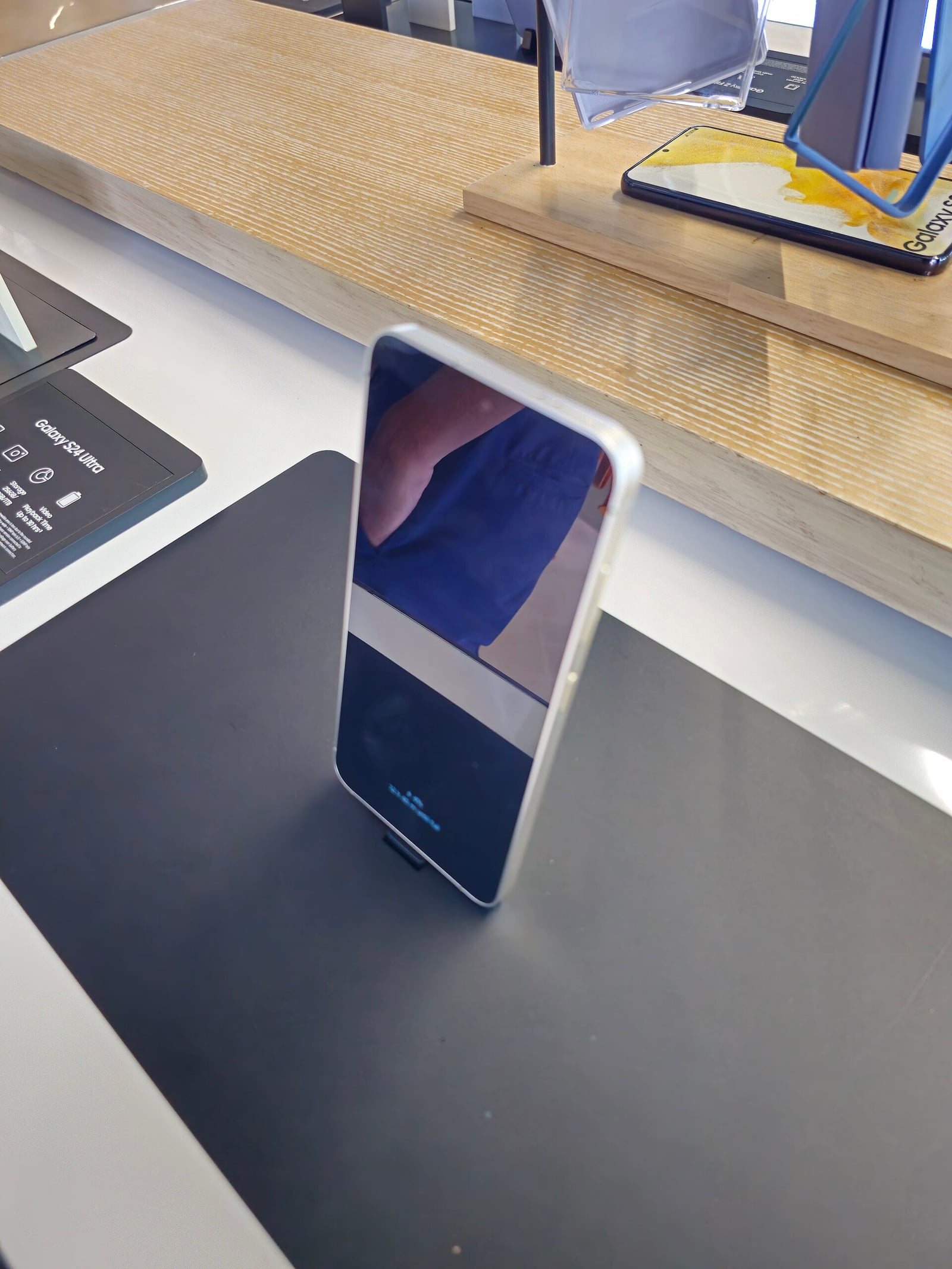
Our image is an archive Galaxy S24 photograph from 2024, not a demonstration of this rollout or evidence of that model’s eligibility. The new announcement is interesting because language can remove a real barrier. Its value still ends with the person who needs the task finished correctly.
Source notes: 1, 2. Original editorial examples and interpretations are identified separately.
Sources & Methods
Prepared October 15, 2026 from two complete manufacturer texts. The older guide supplies navigation context, not current global eligibility. The photographer scenario and judgments are original editorial illustrations. No hands-on test, interview, purchase or independent accuracy measurement was performed.
- Samsung: October 14 announcement — Primary release; complete body and language/rollout footnotes read October 15
- Samsung UK: April 2 support guide — Older primary instructions; complete explanatory body and qualifications read October 15