
Two forecasts, two reference points
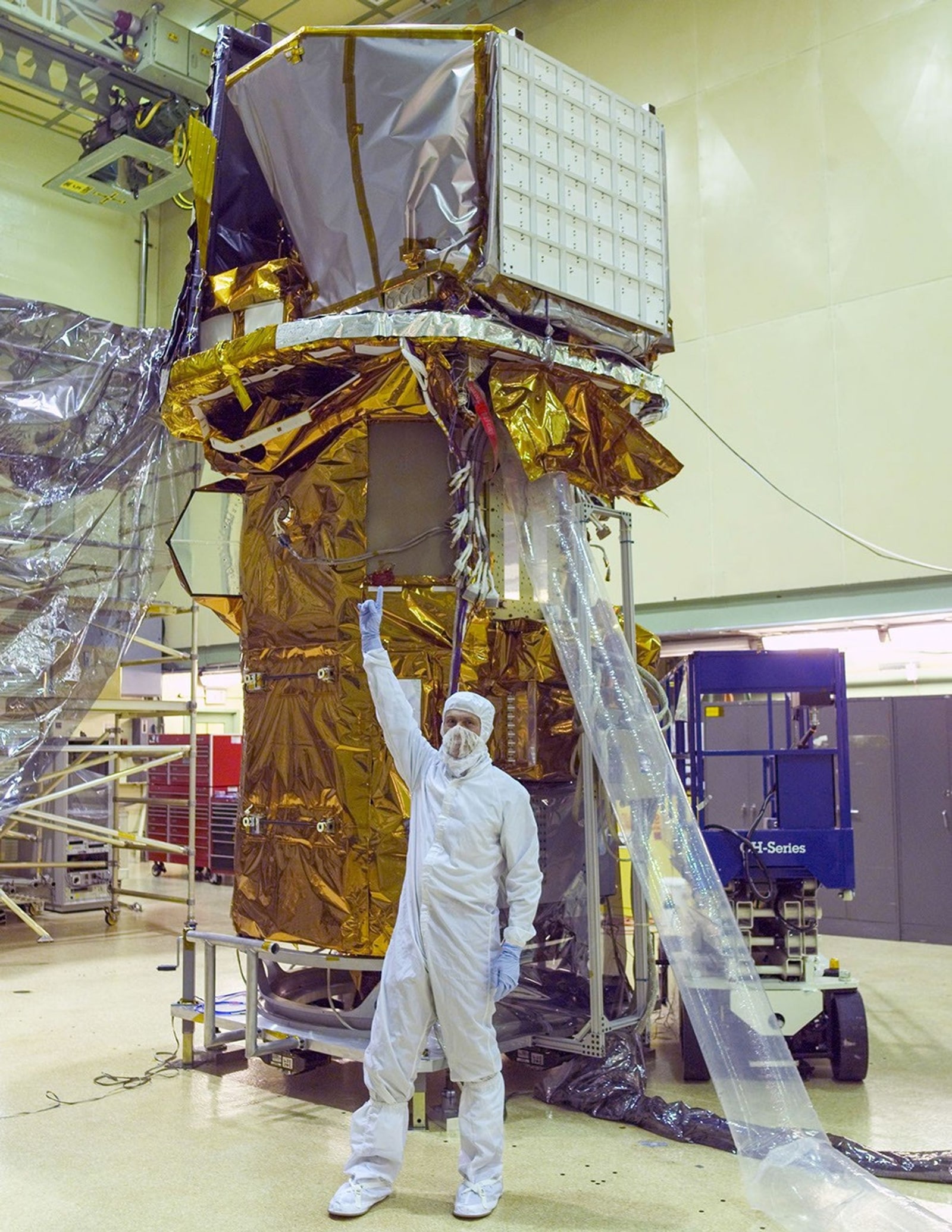
Swift’s science mission ended in October. The development now is a forecast of when the spacecraft itself will return through the atmosphere. NASA’s November 2 notice, on a page last updated November 3, cites a U.S. Space Force estimate centered on 08:30 UTC on November 4 with an 11-hour uncertainty. The notice describes an expected event. Readers should keep the date on the announcement separate from the predicted date in the announcement.
The Aerospace Corporation has a separate prediction page for Swift, catalog object 28485. In the snapshot we read on November 4, that page showed a 10:19 UTC midpoint with a two-hour uncertainty and identified the underlying orbit epoch as 08:09:52 UTC on November 3. The page is live and can change. The Guardian’s November 3 reporting relayed the NASA estimate. It provides a separate account of what was announced, while Aerospace supplies a separately published forecast.
When comparing those records, keep the name of the forecaster, the time convention and the uncertainty alongside each midpoint. Two numbers copied out of their source can look like competing measurements of an event. Here they are predictions. A sensible reading starts with what each publisher actually observed or calculated and when that information was current.
Source notes: 1, 2, 3. Original editorial examples and interpretations are identified separately.
Read the legend before following the dot
Aerospace marks the position at the middle of its forecast interval and uses colored lines for the earlier and later portions of the possible ground track. Its map therefore gives the marker a specific meaning. It represents a position at a chosen time within the calculation. Treating it as a point where debris will land discards the rest of the forecast.
The distinction is easiest to see with an example. Imagine reading a transit map when the time a train will stop is uncertain. A point marking its location at the midpoint is meaningful, but the earlier and later places along the route still matter. Swift’s path is a different physical problem. The analogy explains the reading task: the point and the interval must stay attached to each other.
A changing map is also worth reading with a clock in hand. When a new estimate is published, compare its time window with the one on your saved image. A screenshot that loses its timestamp and legend cannot tell another reader which version of the forecast it shows. The live tracker and the original publication are more useful than a detached image passed around after the estimate has changed.
Source notes: 2. Original editorial examples and interpretations are identified separately.
A latitude band and a risk estimate answer different questions
NASA expects some components to survive despite most of the spacecraft burning up. Its notice confines possible surviving fragments to latitudes between 20.6 degrees south and 20.6 degrees north. That band is a broad geographic boundary. It is distinct from the line on a particular tracker snapshot and from any later account of material recovered on the ground.
NASA also gives an overall estimate for harm to anyone on Earth. The way that estimate is framed matters. A probability referring to someone somewhere across the whole event cannot be read as the probability facing each person inside the latitude band. A regional or local claim would need evidence that is absent from a global estimate.
Keep a third question separate: whether something survived and was found. An image of a light in the sky, even if it proves genuine, may need a time, location and tracking match before it can be assigned to a spacecraft. A recovered object raises a different identification question. Neither result follows automatically from a predicted ground track or a model of how the satellite breaks up.
Source notes: 1, 2. Original editorial examples and interpretations are identified separately.
What changes after the forecast time
An expired forecast can remain useful as a record of what was expected. Its midpoint passing is a reason to look for a new record, especially if the publisher gives a broad window. Search for a revised prediction or an explicit observed or estimated reentry statement from a tracking authority. Keep the wording used by that authority when recording the result.
Lumacta’s earlier Swift coverage addressed the end of science operations and what the archive can still provide. This follow-up concerns the satellite’s physical return. Keeping those milestones separate helps readers make sense of subsequent updates. A confirmation about the orbit does not say whether a fragment survived, and a statement about debris does not change when science operations ended.
For this event, the durable reading method is to keep four fields together: the source, the observation or forecast time, its uncertainty, and the kind of claim it supports. A future update could narrow the interval, record that the object has decayed, or identify surviving hardware. Each would add a specific fact. The current evidence supports a dated forecast and a clear description of its limits.
Source notes: 1, 2, 4. Original editorial examples and interpretations are identified separately.
Sources & Methods
We read the NASA forecast and mission-end notices, The Aerospace Corporation tracker and independent Guardian coverage. The forecasts are attributed and time-bounded. We did not calculate an orbit, model debris or verify an observed reentry.
- NASA: dated Swift reentry forecast — Primary forecast notice, published November 2, 2026 and page updated November 3
- The Aerospace Corporation: Swift tracking and prediction — Separate forecast and map legend, observed November 4, 2026
- The Guardian: coverage of the forecast — Independent reporting, November 3, 2026; reports NASA and Space Force figures
- NASA: end of Swift mission operations — Primary operational chronology, October 23, 2026
- NASA: mission retrospective and archive photograph — Primary credit and dated caption for the clean-room photograph