
Identify the exact MacBook Pro
Apple introduced 14- and 16-inch MacBook Pro models with its tandem OLED PROLED XDR touchscreen on October 28. These use M5 Pro or M5 Max processors. U.S. starting prices are $2,899 and $3,399 respectively; Apple opened preorders that day and schedules availability for November 6.
The separate 14-inch M6 MacBook Pro retains a Liquid Retina XDR display. The newest chip name therefore does not identify the touchscreen model. For a buyer comparing several tabs, that is the first useful distinction: record the exact display family and chip configuration together.
Our recommendation is to write a one-sentence requirement before comparing prices. For example: finish a short documentary away from the studio, using a particular editor, storage device and delivery format. That is a proposed decision method, not a claim that we completed such an assignment on the new machine. A requirement makes it easier to notice when a more expensive display solves a problem you do not actually have.
Source notes: 1, 2, 3. Original editorial examples and interpretations are identified separately.
Read the brightness conditions
Apple’s technical sheet distinguishes 2,000-nit peak HDR brightness from up to 1,000 nits sustained across the full screen. It lists 2,000-nit peak outdoor SDR brightness separately. The display supports P3 and Adobe RGB, with variable refresh from 10Hz to 120Hz. These are manufacturer specifications, not Lumacta measurements.
For a photographer, a bright highlight in a demonstration and a stable editing environment answer different questions. We would ask a future review to identify its picture mode, ambient lighting, measurement pattern and duration before using a brightness number to make a purchase decision. A pleasing launch image cannot supply those conditions retrospectively.
VESA’s DisplayHDR performance criteria likewise evaluate several display characteristics rather than reducing HDR quality to one peak number. We cite that measurement framework as independent context; we have not established that this MacBook carries any particular VESA certification. The practical lesson is to compare results with their conditions attached.
Source notes: 2, 7. Original editorial examples and interpretations are identified separately.
Connect the display to the delivery target
Apple’s reference-mode documentation explains that modes set parameters including color space, white point, gamma and brightness. Its currently published guide still names Liquid Retina XDR MacBook displays and other Apple monitors. It should not be treated as a complete new-model operating manual merely because the general principle is relevant.
Our proposed check is to begin with the output: a client’s web video, a controlled HDR review or a print deliverable. Then identify the application’s color-management settings and the relevant display mode. Keep the target consistent when comparing an existing machine with a new one. Otherwise a more dramatic picture may be mistaken for a more useful reference.
A fictional freelance editor might mainly cut projects on a laptop but approve color on an established studio display. For that person, replacing the portable panel could improve work in transit without replacing the final review process. Another editor who repeatedly has to judge material away from the studio faces a different constraint. The same product can have different value without either buyer being wrong.
Source notes: 4. Original editorial examples and interpretations are identified separately.
Touch has an early demonstration, not a completed compatibility verdict
In his October 28 Tom’s Guide hands-on report, Mark Spoonauer describes smooth navigation and timeline gestures during a short launch session, while leaving third-party application behavior for further assessment. HardwareZone’s Kenny Yeo also reports a responsive brief encounter, explicitly noting that visual inspection cannot verify Apple’s brightness and contrast figures.
These are useful firsthand observations by those authors. They are neither our own experience nor a substitute for a sustained production test. The reports establish a more modest point than universal workflow improvement: journalists could try the interface, and their initial accounts describe what they encountered.
For a future trial, choose three ordinary actions in the application you actually use: selecting a difficult range, changing a small control and moving between a timeline and its viewer. Compare the result with your familiar keyboard and trackpad sequence. Count mistaken selections and recovery steps as well as convenience. This is an original proposed assessment, not a benchmark we have run.
Source notes: 5, 6. Original editorial examples and interpretations are identified separately.
Price the usable configuration
Apple lists memory and storage choices by processor configuration; the largest advertised capacities are not available on every chip. Its PROLED specification also lists Thunderbolt 5, HDMI, SDXC and MagSafe connections. A buyer should price the configuration that accommodates the assignment, rather than combine the lowest price with the largest capacities in a headline.
Our suggested comparison has three columns: keep the current computer, choose the separate non-touch model, or choose PROLED. Under each, record the actual memory, storage, necessary peripherals and the specific work constraint it would remove. Leave unknown performance blank until comparable tests exist. Do not turn a missing measurement into a guessed saving.
For mobile work, add the complete kit to that record: power supply, storage, dock and any external display used at the destination. A lighter computer is useful, but a purchase decision should account for what must travel with it. We have not weighed a kit or measured a battery workload.
Source notes: 2, 3. Original editorial examples and interpretations are identified separately.
Wait for the evidence that could change your decision
There is enough confirmed information to distinguish these models and define a shortlist. There is less evidence here for predicting a particular application’s sustained performance, display accuracy over time or battery life on a real assignment. Those questions deserve repeatable reviews and, where possible, a trial using nonconfidential project material.
Before ordering, write down the result that would justify the change. It could be completing a named task while travelling, seeing a difficult shot under a defined review setup, or replacing an awkward input sequence. If none of those conditions can be stated, the launch is a reason to investigate rather than an automatic reason to replace working equipment.
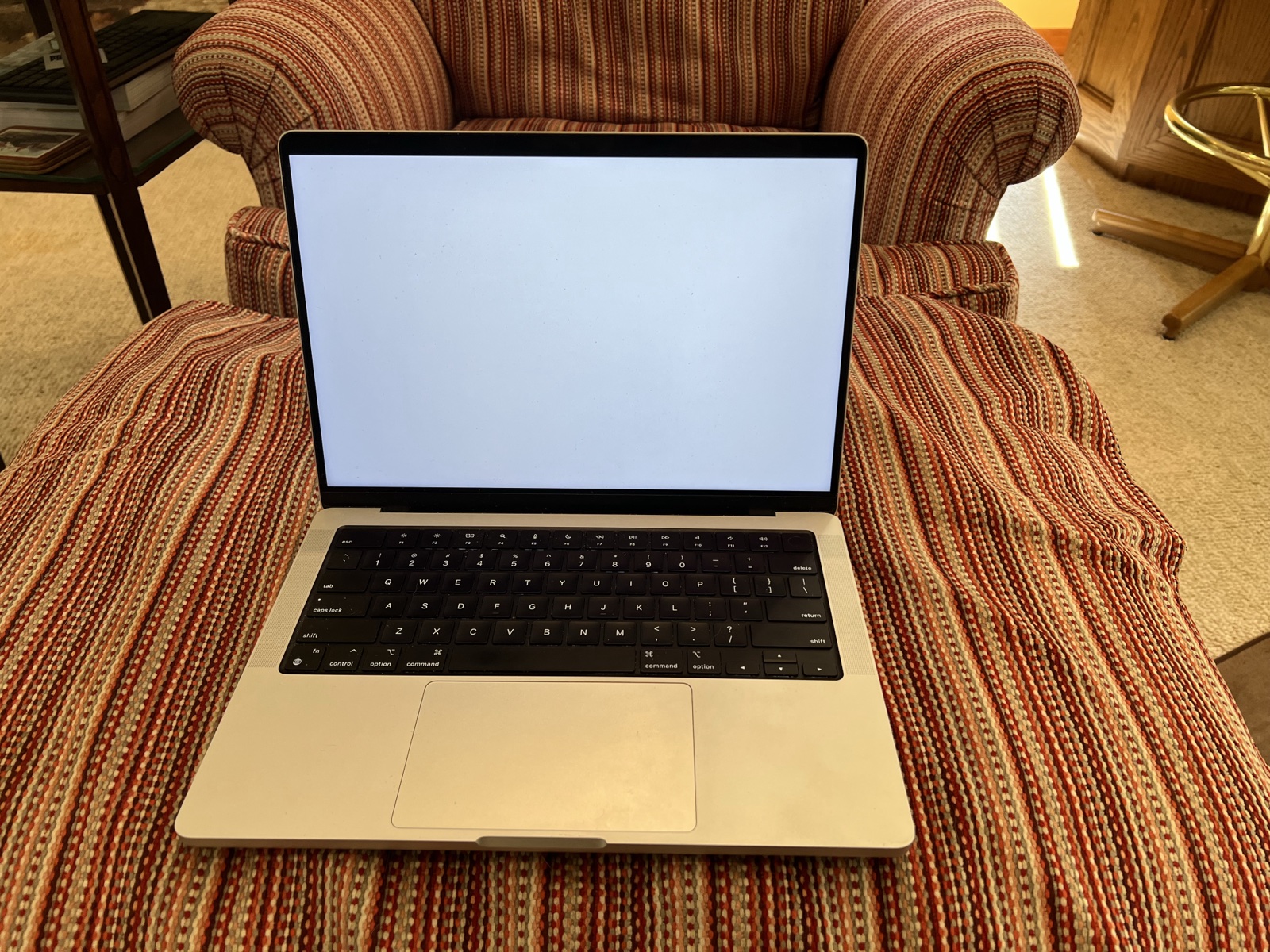
The photograph accompanying this explanation is a real 2021 MacBook Pro photographed on July 21, 2022. It supplies clearly labelled archive context and does not show the PROLED machine, its touchscreen or a Lumacta test. Our analysis is based on documents and attributed launch reporting; Apple and the cited reviewers did not review or endorse it.
Source notes: 1, 5, 6. Original editorial examples and interpretations are identified separately.
Sources & Methods
We compared Apple’s dated announcement with both display-family specification pages, then read display-mode guidance, independent firsthand launch reports and a primary measurement framework. The buying comparisons and suggested trials are original editorial proposals. No Lumacta hands-on work, color measurement or battery test is claimed.
- Apple: PROLED XDR MacBook Pro announcement — Primary launch, October 28, 2026; manufacturer claims
- Apple: PROLED XDR technical specifications — Primary current configuration and measurement conditions; read October 29
- Apple: Liquid Retina XDR technical specifications — Primary comparison with the separate M6 product family
- Apple: display presets and reference modes — Primary workflow context; not a complete new-model manual
- Tom’s Guide: Mark Spoonauer’s firsthand launch session — Independent firsthand account, October 28; brief hands-on, not our test
- HardwareZone: Kenny Yeo’s firsthand launch session — Independent firsthand account, October 28; measurement limits explicit
- VESA: DisplayHDR performance criteria — Independent primary measurement framework; no certification claim for this product