
A developer release for more complicated worlds
AMD’s November 24 RT-MLAS release includes a Vulkan driver and demo for Radeon RX 9000 and Radeon AI PRO R9700 or R9600 series graphics.
Phoronix reported on November 20 that Vulkan 1.4.369 introduced the provisional extension. That specification milestone preceded the developer package.
For players, the useful question is what a developer can now build with it. A new driver feature needs software that uses it. The headline opportunity is to spend graphics resources more carefully as a world becomes complicated, rather than ask every owner to expect a universal frame-rate increase.
Why the arrangement of a scene matters
Complex scenes can make acceleration structures expensive to build and store. These structures help the renderer find the geometry a ray could hit.
RT-MLAS introduces levels between the scene and its geometry. Intermediate structures can reference geometry or other intermediate structures, with transforms at each level.
Consider a warehouse scene built from many copies of a moving assembly. A renderer could group each assembly as a unit and reuse its organization across placements. Whether that helps depends on how often pieces move independently and on the extra work of walking through the larger hierarchy. The example helps frame the experiment for a developer designing the scene, even before there are timings to compare.
Think of a renderer’s organization as an engineering decision that should follow the content. A scene full of repeated moving assemblies poses a different problem from a largely static room. The practical question is where the application can share work without making the work required to follow a ray too expensive. A larger menu of arrangements makes profiling more important.
Source notes: 4.
Check the feature, not just the driver name
Khronos marks VK_AMDX_multi_level_acceleration_structure provisional. The reference allows two additional levels of instances and identifies the dependencies.
AMD’s release notes list Adrenalin 26.20.25.01 for Windows 10 and 11. Their compatibility list covers more cards than the RT-MLAS announcement names.
That distinction matters when assigning a machine to an evaluation. Record the GPU, operating system, driver and exposed feature together. A team comparing results across workstations needs that complete configuration, because a familiar installer name is too coarse a description of the test environment.
For a game or visualization app released to a broad audience, keep a comparison path that runs on the hardware already supported. That creates a cleaner experiment as well as a practical fallback. Developers can compare both paths in the same application and retain a usable baseline while the new behavior is still being validated.
The Playground makes the layout a variable
AMD’s Playground README explains how to build the Windows demo with the Vulkan SDK and CMake. The app lets developers assign parts of a hierarchical scene to different structure levels.
The input extends glTF 2.0 with features such as external asset references and animation timing. Check how your scene represents those details before importing it.
A useful evaluation would hold the content and viewing conditions steady while changing the structure layout. Start with a scene representative of the intended product, then add a simpler comparison. The purpose is to learn when the extra organization earns its cost. Merely reproducing an attractive demonstration would leave the production question unanswered.
Source notes: 5.
Read the memory saving and the timing separately
AMD measured 3.62 MiB for acceleration structures and a 0.43 ms median rebuild on an RX 9070 with 10,000 animated Newton’s cradles. It describes extra traversal cost and lists DirectX 12 support as planned.
The median rebuild time describes the middle result of one measured operation. It does not describe the slowest rebuilds or the complete frame. In an interactive scene, an occasional spike can still be visible even if most rebuilds are fast. A prospective comparison should retain the distribution as well as the median.
Those distinctions shape a sensible test. Keep a record of structure memory, construction or update cost, and the time spent rendering the complete frame. A saving in one category can be valuable even if another category becomes more expensive, but a product decision needs the combined result. Memory figures for the acceleration structures should not be presented as the whole application’s graphics-memory requirement.
Likewise, changing an animation or the amount of reusable content changes the question being measured. Test the scenes that make the proposed feature useful, and also the scenes that might expose its cost. A developer choosing an implementation needs the boundary of the benefit as much as the strongest example.
Source notes: 1.
What would make this matter beyond a demo
The design requires opting in at the pipeline level. Support for saving and restoring these structures is planned for a future revision.
Our assessment is that RT-MLAS is worth watching as a resource-management option for developers with demanding scenes. The next persuasive evidence would connect an implemented renderer, clearly described content and complete frame measurements. That would show where the approach helps a real workload and how much engineering it requires. For a Radeon owner today, the release is a development milestone; its eventual benefit depends on applications putting it to work.
Sources & Methods
We read AMD’s release and driver notes against Khronos documentation, the demo README and Phoronix’s earlier specification report. Evaluation suggestions and the editorial assessment are Lumacta analysis. Company demo measurements are identified as such.
- AMD GPUOpen: RT-MLAS release — Primary announcement by Andy Wright, November 24, 2026; company measurements and stated platform scope.
- AMD expanded Vulkan driver notes — Primary release notes for Adrenalin 26.20.25.01; package compatibility is broader than RT-MLAS feature support.
- Vulkan extension reference — Primary Khronos API reference; provisional, not ratified; revision dated November 1, 2026.
- Vulkan extension design proposal — Primary technical design: hierarchy, transforms, pipeline opt-in and serialization limitation.
- Acceleration Structure Playground README — Primary AMD demo instructions; Windows build, scene configuration and extended glTF input.
- Phoronix on the earlier specification release — Independent reporting by Michael Larabel, November 20, 2026, 06:05 AM EST; precursor coverage, not a test of the November 24 driver.
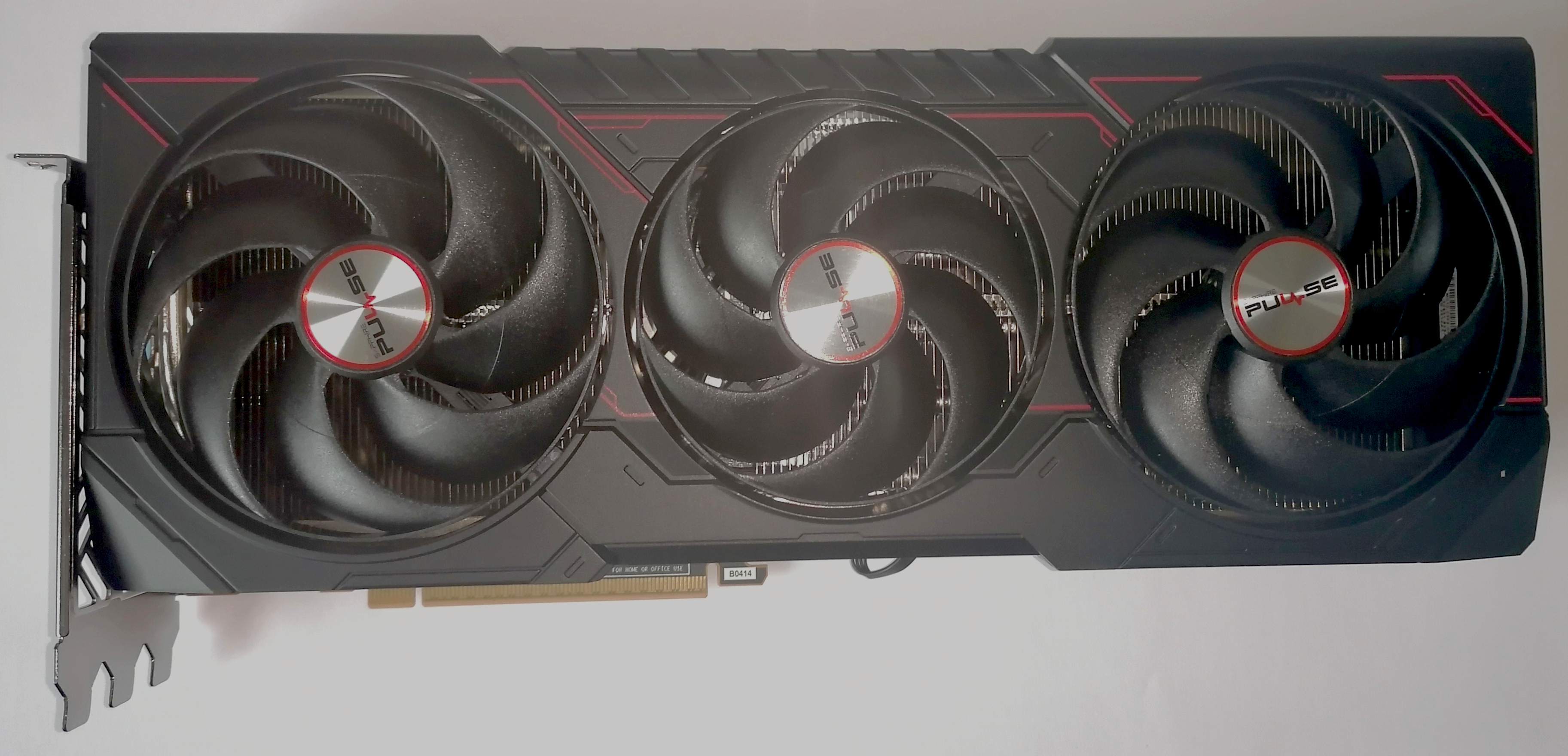
- Original Sapphire Pulse RX 9070 XT photograph — Chaddy own-work archive photograph, declared capture September 10, 2025; uploaded September 28.
- Creative Commons Attribution-ShareAlike 4.0 — Photo license permits commercial redistribution subject to attribution and applicable ShareAlike conditions.
