
An announcement for 2027, not a camera-bag upgrade available today
Sigma announced the 50mm F1.4 CL DG Contemporary on October 23 for early spring 2027, in L-Mount and Sony E-mount. No price is given. This is not evidence of current retail availability.
The useful news is a change in the question photographers can ask. Instead of assuming that a fast standard prime should prioritize every optical correction ahead of its carrying size, we can consider whether a smaller tool would make a camera more likely to leave the house. That is a practical hypothesis, not an image-quality result.
Our analysis therefore separates the published dimensions, the manufacturer’s design intention and the things a future test must establish. A small lens is not automatically a bargain, and a different visual aim does not make an existing lens obsolete. The strongest comparison starts with the photographs someone actually needs to make, rather than a product hierarchy.
Source notes: 1. Original editorial examples and interpretations are identified separately.
The size difference is concrete; the benefit depends on the whole kit
Sigma lists the CL at 375g for either mount. Its Sony E version measures 64.7mm in diameter and 56mm long. For the same mount, the official Art page lists 660g and 111.5mm length. That is a calculated 285g lens-only reduction, about 43 percent, and roughly half the listed length. It is not a measured camera-kit comparison.
There is an important counterpoint. The official Sony E 50mm F2 DG DN specification is 345g, and its page marks it discontinued. The CL is 30g heavier, although shorter. For owners of that compact option, the proposition is not simply less weight. Decide which constraint matters: bag depth, carrying mass, aperture, handling, or the role beside equipment already owned.
A useful packing exercise is to list the complete working setup before comparing replacements. Include the body, protection and accessories you genuinely carry. Then ask whether changing this one component resolves the actual inconvenience. A meaningful reduction in one lens can coexist with a small change in a larger kit; neither conclusion requires claiming that a smaller barrel makes better pictures.
Source notes: 2, 3, 4. Original editorial examples and interpretations are identified separately.
Image character is a design intention, not a substitute for evidence
Sigma says it intentionally controls aberrations to pursue a softer rendition of texture and a particular background character. That is its stated design goal. It is not Lumacta’s observation of sample photographs, and it does not establish that every portrait, every subject distance or every part of the image will look preferable to an alternative.
For a future comparison, define success before looking at labels. A portrait assignment may prioritize how the subject separates from the surroundings; a reproduction job may prioritize consistent detail across the frame. These are proposed evaluation priorities, not findings about this lens. Choosing a different priority can change the appropriate tool without making one photographer’s preference a universal standard.
The fair test would keep framing, light, processing and viewing size consistent, then examine both the intended look and the unwanted distractions. Show enough of the scene to understand the judgement rather than selecting only flattering fragments. Until such evidence exists, character should describe an intention worth investigating—not excuse any unmeasured weakness or imply an automatic artistic advantage.
Source notes: 1. Original editorial examples and interpretations are identified separately.
A new focusing mechanism deserves a test, not an assumed ranking
The CL uses whole-lens extension focusing and a new Rotary Direct Drive actuator. Sigma explains that the mechanism addresses the larger moving focusing unit while keeping the barrel compact. The Art page instead describes an HLA linear motor moving a focusing element. These are documented architectural differences, not a stopwatch result proving which lens focuses faster.
The meaningful question is whether a lens performs the photographer’s task reliably with the intended body. A proposed assessment should include a nearby subject, a distant subject, changing light and an interruption that requires focus to be recovered. Record the conditions and failed attempts as well as successful ones. A single successful demonstration cannot stand in for a repeatable comparison.
Video needs its own assessment rather than an extrapolation from a still photograph. Observe transitions and repeatability under a defined setup, and check whether the behavior suits the scene being filmed. Lumacta has measured none of those properties here. A new actuator name explains part of the engineering; it does not by itself certify tracking, silence or suitability for professional work.
Source notes: 2, 3. Original editorial examples and interpretations are identified separately.
Keep aperture, handling and ownership costs in the same decision
The CL specification gives a 45cm minimum focusing distance and a 52mm filter thread; its feature page describes distance and depth-of-field scales. Those inform a future checklist, not proof of reproduction quality, manual-focus precision or how it will feel on a particular body.
For someone who already owns a capable standard lens, the relevant alternative may be keeping it. Write down the specific missed opportunity that a purchase should solve: a kit left behind, a task that needs a different aperture, or a handling difficulty. If the problem cannot be named, waiting for measured evidence is a defensible decision rather than falling behind.
Compare the complete cost only when comparable offers exist. A future selling price, any genuinely required accessories, local terms and the value of equipment retained or replaced all matter. We have not priced a Romanian kit or predicted resale proceeds. Without those inputs, calling this lens the best value would convert an appealing specification into a claim the evidence cannot support.
Source notes: 2. Original editorial examples and interpretations are identified separately.
The verdict: a promising alternative whose purchase case is unfinished
The announcement opens a credible choice between different design priorities, not a verdict against the Art line or an instruction to replace the F2. The body-size comparison is already useful. The purchase recommendation must wait for a price, confirmed release details and evidence that the lens performs the tasks a buyer actually values.
When retail samples arrive, ask for disclosed camera bodies, shooting conditions, processing and a comparison at useful output sizes. Ask what was not tested. Reviewers can disagree about a rendering preference while agreeing on dimensions; keep those categories separate. Our present conclusion is deliberately narrower: this is a noteworthy option to investigate, not a hands-on review or a universal winner.
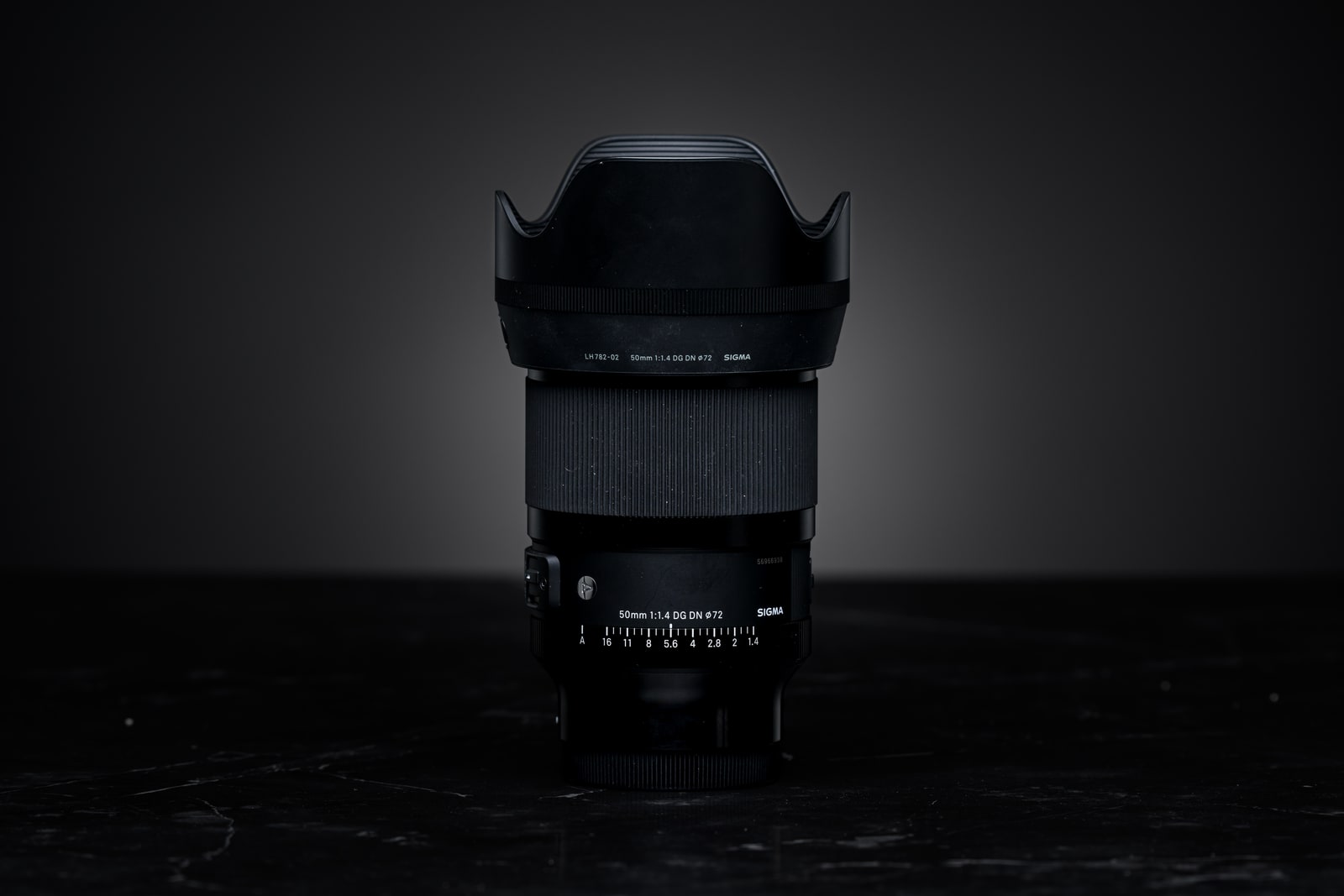
The real archive photograph shows the older Sony E 50mm F1.4 DG DN Art, captured on March 9, 2023—not the announced CL. It provides clearly labelled comparator context, not proof of the new design’s appearance or performance. The important next step is evidence from the product that ships, rather than treating launch-day interest as a completed buying decision.
Source notes: 1, 2, 3, 4. Original editorial examples and interpretations are identified separately.
Sources & Methods
Prepared October 24 from the complete October 23 Sigma announcement and the specifications and relevant feature text of all three official lens pages. Specifications and design intentions remain manufacturer claims; the 285g/about-43-percent and 30g differences are arithmetic from Sony E lens-only figures, not measurements. No review sample, comparison photograph, focusing test, compatibility check, stock check or local price survey was undertaken. The release window is early spring 2027, not October 2026 retail availability. The image is an independently photographed, CC BY 2.0 archive view of the Art comparator, not the new CL; capture date is supported by Commons description and EXIF. Flickr was inaccessible directly, so provenance relies on Commons and its recorded Flickr license review.
- Sigma: October 23 CL announcement — Primary manufacturer announcement; complete body read
- Sigma: CL specifications and mechanism — Primary product page; specification table and relevant feature text read
- Sigma: Art specifications and focusing — Primary comparator page; specification table and focusing feature text read
- Sigma: compact F2 specifications — Primary comparator page; specification table read