
A shorter path to the edit still has to carry the right sound
Sony’s October 14 announcement describes two transmitters and a receiver, with 32-bit float audio recorded inside the video file on compatible cameras. European availability is planned for November. That compatibility qualification matters: we are not describing universal behavior on any camera with an accessory shoe.
For this October 19 explanation, imagine a fictional interview in a workshop. Two people discuss an object while a filmmaker moves between a shared view and close details. The job is not merely to record an impressive specification. It is to preserve who said what, when the object made a useful sound and which moment belongs with the final picture.
Fewer files can make that job easier to organize. They cannot establish that the intended speaker was captured clearly or that a take contains the necessary sentence. Our practical question is therefore about the whole route from a person speaking to an editor understanding the recording. No interview or equipment test was performed for this example.
Source notes: 1. Original editorial examples and interpretations are identified separately.
What the recording format cannot decide for you
Sony specifies that its 32-bit float mode operates at 48 kHz and warns that clipping at the microphone input cannot be repaired simply by changing volume in editing. Those are manufacturer qualifications, not results of a test we conducted.
In our imagined workshop, a quiet explanation and a sudden excited response are different demands from a badly positioned microphone. A recording with convenient level-adjustment scope is useful only if it contains the sound the filmmaker needed. A rub against clothing, an interruption or a distracting background belongs to the recording too; changing a number in the editor is not the same editorial act as obtaining a clearer original take.
Before the important answer, we would ask for a short ordinary exchange in the actual position. Listen for intelligibility and context, rather than treating a reassuring format label as the verdict. This is a suggested production exercise, not evidence that ECM-W5 has a particular noise problem or that another product would perform better.
Source notes: 1. Original editorial examples and interpretations are identified separately.
A headset can supply a microphone without being your monitoring headset
Sony’s compatibility guide gives microphone input, monitoring and binaural recording separate columns. It lists WH-1000XM6 with microphone and monitoring support, but WH-1000XM5 with microphone support only. The guide also requires selecting LE Audio before pairing for supported monitoring configurations. These are documented distinctions, not our measurements.
That changes the question our fictional filmmaker should ask. Having a familiar pair of headphones does not establish that it can perform the intended role in this setup. A device working as a source of sound is a different relationship from a device letting somebody hear what is being captured.
Divide responsibility before the real conversation begins: which person listens, what signal they intend to hear and what they do if the sound becomes distracting or unclear. Confirm the exact equipment and documented mode for that role. We have not measured monitoring delay or verified what any individual pairing delivers. The important discipline is to demonstrate the intended listening task, not merely a successful connection.
Source notes: 3. Original editorial examples and interpretations are identified separately.
A fallback recording is another route to the moment, not the finished recovery
Sony’s product page describes internal transmitter recording and separate audio retention, alongside simultaneous in-camera WAV recording on compatible models. It identifies wireless problems as one reason for keeping a separate source. The precise camera and configuration remain part of that qualification.
Return to the imagined interview. If a useful answer is missing from the intended edit track, the filmmaker first needs to establish whether an alternative recording contains that answer. The existence of another file is only the beginning: it must be identifiable, accessible and associated with the right speaker and take.
For a small job, our suggested record can be brief: the conversation segment, the intended person and the place the team expects to find an alternative. Retain the original material while assembling the edit, and inspect the recovered passage in context. This is our proposed handoff practice, not an account of recovery we performed, a guarantee against loss or a substitute for the product’s operating instructions.
Source notes: 2. Original editorial examples and interpretations are identified separately.
One combined file and several cameras create different synchronization questions
Sony’s product footnotes say that, as of October 2026, FX5 is the only camera supporting its USB SYNC timecode synchronization. A general mention of timecode should not be read as identical functionality across the entire camera range.
Our fictional workshop film shows why. Audio already attached to one camera’s picture can simplify that camera’s handoff. A second view of the same conversation introduces another relationship: does its picture correspond to the same moment? Keeping one relationship convenient does not automatically establish the other.
Before choosing a synchronization approach, define the intended edit. Does the film need continuous switching between both speakers, or only a few relevant detail shots? Preserve a comprehensible account of the takes so an editor can place the needed moments without guessing. Any proposed timing feature should be assessed against that actual task. We have not tested a multi-camera workflow, timecode drift, recording duration or the accuracy of an alignment method here.
Source notes: 2. Original editorial examples and interpretations are identified separately.
Our assessment: convenience is valuable when the handoff remains understandable
The strongest potential benefit is a simpler route to a usable film, not permission to stop paying attention to sound. We would judge the imagined assignment by whether another editor can identify the right speaker, understand the important words and recover the intended passage when a fallback is needed. Those acceptance conditions belong to the production, not to the largest number on a product page.
That reasoning can support keeping an existing setup. If it already captures the required conversation and produces a clear handoff, a different accessory needs a demonstrated advantage for that job. If file handling or listening is the recurring difficulty, investigate that specific route rather than assuming every new function addresses it. This is not a matched buying verdict or a claim of savings.
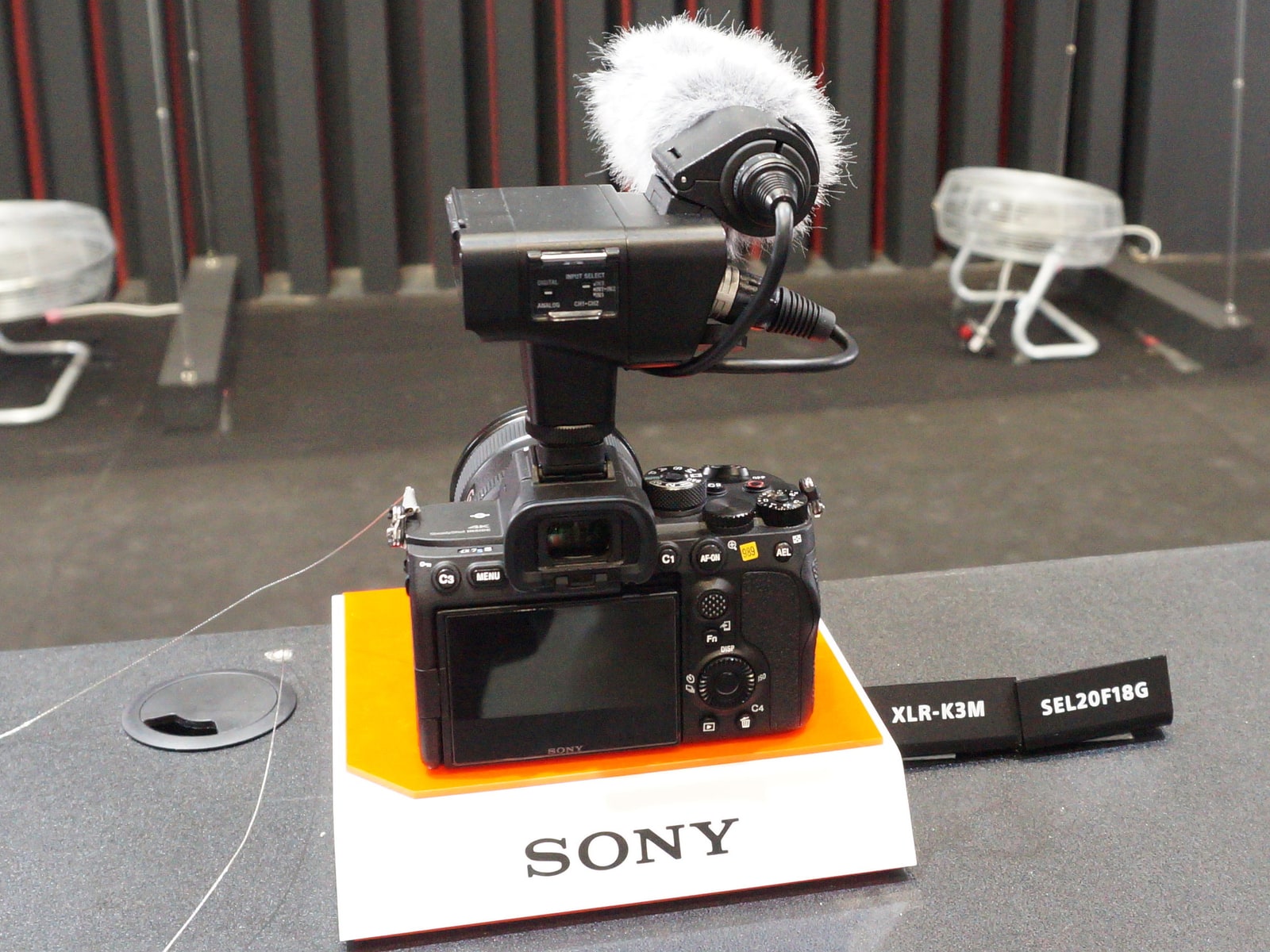
Our real archive photograph shows Sony XLR-K3M camera-audio equipment in November 2020, not ECM-W5 or a system tested for this article. The announced product and its exact compatibility still need assessment in the intended configuration. The useful upgrade is the one that preserves the moment and leaves the next person able to finish the film.
Source notes: 1, 2, 3. Original editorial examples and interpretations are identified separately.
Sources & Methods
Prepared October 19 from three complete Sony primary pages. The launch date is October 14, not today. The interview, role assignment and handoff analysis are original hypothetical examples. No audio was recorded, equipment paired, firmware installed, store availability confirmed or product tested. The indexed support date differed from the directly fetched page, so no new-update date is inferred. The archive photograph is a different, explicitly identified camera-audio setup.
- Sony: October 14 announcement — Primary release; complete main text and all eight qualifications read
- Sony: product description and qualifications — Primary product page; complete features and all 17 footnotes read; not an availability guarantee
- Sony: headphone role compatibility — Primary support guide; complete table, footnotes and pairing note read; direct page dated October 15