
October 23 adds a specific question, not a reason to skip the update
PHP’s October 23 notice recommends session.upload_progress.enabled=0 pending a regular bugfix. CVE-2026-115560 concerns an unusual remote-code-execution path. If already disabled, leave this feature disabled.
The stated condition combines a php_binary or php_serialize configuration, a runtime switch to php before session_start(), and enabled upload progress. Applications that never switch handlers at runtime can keep the feature enabled. A full advisory will accompany the next release.
The distinction matters because an urgent security story can easily turn into an inaccurate slogan. Our reading is not that every updated installation remains equally exposed, nor that the previous update should be avoided. It is that the follow-up has its own conditions and needs its own check. Keep the earlier remediation work moving while the responsible administrator assesses the additional notice.
A site owner should send the dated notice to the hosting team rather than diagnose an unfamiliar configuration from a headline. Ask for the conclusion and its evidence, not a universal promise that no future problem can exist.
Source notes: 1. Original editorial examples and interpretations are identified separately.
The October 21 fixes address two different memory-lifecycle failures
Both earlier advisories list PHP 8.2.35, 8.3.36, 8.4.27 and 8.5.12 as patched releases. These version numbers concern the October 21 vulnerabilities, not a claim that the October 23 issue has already received its forthcoming fix.
CVE-2026-109618 concerns memory-exhaustion handling: an interrupted operation can leave partially initialized request data for cleanup to process. The report confirms unauthenticated remote code execution with Apache mod_php, including before application code starts. It describes different exposure and validation limits for other execution environments.
CVE-2026-109619 concerns request-owned state that a persistent worker retains after the underlying memory is released. A later request can reach that stale state. The advisory reports confirmed mod_php and FPM paths; their conditions are not identical.
For a non-specialist, the important architectural point is the boundary between an application and the engine executing it. Updating a content-management plugin may be worthwhile for that plugin, but it is not evidence that the separate PHP runtime was replaced. Similarly, a site that still displays its pages has demonstrated availability, not that the vulnerable engine is absent.
Source notes: 2, 3. Original editorial examples and interpretations are identified separately.
A conditional warning requires a conditional answer
Consider an original analogy: an office accepts documents under one filing convention, then changes conventions while the same work is in progress. The relevant question is not simply whether the office uses files. It is where the transition happens and what information is carried through it. This is an illustration of why configuration and execution order matter, not a model of PHP internals or an exploit description.
PHP’s session reference describes serialization-handler choices and the session.upload_progress.enabled configuration directive. A directive’s presence in a settings page is not, by itself, an assessment of a particular application’s behavior.
Our recommendation is therefore to separate two responses in the administrator’s report: which corrected runtime is serving requests, and whether the application satisfies the new notice’s conditions. An answer to one does not automatically answer the other. If the host cannot establish the relevant application behavior, that uncertainty belongs in the report instead of being silently converted into a reassuring no.
We do not reproduce a triggering request or suggest experimenting against a public service. The useful outcome for a customer is an accountable assessment, not an improvised vulnerability test.
Source notes: 1, 4. Original editorial examples and interpretations are identified separately.
Ask about the PHP that serves the site, not just an installed package
The stale-state advisory says updating is the only complete generic remedy for that earlier flaw. Its temporary session control must apply administratively before request parsing, with every worker restarted; an application-level ini_set() change is not the remedy. Configuration controls cover particular paths, not every variant. The memory-exhaustion advisory separately warns that its configuration mitigations do not replace patching.
For managed hosting, our suggested evidence request is specific: identify the affected site or service, the runtime actually serving its requests, the applicable corrected vendor package, the completion time and any remaining exception. An installed update in a control panel is useful information; the operator should also establish that the intended running service is using it.
Keep that verification internal. Publishing diagnostic pages or detailed server configuration is not necessary to reassure visitors and can expose information unrelated to the announcement. A concise customer-facing update can state what was addressed and what remains under review without revealing secrets or infrastructure details.
Finally, do not turn successful patch installation into a retrospective clean bill of health. Whether unauthorized activity happened before remediation is a separate question for the responsible security team. We have not examined logs, investigated an incident or verified anyone’s environment.
Source notes: 2, 3. Original editorial examples and interpretations are identified separately.
A completed update and an open follow-up can coexist
Our suggested completion record has two separate entries. The first records the earlier runtime remediation and how the operator verified it. The second records the new notice’s applicability, any selected temporary control and who will review the forthcoming advisory. Combining both into a single green check can conceal which question has actually been answered.
For a hosted-site customer, this means asking the provider to distinguish its infrastructure work from application work that remains your developer’s responsibility. For a self-managed service, assign the same distinction internally. Responsibility should follow who can inspect and change the relevant component, not whoever happened to receive the warning email first.
Do not invent a patch date that PHP has not supplied. Instead, name the person responsible for checking the next announcement and deciding when the temporary arrangement can change. Our recommendation is to retain the reason for any exception so a future administrator does not remove it merely because its purpose was forgotten.
None of that requires a claim that an attack occurred. It is a way to preserve a known unfinished task without overstating what is known about the system.
Source notes: 1, 2, 3. Original editorial examples and interpretations are identified separately.
Our assessment: close the known issue without inventing certainty
The useful response is disciplined urgency. Address the known runtime vulnerabilities, assess the narrower follow-up against the actual application and retain an owner for anything unresolved. Avoid both extremes: treating a conditional notice as proof that every site is compromised, or treating one successful update as proof that every relevant question is closed.
For website owners who outsource operations, the most valuable next step is a short, service-specific answer from the party who can inspect the system. For administrators, it is a record that distinguishes a completed change from a pending assessment. Neither task is improved by replacing uncertainty with an unsupported reassurance.
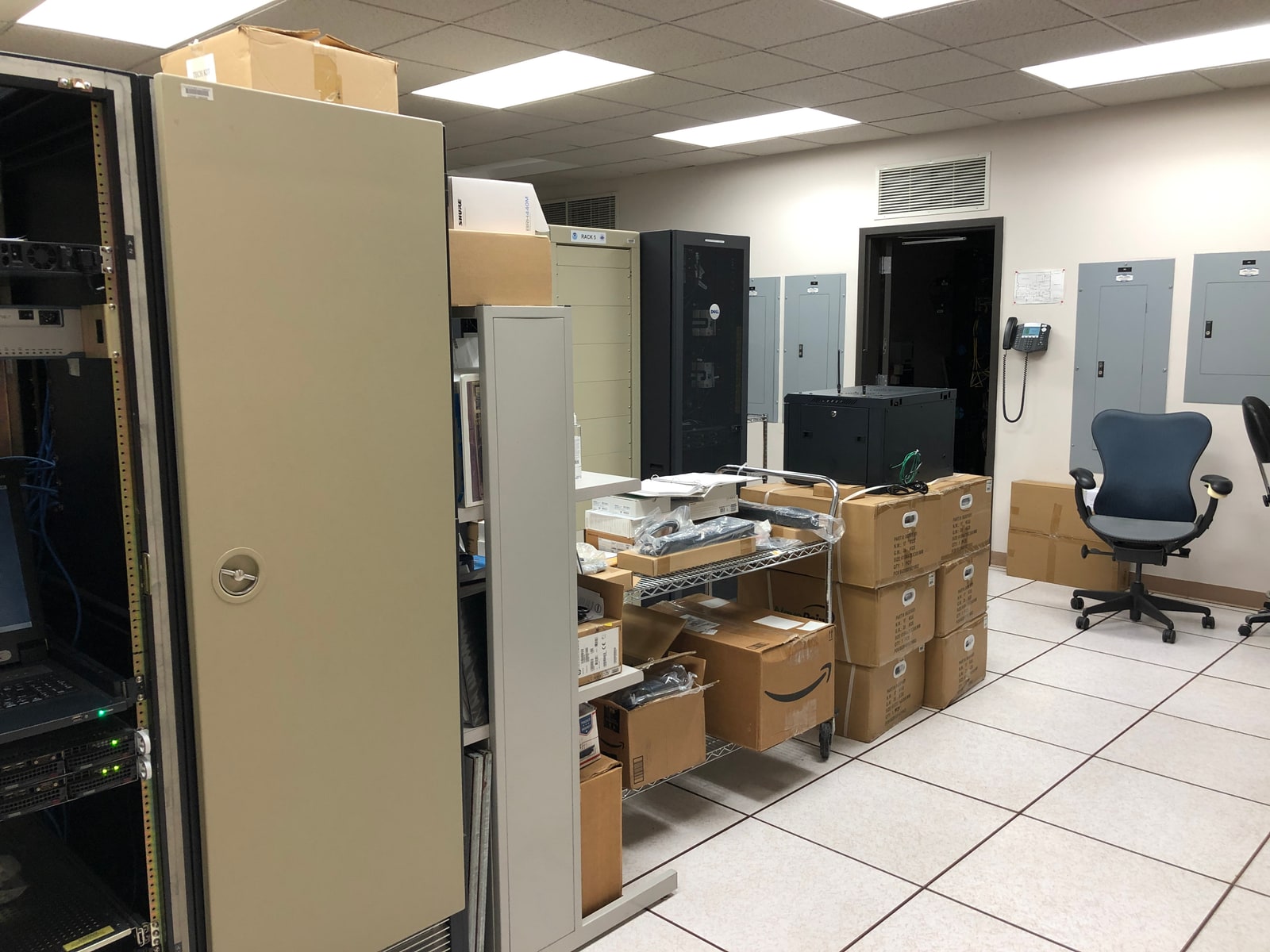
Our analysis comes from primary notices and documentation, not laboratory reproduction or a hosting audit. The two technical advisories are from the PHP project, not independent corroboration. The real archive photograph depicts a National Weather Service server room in New Jersey in 2022. It does not identify an affected PHP installation or document this incident.
Source notes: 1, 2, 3. Original editorial examples and interpretations are identified separately.
Sources & Methods
Prepared October 23, 2026. Read the complete October 23 informational notice and October 21 critical notice, both earlier PHP technical advisories including their validation limits and mitigations, and the complete PHP session configuration directive reference, excluding user-contributed notes. The new CVE has no full advisory in the current notice; no missing details were inferred. The configuration analogy, customer evidence request and separation of availability, remediation and investigation are original editorial analysis. No exploit execution, request probing, configuration changes, customer-system access or independent incident investigation occurred. The camera photograph’s complete Commons record, public photographer profile and CC BY-SA deed were read.
- PHP: October 23 and October 21 notices — Primary notices; complete relevant bodies read
- PHP: memory-exhaustion advisory — Primary technical advisory; complete technical body read
- PHP: stale-state advisory — Primary technical advisory; complete technical body read
- PHP: session configuration — Primary reference; complete directive reference read