
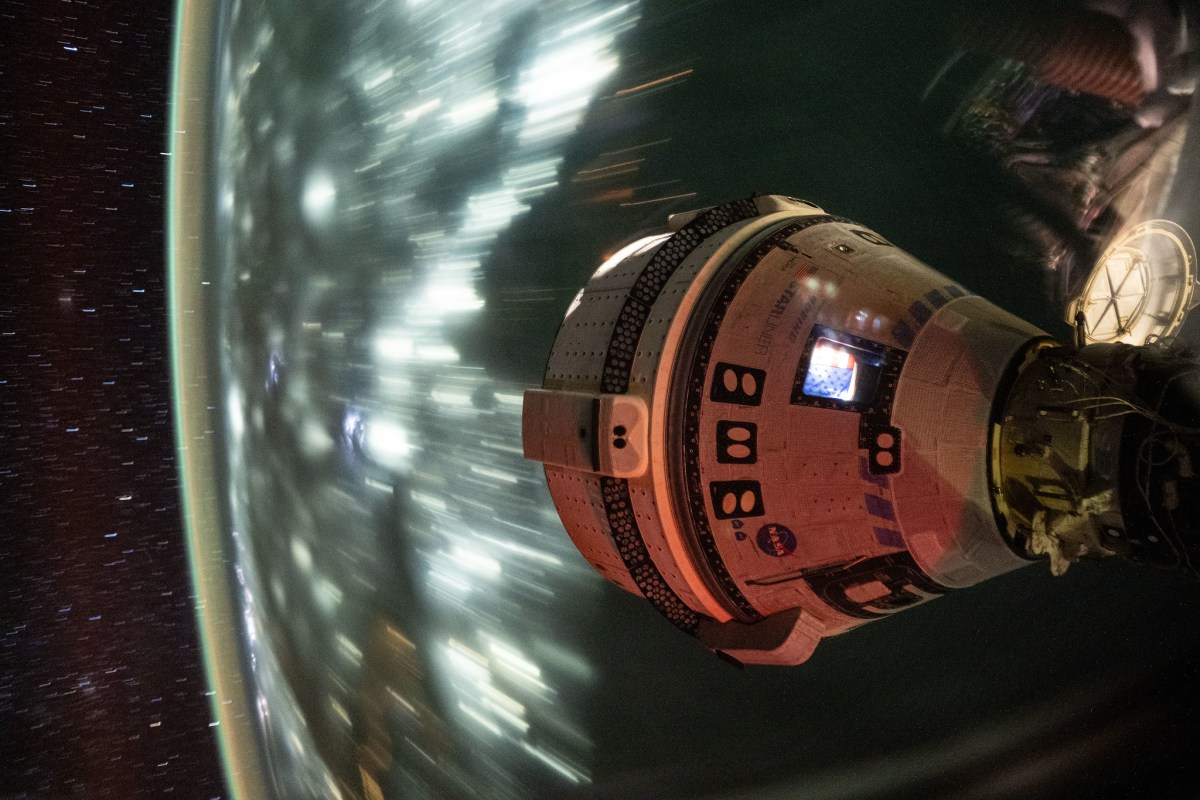
A roadmap with several gates, not a declaration of readiness
NASA’s September 28 update says the uncrewed Starliner-1 engineering flight could take place in December 2026 or January 2027. Its current plan is a crewed Starliner-2 return by 2028. The agency also intends to exercise fifth and sixth mission options and pursue Vulcan certification after the final Atlas V flight.
The conditional wording is part of the news. A possible launch window is not a booked flight, and a plan to carry astronauts is not a completed crew certification. This October 1 article examines that newly announced roadmap; it does not report a launch or a finding that the spacecraft is now ready for people.
Our editorial interpretation is that the value of a second transport provider depends on an operational capability, not a second name on a contract. A system has to demonstrate that it can perform its mission within the required safety boundaries. Additional planned flights can create an opportunity to do that work; they cannot stand in for the evidence.
Source notes: 1. Editorial analysis and hypothetical examples are identified in the text.
The 2024 flight exposed more than a hardware fault
NASA’s February 19 investigation announcement describes propulsion anomalies during the 2024 crewed flight and the decision to return Starliner without its astronauts. Wilmore and Williams came home on Crew-9 in March 2025. NASA classified the test as a Type A mishap and identified technical, qualification, leadership and organisational contributors.
Our reading is that an engineering recovery has two tracks. One concerns whether a modified system behaves as intended. The other concerns whether the organisation recognises uncertainty, applies qualification evidence correctly and allows a problem to change the plan. Replacing a component cannot, by itself, demonstrate improvement on that second track.
This is why a narrowly framed story about a delayed spacecraft misses the useful lesson. A programme can have an appealing goal and still need to stop at a technical boundary. The question for future decisions is not whether the original goal remains desirable, but whether the evidence required to pursue it has actually been supplied.
Source notes: 2. Editorial analysis and hypothetical examples are identified in the text.
The next spacecraft does not contain every eventual change
NASA says service-module thruster problems involved the thermal environment and design features. Boeing has made thermal modifications for evaluation on Starliner-1. A further thruster-valve design change addressing poppet-seal extrusion is planned after that flight, ahead of crew certification. The first engineering flight therefore is not the final crewed configuration.
That sequence makes configuration control central to interpreting a successful test. Our engineering analysis is that a result applies to the hardware, software and operating procedure that produced it. If a later vehicle changes, reviewers need a reasoned account of what still carries over and what must be tested again. Success cannot be transferred merely because both vehicles share the same name.
Imagine a hypothetical test in which a cooling change keeps a component within its limits on a specified sequence of firings. That would support the cooling change under those conditions. It would not automatically establish that a subsequent valve redesign, longer operation or a different firing sequence is equally well understood. This example illustrates the evidence boundary; it is not a prediction of the flight result.
Source notes: 1. Editorial analysis and hypothetical examples are identified in the text.
What should an uncrewed engineering mission tell us?
Lumacta would look for a clear account of which conditions were exercised and which uncertainties remain. The useful comparison is between a defined requirement, a ground-test prediction and the flight observation. A spacecraft completing a mission is important, but “it arrived” is less informative than a transparent explanation of how its relevant systems behaved along the way.
We would also distinguish a planned demonstration from an incidental result. Did the mission deliberately test the operating condition that exposed the earlier issue, or avoid it? What margins were measured, and which restrictions were needed? Those are proposed reporting questions, not claims that NASA has already published the full Starliner-1 test plan.
An uncrewed flight can reduce uncertainty without eliminating it. The next decision should reflect what was learned, including unfavourable findings. A useful technical update would explain the remaining work rather than treating the absence of a visible incident as proof that every relevant risk has disappeared.
Source notes: 1, 2. Editorial analysis and hypothetical examples are identified in the text.
Approving a spacecraft is not the same as approving its new launcher
The update separately identifies work with Boeing and United Launch Alliance to certify Vulcan for crew transport. Our interpretation is that this introduces another evidence chain. A spacecraft and a launcher interact as a system; a finding about one does not automatically qualify the other or the combination.
For readers, the practical distinction is between a rocket being able to launch payloads and a particular crew-transport system meeting its human-spaceflight requirements. This article does not assert a Vulcan crew-certification date or describe an approved Starliner–Vulcan operational configuration. The published plan is to undertake that certification work.
A future roadmap should make the dependencies visible: spacecraft changes, test results, integrated system work and the approvals needed for a crewed mission. That would allow readers to understand why a launcher transition can affect the programme without misreading the transition itself as either proof of readiness or proof of failure.
Source notes: 1. Editorial analysis and hypothetical examples are identified in the text.
The date should follow the evidence
Our scientific and engineering perspective is to treat the return schedule as a consequence of successful verification, not a substitute for it. A useful programme milestone closes a defined uncertainty. An announcement that moves a date on the calendar does not do that by itself, even when the programme’s strategic value is substantial.
The updated plan is worth reporting because it distinguishes an engineering flight, further hardware work and a later crewed mission. The next meaningful story will be what the tests establish and how the remaining findings are resolved. We have not inspected proprietary test data, audited the vehicle or made an independent safety assessment.
For now, the defensible conclusion is that Starliner has a proposed route back through testing, while the launcher transition adds a separate certification task. Neither the possible winter flight nor the 2028 crew target should be presented as a guarantee. The real measure of progress will be evidence that is specific enough to support the next decision.
Source notes: 1, 2. Editorial analysis and hypothetical examples are identified in the text.
Sources & Methods
Prepared October 1, 2026, from NASA’s September 28 development update and February 19 investigation announcement. The older announcement supplies historical context, not a new finding today. We distinguish conditional dates from confirmed flights, the first engineering configuration from subsequent modifications, and spacecraft work from launcher certification. Proposed test questions and engineering examples are Lumacta’s analysis. We did not inspect proprietary data, audit hardware, interview officials or independently assess flight safety.
- NASA and Boeing: updated Starliner development plans — Primary development update dated September 28, 2026; conditional schedule and certification work
- NASA: crewed-flight-test investigation announcement — Primary investigation summary dated February 19, 2026; historical context, not independent inspection of the full report