
What changed on October 19—and what did not
GitHub’s October 19 notice says some unauthenticated HTTPS clones and fetches of public repositories may temporarily require authentication during unusual traffic. It is an availability protection, not a blanket sign-in requirement for public code.
GitHub says authenticated HTTPS, SSH, pushes and unrelated web/API traffic are unaffected. No universal duration or trigger threshold is specified.
For a developer, the important distinction is between the material being public and a particular request being accepted. Our reading is that this deserves attention where a build silently assumes those are the same promise. A failure to obtain the source should not be reported as though the source itself failed its tests.
In our assessment, teams should make the failure report just as specific as the observation. Report the operation that failed, not a sweeping conclusion about the maintainer, the platform or the project’s future. Useful evidence says what happened to this request; a dramatic label is not a substitute for that evidence.
Source notes: 1. Original editorial examples and interpretations are identified separately.
Start with the operation, not a replacement password
Our suggested investigation begins with the earliest failed step. Was the process requesting source code, preparing the environment, compiling it or publishing an artifact? Preserve the error category and destination, without recording a credential. A later build failure may simply reflect that an earlier prerequisite never completed.
Next, distinguish a change in transport or identity from a change in the requested material. If two requests produce different outcomes, compare what each requested and under which conditions. Merely placing those observations beside each other does not explain the difference. A useful diagnosis needs an account of why the comparison is relevant.
The useful comparison is therefore narrow: the intended repository, the operation attempted, the identity method expected and the returned failure. Our recommendation is to investigate a stable mismatch in those details before repeatedly rerunning the entire release. A retry that changes several conditions at once may finish without explaining which condition mattered.
We have not triggered this protection or measured its frequency. This diagnostic ordering is an editorial recommendation, not a claim about the error text, timing or network conditions that every affected customer will encounter.
Source notes: 1, 2. Original editorial examples and interpretations are identified separately.
A human login, an Actions job and an external service are different cases
For automation, GitHub recommends the built-in GITHUB_TOKEN in Actions and prefers an App installation token in other CI systems. A personal token is another supported option.
GitHub’s authentication reference separates browser access from command-line HTTPS and SSH authentication. An account password is not the credential for Git over HTTPS; the reference describes tokens and credential helpers for that purpose.
The practical implication is not that every machine needs a copy of its operator’s credentials. Our recommendation is to use the identity already approved for that particular job. A personal workstation, a repository’s automation and a service maintained by an organization have different ownership and retirement arrangements.
For an existing automated process, ask who will maintain its access when the person who configured it changes roles. For a one-off manual operation, avoid turning a temporary inconvenience into a permanent shared credential. These are reasons to choose an authentication arrangement deliberately, not instructions to create a new account or token before checking the current one.
Source notes: 1, 2. Original editorial examples and interpretations are identified separately.
Narrow scope and short lifetime solve different problems
The App reference says installation tokens can authenticate HTTP Git access with the Contents repository permission. They expire after one hour. Token requests can narrow repositories and permissions, but cannot exceed the installation’s grants.
Those properties should not be collapsed into one label such as secure token. Our interpretation is that scope answers what an identity may reach, while lifetime answers how long one credential remains usable. A short-lived credential with excessive reach and a narrowly scoped credential retained unnecessarily are different design problems.
For a job that only obtains source, our recommendation is to establish the minimum justified access before making changes. Do not add write privileges or unrelated repositories merely because a download failed. An authorization expansion should have its own reason and review, separate from the desire to make a build green.
GitHub’s general reference also notes that GITHUB_TOKEN access is tied to the repository containing the workflow. That boundary matters when designing a process that touches another repository.
We deliberately provide no token-bearing clone URL or command. Keep credentials out of copied diagnostics and shared messages. An example that makes a successful download easy but makes a secret easy to circulate would be the wrong lesson to take from an availability change.
Source notes: 2, 3. Original editorial examples and interpretations are identified separately.
A sensible retry preserves the intended release
Our recovery comparison has three branches. When the current process already has an approved authentication method, inspect whether that method is actually being used. When authentication is intentionally unavailable, a delayed retry may be appropriate. When the failure persists or has a different explanation, investigate that explanation instead of treating temporary protection as the universal answer.
A retry needs a stopping condition. Decide when to stop automated attempts, retain useful diagnostics and involve the person responsible for the process. This article does not prescribe a GitHub-approved waiting interval: the announcement provides no such universal timer.
Also retain the intended revision and compare it with the revision eventually obtained. A recovered download is useful only if the subsequent work still matches the intended release. Do not let the excitement of a successful rerun obscure a change in what is being built or the conditions under which it will be published.
This is why we would assess recovery in stages: obtain the intended input, complete the work that depends on it, and then confirm the result intended for delivery. Those are acceptance criteria for an organization to define; we did not execute a pipeline or verify any customer’s recovery.
Source notes: 1. Original editorial examples and interpretations are identified separately.
Our assessment: protect availability without making access careless
The useful response is neither panic about the end of public code nor an automatic permission increase. Treat anonymous retrieval as an operational dependency worth understanding. Choose an appropriate identity where one is justified, retain a bounded alternative where it is not, and make the cause of a failure visible to the next person investigating it.
For maintainers, our editorial recommendation is to explain the difference between a download interruption and a project failure when helping users. For teams operating releases, record whether their automation depends on anonymous access, without collecting the underlying secrets into a general troubleshooting document.
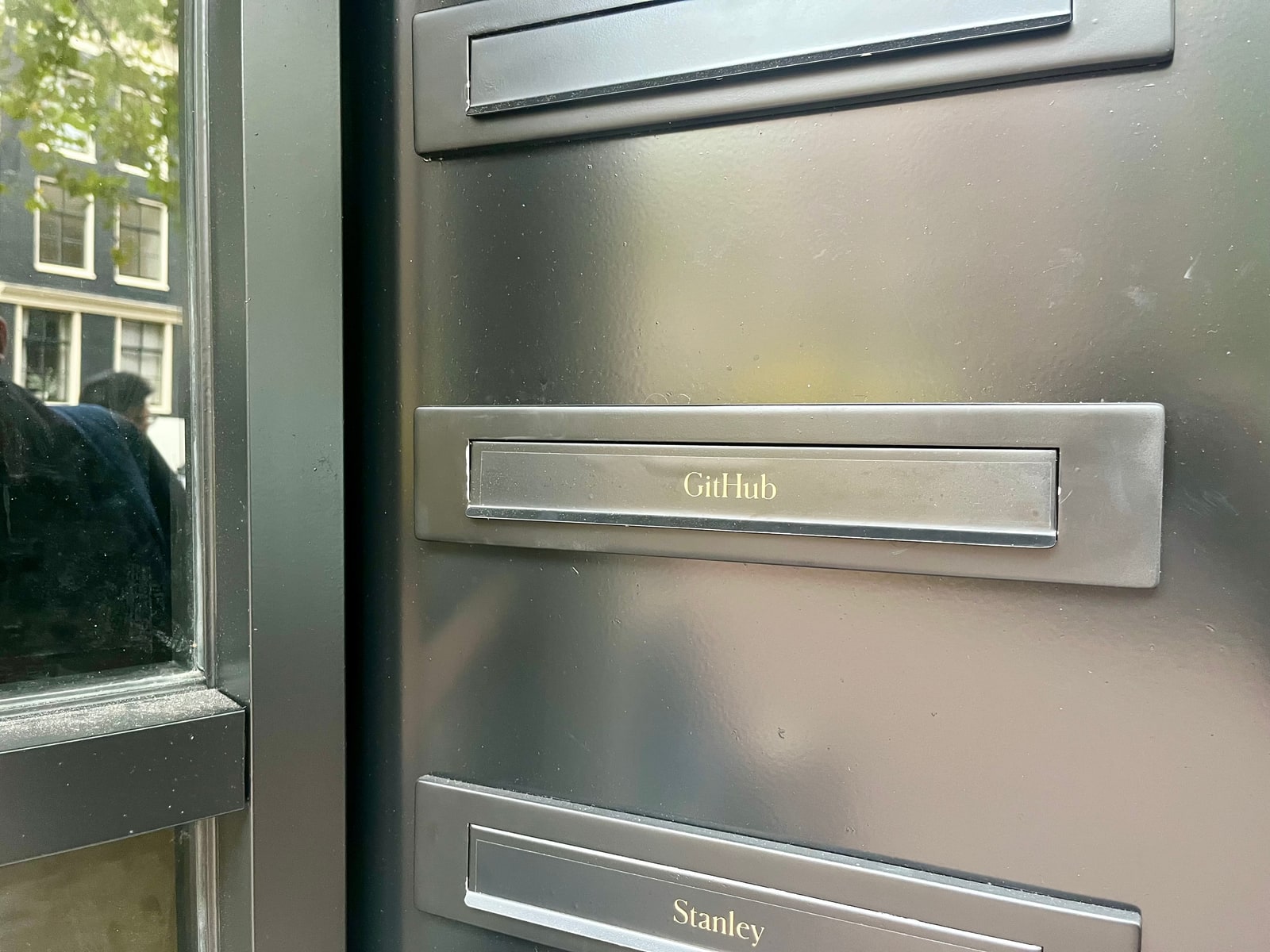
Our conclusion comes from reading the announcement and current provider references, not from benchmarking GitHub, reproducing anomalous traffic or evaluating a customer installation. All three technical sources come from GitHub. The archive photograph shows an office letterbox in Amsterdam in 2023; it is not a photograph of a current interruption or evidence about service status.
Source notes: 1, 2, 3. Original editorial examples and interpretations are identified separately.
Sources & Methods
Prepared October 20, 2026 from the complete October 19 GitHub announcement and two complete primary authentication references. All technical sources are from GitHub, not independent validation. The operation-first diagnosis, identity comparison and release-recovery criteria are original editorial analysis. No failure reproduction, network experiment, token creation, credential change, private repository access or release execution was performed. The separate Commons file record, photographer-profile availability and full CC0 deed were checked. The real camera photograph is dated archive context, not service-status evidence.
- GitHub: October 19 notice — Primary announcement; complete body read
- GitHub: authentication reference — Primary documentation; complete reference read
- GitHub: App installation reference — Primary documentation; complete reference and examples read