
Runtime support and hosting have different clocks
Ryan Dahl’s October 9 statement says the entire Deno team is joining Cloudflare. It sets two different windows: another year of runtime bug fixes and security updates, issued monthly, and six more months of Deno Deploy operation. The company then plans to end its runtime development and close Deploy.
The runtime remains open source, JSR continues with its infrastructure moving to Cloudflare, and paying Deploy customers are offered migration support toward Workers. These are announced commitments, not independently checked operational outcomes.
Our reading is to inventory what you actually use before reacting to the headline. Running a script on your own machine, depending on a package registry and hosting a customer-facing application are different relationships. Their continuity questions should not be collapsed into one declaration that the code is either safe or gone.
Source notes: 1. Editorial interpretation and illustrative calculations are identified separately.
A working application is more than its runtime
For an application owner, our proposed inventory starts with the executable code and continues through stored records, background jobs, incoming addresses, credentials, monitoring and recovery procedures. A runtime can execute code without recreating all the services that surround it.
This creates two separate migration decisions. One asks whether the same application can run in another environment. The other asks whether the complete service can resume with the right records, scheduled work and access boundaries. Passing the first does not supply evidence for the second.
Treat the announcement’s relative windows as planning inputs, not an exact shutdown timestamp we have established. Obtain the account-specific schedule and transition terms, then work backward from a verified recovery exercise. Do not assume an offer of assistance means every workload, account or integration has already been checked.
Source notes: 1. Editorial interpretation and illustrative calculations are identified separately.
The self-hosting ambition still has present-tense limits
Cloudflare’s joint post plans to combine celld work with workerd to improve self-hosting Workers and Durable Objects. It acknowledges that workerd’s current Durable Objects implementation is single-instance rather than the scalable self-hosted system it wants to provide. That roadmap is not a completed distributed migration.
The current celld README describes Workers applications running on an operator’s own machines, with long-term state in object storage. It also excludes products requiring Cloudflare’s network, GPUs or a browser farm. We read the documentation rather than installing or validating that platform.
Our interpretation is that portability must be scoped to an actual dependency list. An available runtime does not move a network service or replace a missing capability. Make unsupported dependencies visible before estimating effort; otherwise a short code change can conceal a much larger operational replacement.
Source notes: 2, 3. Editorial interpretation and illustrative calculations are identified separately.
An original exercise: move a booking service without losing its history
Imagine a fictional workshop-booking application, not a migration we performed. Its test copy contains 120 reservations, including cancellations and repeated customer requests. Define the expected active bookings before moving anything; the total row count alone cannot tell you which appointments should remain.
Restore that copy into the proposed destination. Check identifiers, status histories and access rules, then replay the same synthetic requests. A repeated request should not silently create another reservation. Reconnect a test client after a restart and verify that it sees the same booking rather than a fresh empty session.
Only after those checks would our proposed exercise simulate switching traffic. Record what happens to requests arriving during the switch and how the old environment would resume if the new one fails. Reversing the address is not a complete rollback when the new service has already accepted additional bookings.
Source notes: 3. Editorial interpretation and illustrative calculations are identified separately.
Self-hosting transfers responsibilities as well as control
The workerd README warns that the runtime alone is not a hardened sandbox for potentially malicious code; it calls for appropriate isolation and notes additional defenses in the managed hosting service. The celld README likewise requires a trusted private network for its internal communication and treats bucket credentials as administrator-level access.
Our buying interpretation is that a server bill is only one part of replacement cost. Someone must maintain the machines, restrict access, respond to failures and demonstrate that backups restore. A cheaper instance is not a cheaper service if those jobs remain unstaffed or untested.
For the fictional booking system, write down who owns each of those jobs and what evidence closes it. A successful page load cannot establish containment, recoverability or the ability to operate during an incident. We have not compared providers’ security, latency or total ownership costs.
Source notes: 3, 4. Editorial interpretation and illustrative calculations are identified separately.
Judge the transition by what the service preserves
Our editorial recommendation is to preserve options while testing a representative workload. Keep a reproducible copy of the application and its expected behavior, record the dependencies that need replacements and establish a recoverable transition before committing customer traffic.
A useful progress report separates announced support, available software, demonstrated compatibility and completed service recovery. Each answers a different question. If only a small test succeeds, describe that result at its actual scope rather than declaring the entire organization portable.
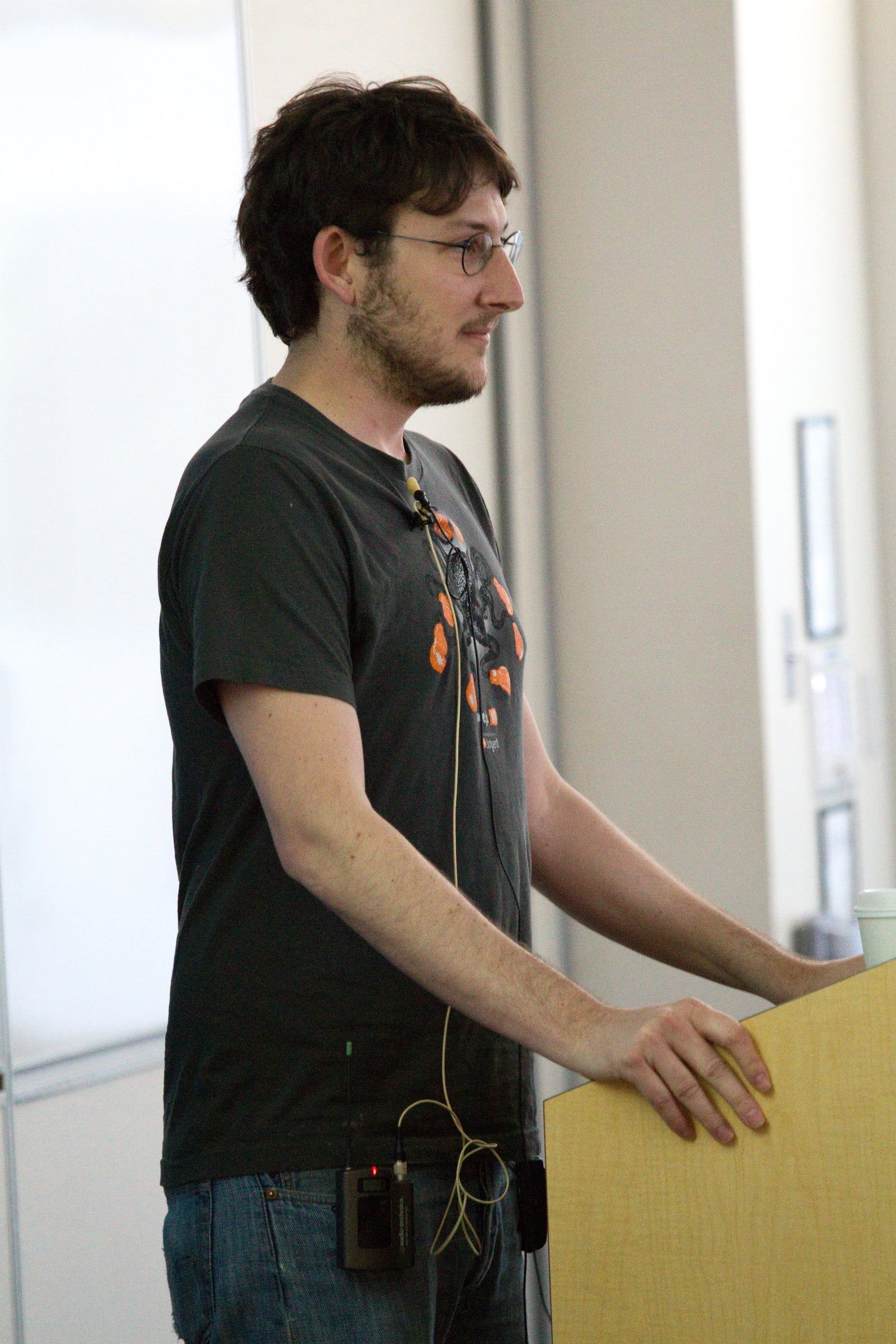
The real archive portrait shows Ryan Dahl speaking at YUIConf in November 2010, not this month’s joining announcement. The substantive story now is a changed maintenance and hosting direction. Its practical consequence is planning two transitions carefully, without treating open code or a future roadmap as proof that either one is finished.
Source notes: 1, 2. Editorial interpretation and illustrative calculations are identified separately.
Sources & Methods
We read both announcements and the complete celld and workerd READMEs. The fictional booking exercise is original editorial analysis; no migration, deployment, recovery test or benchmark was performed.
- Deno: October 9 team announcement — Primary company statement; relative support and hosting windows, not an exact shutdown timestamp
- Cloudflare: Deno joins and self-hosting plan — Primary joint announcement; current limitation distinguished from planned development
- celld: current project README — Complete primary project documentation read October 12; described capabilities are not independently tested
- workerd: current runtime README — Complete primary runtime documentation read October 12, including sandbox qualification; not a security audit