
An October 31 disclosure with a specific condition
Apache’s October 31 advisory lists MINA 3.0.0 through 3.0.0-M2 as affected by CVE-2026-118636. JavaNativeMessageDecoder deserializes incoming frames without a class filter; exposure to an untrusted peer can enable gadget-chain remote code execution. The developer rates it Critical, says the 3.0 branch is inactive and plans no fix there, and recommends the latest 2.2.x branch.
That makes this a maintenance decision as well as a vulnerability notice. We suggest treating the next step as a supported migration that must earn acceptance in the application. An installed package name alone cannot establish the complete exposure path. Equally, choosing a destination version on paper does not show what is running in production.
Source notes: 1. Original editorial examples and interpretations are identified separately.
Start with the application, not a search result
Our proposed first record has three fields: the dependency actually deployed, the component that consumes incoming messages, and the boundary those messages cross. Ask the application’s responsible maintainer to establish those facts from its build and deployment evidence. Keep an unknown entry visible instead of turning a partial inventory into a conclusion about the service.
For example, an inventory might establish a library version while leaving the decoder configuration unresolved. That is a concrete handover to the engineer who owns the integration. A separate observation that a listener is reachable still does not establish which decoder processes its traffic. This is a suggested investigation sequence, not a finding about any particular MINA installation.
Source notes: 1. Original editorial examples and interpretations are identified separately.
A larger version number is not a support policy
Apache’s download page currently lists MINA 2.2.10 as stable, requiring Java 8 or later. It explains that an M suffix denotes a milestone whose feature set can change, while a major-version change can include incompatible APIs. It also provides signatures and checksums for release downloads.
The practical lesson is to use the project’s stated maintenance route rather than rank branches by their first digit. We propose recording the selected release, its source, the application’s runtime requirements and the person responsible for evaluating compatibility. Verify the acquired artifact against the project’s published integrity material; that establishes what was obtained, not that the application now meets every security or reliability requirement.
Source notes: 2. Original editorial examples and interpretations are identified separately.
Filtering needs an application-specific argument
Oracle’s Java 25 documentation describes deserialization as capable of executing custom object code. It says filters can constrain accepted classes and object-graph complexity, and that filtering is not configured by default. This is general platform guidance, not a MINA-specific fix or evidence about a reader’s runtime configuration.
A separate Oracle reference distinguishes JVM-wide and stream-specific filters. Their interaction matters: a JVM-wide setting does not by itself describe how a particular stream combines filtering decisions. The documentation lists limits such as graph depth, references, stream size and array sizes.
For an application owner, the question is which messages are legitimate and how the chosen design enforces that boundary. Do not convert the existence of a filtering feature into a claim that an unreviewed configuration closes this advisory. A proposed compensating measure needs an owner, an explicit scope and evidence appropriate to the actual integration. It should not quietly replace Apache’s migration recommendation.
Source notes: 3, 4. Original editorial examples and interpretations are identified separately.
Compatibility must include both ends of a conversation
Apache’s project page documents a separate historical serialization-format boundary between 2.2.7 and 2.2.8, with corresponding changes in the other maintained lines. Affected object streams are incompatible across that boundary; arrays, primitives and non-Serializable classes are excluded. That is documented release history, not a demonstrated failure of this particular 3.0 migration.
It supplies a useful question for planning: what must continue to communicate after the change? Our proposed acceptance list includes counterpart applications, stored messages, expected inputs, error handling and the observable result of a normal operation. Select checks that exercise the organization’s actual contract rather than treating a successful process start as complete interoperability evidence. We have not executed those checks.
For a proposed staged change, ask whether the deployment plan leaves different application versions exchanging messages, and which evidence would make that combination acceptable. If the team has not evaluated it, retain the combination as an unresolved condition. A successful check involving only the replacement component should not be described as a check of an unexamined counterpart.
Source notes: 5. Original editorial examples and interpretations are identified separately.
Separate deployment from operational acceptance
We suggest two independent entries in a release record. The first establishes which reviewed build reached which service. The second records what the responsible team observed when checking the application’s intended behavior. If the first entry is complete and the second is pending, say so. A single green status should not conceal two different decisions.
A rollback plan also needs a defined boundary. If a proposed recovery would restore an affected, unsupported dependency, it has not resolved the maintenance problem simply by making the service available again. The owner should decide the temporary operating conditions and escalation route using the organization’s incident process. This article offers no universal waiting period, safe network layout or substitute production configuration.
For a small team, a concise record may be enough: selected build, deployment scope, compatibility observations, unresolved questions and the next accountable decision. The purpose is a reviewable change. Extra paperwork that cannot help someone decide whether to proceed adds little value.
Source notes: 1, 2. Original editorial examples and interpretations are identified separately.
What this reporting does and does not establish
Apache’s email is dated October 31, 2026 at 08:01:38 UTC, without a discovery or incident date. This is a disclosure report, not a new-attack claim.
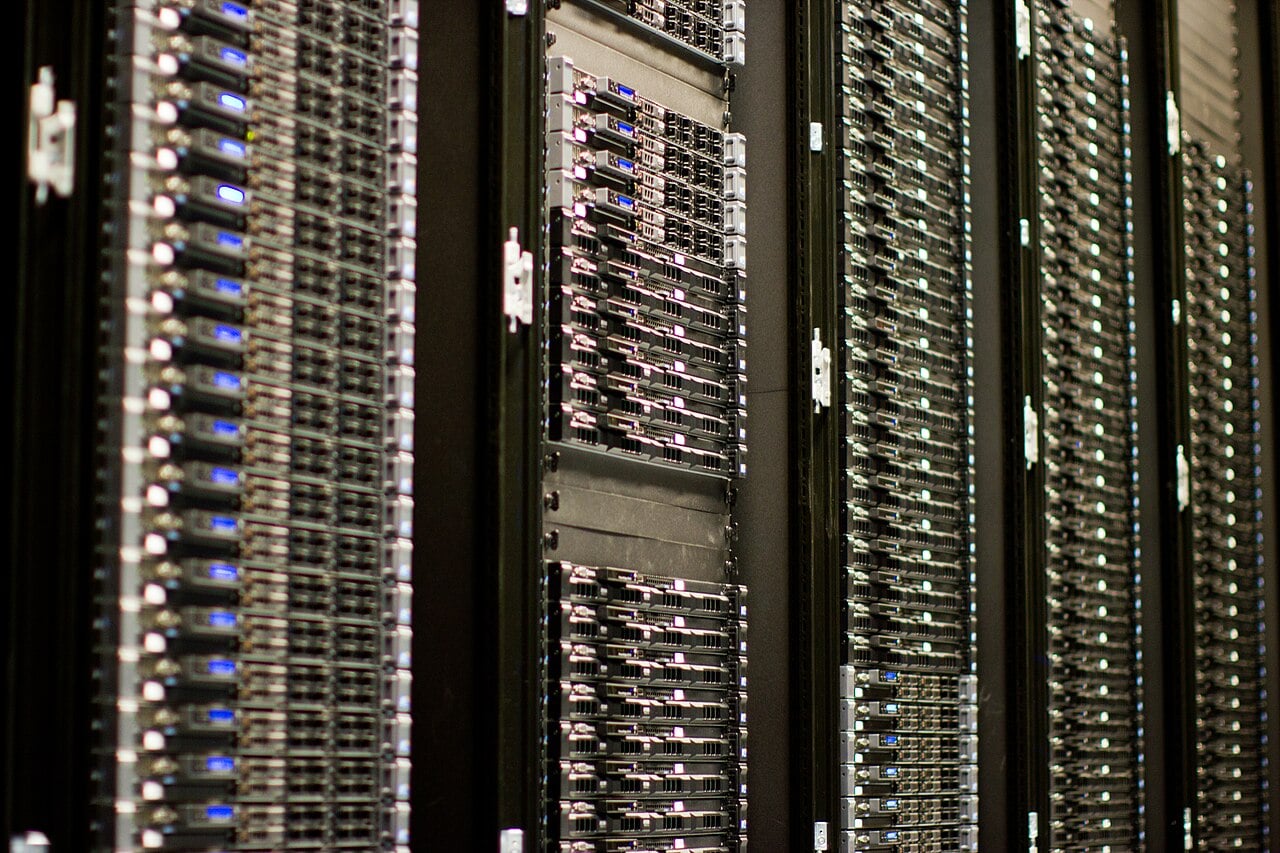
Our operational sequence is original editorial analysis. We performed no exploit execution, server inspection, filtering experiment, artifact-signature verification or migration test. The separately credited 2012 Wikimedia server photograph is infrastructure context only; it does not show MINA, an affected system or a completed repair.
Source notes: 1, 2, 3, 4, 5. Original editorial examples and interpretations are identified separately.
Sources & Methods
The full developer disclosure and relevant primary release, download and Java documentation were read independently. Different evidence types remain separate: advisory conditions, release metadata and platform mechanisms. A mirrored advisory is not independent reproduction. The operational sequence is proposed editorial analysis; no exploit, configuration or migration was tested. Archive photograph source/licence and actual pixels were checked.
- Apache: developer disclosure — Primary developer email, October 31, 2026, 08:01:38 UTC
- Apache: release downloads — Primary current release, integrity and version-numbering guidance, read November 2, 2026
- Oracle: deserialization boundaries — Primary Java 25 platform reference, complete substantive body read
- Oracle: serialization filters — Primary Java 25 platform reference, complete substantive body read
- Apache: historical release context — Primary project page; relevant serialization compatibility and release sections read