
PRODUCT GUIDE · CREATOR TECHNOLOGY
Tamron 16–50mm vs Sigma 18–50mm vs Tamron 17–70mm: the complete APS-C buying guide
A wider compact zoom, an exceptionally small everyday lens, or a longer stabilized workhorse? We compare the trade-offs that change real photographs and video—not just the numbers on the box.

Compact wide-angle work
Tamron 16–50mm F2.8 A
The interesting candidate when the wide end is the limitation. Confirm your mount’s release date and controls; an early review is not proof of an overall optical win.
Read the reasoning →Compact everyday choice
Sigma 18–50mm F2.8 DC DN
The established compact option if its starting angle is already wide enough. There is no reason to replace a satisfactory copy just because a wider alternative exists.
Read the reasoning →Reach and lens stabilization
Tamron 17–70mm F2.8 VC
Carry more lens to avoid a swap and gain optical stabilization. Particularly relevant when the body lacks IBIS, provided size and video behavior suit the camera.
Read the reasoning →Editorial analysis
Start with the photograph you keep missing
Before choosing a winner, look through your last few shoots. Were the rejected frames too tight indoors, too loose from the back of a room, blurred by subject movement, or never taken because the camera stayed in the bag? Those are different problems. A lens that solves one can make another worse. Our recommendation begins with the constraint, not with a universal score.
For someone building a light travel kit from scratch, the compact options deserve the first look. If the existing lens repeatedly leaves something outside the frame and stepping back is impossible, the wider Tamron is the more relevant candidate. If the framing works, the Sigma’s small carrying footprint remains rational. A specification advantage does not create a photograph on its own; a lens you actually bring along can.
The longer Tamron should not be penalized for failing to be the same product. Its proposition is coverage plus stabilization, not winning a pocketability contest. A photographer who cannot walk closer during a ceremony may value reach more than a smaller bag. A filmmaker working at a fixed distance may value stabilization differently from a gimbal operator. Buy for work you can describe, not an imagined future in which every specification matters equally.
Current owners should apply a stricter test than first-time buyers. Write down the missed shot, the cost of changing, and what becomes worse after the swap. If that page stays blank, keeping the lens is a valid outcome. This is a comparison of alternatives, not an instruction to purchase something.
Editorial analysis
What the announcement changes—and what it cannot prove
The significance of this announcement is a different balance of coverage and portability. It gives buyers another way to build an APS-C system without assuming that a larger camera format is the next compulsory step. That is useful competition even for people who ultimately choose something else: a standard zoom belongs in a complete working kit, not on an isolated pedestal.
An announcement and an early review answer different questions. The specification sheet identifies what is offered. A hands-on report describes what one reviewer encountered with a particular sample and camera. Neither establishes production-wide sample consistency, behavior on every mount, service reliability or value after several years. The new lens has less accumulated user history than its established rivals.
That imbalance is not evidence of poor performance. It is a reason to attach conditions to a recommendation. A buyer with an urgent paid assignment may prefer an available, familiar option. Someone whose current lens is adequate can wait for additional tests or a rental. A preorder commits money before that extra information exists; the return policy and delivery date belong in the decision.
We distinguish specified, independently reported, and calculated or inferred. A motor name is not a measured tracking result. A manufacturer’s optical claim is not a comparative lab test. A favorable review is not a promise that your copy, camera firmware and conditions will behave identically.
Like-for-like starting point
Sony E specifications: three different balances
Small screen? Scroll inside this table to see every column.
| Specification | Tamron 16–50 B091 | Sigma 18–50 C021 | Tamron 17–70 B070 |
|---|---|---|---|
| Focal range | 16–50mm | 18–50mm | 17–70mm |
| Maximum / minimum aperture | F2.8–F16 | F2.8–F22 | F2.8–F22 |
| Optical construction | 14 elements / 10 groups | 13 elements / 10 groups | 16 elements / 12 groups |
| Diaphragm | 7 rounded blades | 7 rounded blades | 9 rounded blades |
| Lens mass | 305g | 290g | 525g |
| Diameter × length | 64.4 × 79.6mm | 61.6 × 76.5mm | 74.6 × 119.3mm |
| Filter thread | 55mm | 55mm | 67mm |
| Minimum focus distance · wide / tele | 0.15 / 0.29m | 0.121 / 0.30m | 0.19 / 0.39m |
| Maximum magnification · wide / tele | 1:4.5 / 1:4.8 | 1:2.8 / 1:5 | 1:4.8 / 1:5.2 |
| AF drive · manufacturer description | VXD linear motor | Stepping motor | RXD stepping motor |
| Optical stabilization | Not specified in checked documents; no VC advertised | No | VC: yes |
Lens-only weights. Tamron length is front-to-mount-face, not maximum zoom extension. Minimum focus distance is measured from the sensor plane, not front clearance. No B091 manual was listed in the checked global directory. “Not specified” is not a measured absence.
The optics explained · original calculations, not a lens test
16mm versus 18mm: a little wider can mean the room actually fits
Edmund Optics distinguishes angular field of view from the width of a scene that fits in the image. We use an ideal rectilinear, distant-scene model, holding sensor, aspect ratio and camera position fixed. Real framing can differ because of distortion correction, focusing and the effective optical viewpoint.
Our calculation compares widths, not degrees: 18 ÷ 16 = 1.125. The 16mm view covers approximately 12.5 percent more scene width than the 18mm view under those assumptions. If 18mm fits a hypothetical 4-metre-wide plane, 16mm fits about 4.5 metres. This is geometry, not our measurement of either lens.
That extra half-metre could matter when a wall prevents stepping back, but we would first list what must fit: two people, an interview background or the edges of a small interior. If 18mm already accommodates the composition, unused width is not automatically a better photograph. Moving back changes the viewpoint; it is not an identical substitute.
Evidence: [24]
The optics explained · original calculations, not a lens test
Crop factors describe the view; they do not turn F2.8 into a darker setting
Nikon documents a nominal 1.5× crop relationship for DX, while Canon’s manual describes approximately 1.6× for its APS-C crop. Those are comparison conventions, not universal instructions to apply 1.5 to every small sensor. Check the actual camera and recording mode before choosing a conversion.
Our arithmetic gives 16–50mm a 24–75mm full-frame angle-of-view equivalent at 1.5×, or 25.6–80mm at 1.6×. Likewise, 18mm becomes 27mm or 28.8mm. These numbers do not change the lens’s physical focal length, establish mount compatibility or prove that either lens covers a full-frame sensor.
For an approximate depth-of-field comparison at ordinary distances, match viewpoint, framing, focus distance and final viewing criteria, using the corresponding equivalent focal length on full frame: F2.8 on 1.5× APS-C corresponds roughly to F4.2 on full frame, or F4.48 at 1.6×. This is not an exposure setting to enter on the APS-C camera. It remains F2.8 for nominal exposure; neither equal noise nor identical background rendering is promised.
Reproducible arithmetic · assumptions visible
Width, reach and mass: what the numbers actually mean
Small screen? Scroll inside this table to see every column.
| Question | Arithmetic | Interpretation / limit |
|---|---|---|
| At equal distance and sensor size, an ideal rectilinear 16mm view covers 12.5% more linear scene width than 18mm. | 18 / 16 = 1.125 | Geometric approximation, not measured corrected coverage or a 12.5% increase in angle of view. Focus breathing and electronic crop can alter framing. |
| Cropping a hypothetical 24MP 50mm frame to match 70mm framing retains about 12.2MP. | (50 / 70) ** 2 = 0.5102040816; 24 * 0.5102040816 = 12.24489796 | Same viewpoint, sensor, distant subject, ideal framing and no other crop. Not a claim that either lens resolves that detail or has identical perspective after moving the camera. |
| B091 Sony E is 15g heavier than Sigma, but 220g or about 42% lighter than B070. | 305 - 290 = 15; 525 - 305 = 220; (525 - 305) / 525 * 100 = 41.9047619 | Lens-only specification comparison; hood, caps, filter, body and rig excluded. Not an actual gimbal-balance test. |
The crop-to-reach example uses a hypothetical 24MP image at the same viewpoint and distant subject. It does not establish resolved detail or replace a lens test.
Try your own assumptions · calculations run only in this page
Framing and carrying calculator
This is a planning tool, not a camera simulator. Lens masses use Sony E specifications; the crop and common body/accessory allowance are your inputs. No data is sent or stored.
Formulas: focal length × sensor crop × additional crop; total grams = common allowance + lens mass; nominal gain = (comparison F-number ÷ 2.8)²; stops = log₂(gain). Ideal rectilinear scene width at a fixed distance varies inversely with focal length. None is an optical measurement.
Editorial analysis
How to read seven reviews without inventing a winner
The evidence register records test context instead of collecting star ratings. It lets you ask whether a reviewer’s setup resembles your work. A Fujifilm laboratory result, a Sony field review and a stabilized handheld sequence are complementary evidence, not interchangeable measurements. A mount-specific observation should remain attached to that mount.
Sharpness graphs change with sensor resolution, processing, sharpening, chart distance and reporting conventions. Even the apparent corner depends on which region was sampled. Combining unlike numerical results into a new league table would create a ranking that no reviewer actually tested. We do not convert the reviews into a synthetic percentage score.
If a reviewer identifies a weakness at a particular focal length or aperture, add that condition to your own trial. Judge it at your final output size. A soft extreme corner in a close-distance chart can be irrelevant to a centered portrait but consequential to a detailed interior. A flattering web-sized sample cannot establish edge uniformity in a large print.
PetaPixel offers an early field review, not a matched comparison. Its sample photographs remain with the original publisher and are not reproduced here.
Several reviews should produce a better test plan. Separate rendering, focusing, handling and processing, then ask which issues affect your work. Positive opinions are not a substitute for a missing side-by-side test. Disagreement does not automatically mean either reviewer is wrong.
Seven written tests · five independent outlets
What other reviewers actually found
These are short attributed summaries, not Lumacta measurements. Original sample galleries remain with their authors. The publication and update dates below do not imply a later retest. The early review’s October 13 publisher date is distinct from Tamron’s October 14 global announcement date.
Sony E · Chris Niccolls
PetaPixel: B091 field review
Published 2026-10-13
- Setup
- Sony A7R V
- Method
- Outdoor photographs; aperture comparisons
Niccolls found strong centers, softer extreme 16mm corners improving at f/5.6, and convincing 50mm detail. Some stopped-down ghosting and minor LoCA remained; autofocus pleased him. He supplied no matched three-lens measurements.
Limit: Crop mode, breathing and RAW-correction tests unspecified.
Sony E · Gordon Laing
CameraLabs: Sigma Sony review
Published 2021-10-19
- Setup
- Sony A6400
- Method
- Landscapes, portraits, focus pulls; Sony kit comparison
Laing found strong wide-open detail and better corners than Sony’s kit zoom. Correcting wide-end barrel distortion cropped the frame slightly. AF was quick and quiet; breathing checks at f/22 showed little magnification change. Unstabilized A6400 handheld video remained shaky.
Limit: Not a Tamron comparison or gimbal test.
Sony E · Dustin Abbott
Abbott: Sigma Sony review
Published 2021-10-19
- Setup
- A6400 charts; A6400/A6600 fieldwork
- Method
- 24MP chart crops, field images, focus pulls
Abbott reported strong centers, lower-contrast 18mm corners and a 35mm contrast dip. The closest wide-end focusing position brought shading and field-curvature problems. AF and breathing impressed; RAW distortion required correction and some lighting produced ghosting.
Limit: Pre-release loan; current profiles not tested.
Fujifilm X · Klaus
OpticalLimits: Sigma X lab review
Published 2023-03-02 · Page updated 2026-08-20
- Setup
- Camera body not identified in the written test
- Method
- 26MP MTF50; RAW/corrected comparisons; 40MP observation
The lab found good wide-open performance on 26MP, with poorer 18mm corners on 40MP. Uncorrected distortion and vignetting were substantial. LoCA persisted at f/4; lateral-color correction and axial-color behavior should not be conflated.
Limit: Bodies unspecified; cross-system MTF comparisons invalid.
Sony E · Dustin Abbott
Abbott: B070 Sony review
Published 2021-01-12
- Setup
- Sony A7R III; 18MP APS-C crop
- Method
- Chart crops, field photographs, focus pulls
Abbott found high wide-open detail, with reduced 70mm contrast improving at f/4. Bright bokeh highlights showed rings. He reported quiet focus pulls and little breathing; his stabilization observations combined VC with IBIS and cannot isolate either system.
Limit: Different resolution from his Sigma test.
Sony E · Klaus
OpticalLimits: B070 Sony lab review
Published 2023-05-02 · Page updated 2026-08-20
- Setup
- Camera body not identified in the written test
- Method
- MTF50, RAW/corrected comparisons, field images
The lab reported strong centers and outer-frame resolution, with some 70mm decline. RAW vignetting exceeded two stops at the extremes. Bokeh highlights were busy; extreme backlighting produced colored ghosts despite retained contrast. Its sample exhibited zoom creep.
Limit: Body unspecified; no standardized stabilization protocol supplied.
Sony E · Andy Westlake
Amateur Photographer: B070 field review
Published 2021-04-20 · Page updated 2025-06-03
- Setup
- Sony A6000; secondary A7 III observations
- Method
- Field images, aperture comparisons, handheld stabilization
Westlake obtained sharp wide-angle images at 0.3 seconds on the A6000. Midrange detail impressed, but extreme-focal-length corners softened. He found the lens front-heavy, with sticky manual focusing; his contemporary Camera Raw profile over-corrected vignetting.
Limit: Historical profile observation, not a current-software diagnosis.
Complete written bodies read. Embedded videos were not watched or transcribed. Historical software observations are not diagnosed as current faults; cross-system laboratory numbers are not combined.
The evidence, side by side
Compare the evidence by aspect—not by a borrowed overall score
Use this matrix as a reading map to the seven original reviews, not as a matched shoot-out. Each numbered reference identifies the source of that specific capsule. Cameras, samples, formats, processing and test dates differ. In particular, the Sigma axial-color observation comes from a Fujifilm X test; it is not a Sony-versus-Sony measurement.
A missing matched result is a gap in this guide’s evidence, not a defect in the lens. Likewise, an isolated successful exposure is not a stabilizer rating and a pleasing focus transition is not a tracking percentage. The register above preserves each reviewer’s setup and qualifications; use it before treating two cells as equivalent evidence.
Start with the row that affects your intended photograph, follow its sources, then define a trial that would settle your decision. If the work is a controlled tabletop session, the closest-focus row is more relevant than a generic autofocus compliment. If the work is a ceremony, ask whether the tested behavior resembles the actual camera, distance and permitted position. Do not count positive cells as votes.
Scroll inside the table on a narrow screen. Read each source and its setup before comparing cells.
| Aspect | Tamron 16–50 B091 | Sigma 18–50 C021 | Tamron 17–70 B070 |
|---|---|---|---|
| Wide-open central detail | Strong centers reported. Evidence: [17] | Strong detail reported. Evidence: [18] | High wide-open detail reported. Evidence: [21] |
| Corners and edges | Extreme 16mm corners improved at F5.6. Evidence: [17] | Lower-contrast 18mm corners in Abbott’s Sony test. Evidence: [19] | Extreme-focal-length corners softened in Westlake’s test. Evidence: [23] |
| Long-end qualification | Convincing 50mm detail reported. Evidence: [17] | No common-body three-way result established here. | Reduced 70mm contrast improved at F4. Evidence: [21] |
| Corrections and delivered frame | RAW-correction protocol unspecified. Evidence: [17] | Wide-end barrel correction slightly cropped the frame. Evidence: [18] | RAW vignetting exceeded two stops at the extremes. Evidence: [22] |
| Focus acquisition / transitions | Autofocus pleased the reviewer. Evidence: [17] | Quick, quiet AF in Laing’s test. Evidence: [18] | Quiet focus pulls reported. Evidence: [21] |
| Breathing evidence | Breathing test unspecified. Evidence: [17] | Little change in Laing’s F22 check. Evidence: [18] | Little breathing reported. Evidence: [21] |
| Backlight behavior | Some stopped-down ghosting. Evidence: [17] | Some lighting produced ghosting. Evidence: [19] | Colored ghosts under extreme backlighting. Evidence: [22] |
| Axial color / LoCA | Minor LoCA reported. Evidence: [17] | LoCA persisted at F4 in the X-mount lab report. Evidence: [20] | Not ranked here; no matched color-aberration test. |
| Out-of-focus highlights | No three-way bokeh ranking claimed. | No three-way bokeh ranking claimed. | Rings in bright bokeh highlights. Evidence: [21] |
| Handheld stabilization context | No controlled stabilization result claimed. | Shaky handheld video on an unstabilized A6400. Evidence: [18] | Static stills success on A6000; not a guaranteed rating. Evidence: [23] |
| Handling qualifications | No long-term handling comparison claimed. | No matched handling comparison claimed. | Front-heavy; sticky manual focus reported. Evidence: [23] |
| Closest wide-end focus | No matched tabletop trial claimed. | Shading and field-curvature problems at closest focus. Evidence: [19] | No matched tabletop trial claimed. |
The Sigma color-aberration capsule is Fujifilm X; the other cited capsules here are Sony E. No cross-system lab numbers, star ratings or isolated successes are normalized. “No result claimed” describes our evidence, not a measured weakness.
Translate the reviews
What the optical terms actually tell you
Definitions describe concepts, not measured differences between these three lenses. The suggested checks are proposed exercises; they were not performed for this guide.
- Field curvature
The best-focused subject surface need not be a flat plane. An edge can require a different focus distance from the centre even in a well-centred lens. That differs from saying the edge can never become sharp.
What to check: We would align a flat subject, focus centrally, then refocus on each edge. Keep both versions. Compare the intended three-dimensional scene too; a wall is not every photographic assignment.
Evidence: [37]
- Decentering versus tilt
Decentering is an alignment fault distinct from a tilted best-focus field. A weak side alone cannot identify which problem exists. Refocusing may reveal that opposite sides reach similar sharpness at different focus distances rather than one remaining intrinsically weak.
What to check: We would report the repeatable symptom and retain refocused comparisons before contacting service. This is screening, not a diagnosis. Do not dismantle or adjust a borrowed or purchased lens.
Evidence: [37]
- Lateral chromatic aberration
Transverse chromatic aberration means different wavelengths produce differently sized images. Colour boundaries consequently fail to coincide. This differs from colours reaching best focus at different distances along the optical axis.
What to check: We would inspect matching high-contrast boundaries near the centre and edges, recording converter and correction settings. Describe where fringes appear rather than labelling every coloured edge as the same problem.
Evidence: [38]
- Longitudinal chromatic aberration
Axial chromatic aberration, or LoCA, means different wavelengths focus at different positions along the optical axis. One focus setting does not bring all colours together. This differs from a colour-channel image-size mismatch.
What to check: We would photograph small neutral details distributed through depth, then compare just-in-front, focused and just-behind regions. Record focus and aperture. Treat visible colour as an observation requiring interpretation, not a diagnosis from one screenshot.
Evidence: [38]
- Veiling flare
Stray light can wash over an image, reducing contrast and weakening colour without a neatly outlined bright shape. This veiling appearance raises a different question from an isolated ghost or a fine-detail resolution chart.
What to check: We would compare a low-power light just outside different frame edges, with consistent exposure and a clean lens. Record the conditions. Do not use the sun for this proposed exercise.
Evidence: [39]
- Ghosting
Internal reflections can create distinct bright spots, rings or polygons. Unlike a broad veil, these are local patterns. Filter surfaces can contribute, so a ghost in one configuration does not identify the lens as the sole cause.
What to check: We would repeat the same safe lighting arrangement without the optional filter, then change the light’s position slightly. Keep framing and exposure documented; compare the patterns rather than inventing a universal flare-resistance score.
Evidence: [39]
- Onion-ring highlights
Concentric structure inside a defocused small highlight can reveal residual surface structure in some aspherical optics. This local highlight characteristic does not prove that every aspherical design produces distracting backgrounds or that the photograph lacks detail.
What to check: We would record small, unclipped background lights at the intended distance and aperture, then inspect the delivered image. One enlarged blur disc cannot establish how every background looks.
Evidence: [40]
- Bokeh beyond highlights
Bokeh concerns the character of out-of-focus rendering, not just blur quantity. A highlight’s outline reveals only part of that behaviour. Background edges and textures may differ even when isolated light discs look similarly round.
What to check: We would place the subject against foliage, broad shapes and room clutter while maintaining composition. Compare at delivery size and state a preference; a subjective response is not a laboratory ranking.
Evidence: [40]
- MTF and resolution
Modulation transfer function describes contrast transfer at specified spatial frequencies, connecting detail size with how distinctly it is reproduced. It is not a megapixel count; read the curve with its position, aperture and stated conditions.
What to check: We would identify axes and test conditions before comparing lines. Ask which frequencies concern the intended output. Do not convert an attractive curve into an unsupported overall percentage score.
Evidence: [41]
- Computed versus measured
A computed optical curve describes a design model; manufacturing tolerances can change actual performance. A measured system may also include the camera. Neither alone establishes what a photograph, focusing sequence or production copy delivers.
What to check: We would distinguish modelled lens data from measured lens or camera-system data, then seek relevant photographs. Record what was included. A chart remains useful evidence without becoming a substitute for every shooting condition.
Evidence: [41]
Editorial analysis
Image quality means more than sharpness in the middle
For architecture and landscapes, inspect the whole corrected frame: straight lines near the borders, corner detail and what remains after correction. For portraits, examine the face, the transition out of focus and background distractions. For product work, inspect fine edges against bright backgrounds and color consistency as the subject moves through the frame. These are different acceptance tests.
A maximum-aperture center crop is easy to compare and easy to overvalue. A complete judgment asks what happens when the lens is stopped down, how it handles a bright window near the edge, and whether out-of-focus highlights have distracting outlines. No specification table describes all of that. The linked reviews provide examples, but not one shared lighting and processing setup.
Correction profiles are part of a modern workflow, not automatic proof of a defective lens. The practical question is whether your camera and editor produce an acceptable final image. Brightening dark corners can make noise more visible there; remapping curved lines redistributes detail and can alter the frame boundary. Examine files in the software you will deliver from, rather than assuming every editor applies the same profile.
A pleasing portrait does not establish suitability for astrophotography. Stars near the corners test aberrations differently from a moving person. We have no controlled star-field comparison of these three lenses. If the night sky is the purchase reason, make that a dedicated trial instead of treating a general sharpness verdict as permission to skip it.
During a return window, photograph a flat detailed subject square-on at several apertures and repeat after refocusing. A persistently weaker side deserves investigation, but a tilted wall photograph cannot diagnose decentering on its own. Rule out alignment, focus and subject depth before concluding that a copy is faulty.
The optics explained · original calculations, not a lens test
Judge corrected delivery and uncorrected optics as different questions
Sony documents profile-based compensation and notes that some camera/lens combinations lock distortion correction on. Our comparison would record what the actual camera and converter permit, rather than assume every RAW file can be displayed identically without corrections. A corrected JPEG and an uncorrected conversion answer different questions.
We would first judge the delivered image at a common output size: does the intended subject retain useful detail across the frame? Then, where the software permits, inspect an uncorrected version to understand the transformation. Record framing and edge placement as well as apparent sharpness; do not quietly compare differently cropped compositions.
For laboratory reports, our acceptance checklist requires sensor, aperture, focal length, focus distance, correction state, processing and score definition. We would not rank two lenses by numerically combining tests that differ on those inputs. A manufacturer’s optical chart, a camera-based chart and a reviewer’s cropped photograph are not interchangeable measurements. Treat an unexplained score as a question to investigate, not a purchasing verdict.
Evidence: [34]
The optics explained · original calculations, not a lens test
F2.8 buys a calculable opportunity, not an independently measured T-stop
The nominal exposure ratio follows the squared f-number ratio. In our calculation, changing F3.5 to F2.8 gives (3.5 ÷ 2.8)² = 1.5625 times the light, or approximately 0.64 stop. F5.6 to F2.8 gives four times, or two stops. Compare at a shared focal length, not unlike ends of unrelated zoom ranges.
Hold scene illumination, shutter time and sensor settings constant for that model. Alternatively, spend the nominal gain on a shorter shutter time or reduced ISO, rather than claiming both benefits in full simultaneously. We would write down which benefit the job needs before calling a brighter zoom an essential upgrade.
F-number is geometric; T-stop accounts for actual transmission. We have measured neither lens’s transmission. Coatings, losses and camera processing mean equal marked apertures are not a guarantee of identical recorded brightness. These calculations also omit close-focus exposure effects. Automatic exposure can conceal differences, so a proposed comparison should document manual settings and consistent processing.
The optics explained · original calculations, not a lens test
Stabilizing a camera and stopping a moving person solve different problems
Sony’s action guidance recommends adjusting shutter speed to the subject’s movement; Canon’s stabilization explanation addresses camera-shake blur. We keep those problems separate. A steady background does not prove a moving hand or face will remain sharp during the exposure.
Take an original simplified model: a subject detail travels across the image at a constant 100 pixels per second. During 1/50 second it moves 2 pixels; during 1/200 it moves 0.5 pixel. The fourfold exposure reduction matches the nominal F5.6-to-F2.8 gain at fixed ISO and light. These are invented inputs, not measured blur or a guaranteed sharpness threshold.
Our practical priority for a moving subject is to choose the necessary shutter time, then assess focus and available light. For a still subject we would investigate slower-shutter consistency instead. For video, shortening exposure also changes the appearance of motion. We would decide whether that look suits the sequence rather than importing a still-photography preference automatically.
The optics explained · original calculations, not a lens test
IBIS, optical stabilization and electronic crop belong on the same worksheet
In-body stabilization acts at the sensor; optical stabilization operates in the lens. Compatible systems can coordinate, but their advertised stop figures are not numbers to add. Electronic stabilization may use a smaller image region. Sony’s α6700 guide explicitly says Active mode narrows the angle of view; this does not specify a universal crop for other cameras.
Our deliberately hypothetical example adds a 1.1× recording crop: 16 × 1.5 × 1.1 = 26.4mm full-frame view equivalent, rather than 24mm. The 1.1 is an assumed input, not a measured α6700 value. If both lenses use the same extra crop, their ideal 12.5-percent relative width advantage remains; the absolute view changes.
We would compare the final mode actually delivered, including any breathing compensation. For a gimbal, we would also check permitted combinations, balance and walking footage. Neither a payload label nor an electronic stabilization menu establishes that a finished rig produces acceptable movement. Our proposal is to verify the whole setup, not nominate a universal winning stabilization switch.
Editorial analysis
For video, compare the recording chain—not just the lens
Begin with the camera’s exact recording mode. High-frame-rate capture, electronic stabilization or a delivery aspect ratio can reduce usable framing; an aspect-ratio change may trim height rather than width. A handheld talking-head frame and a tripod interview have different requirements. Mark the position, select the actual mode and inspect the final frame before ordering a lens to solve a framing problem.
Autofocus needs separate trials: an approaching subject, a near-to-far rack, a face partly leaving the frame and a zoom during recording. Quick acquisition in a still photograph does not guarantee a smooth video transition. Camera transition settings, subject detection and firmware can change the impression. Motor branding cannot predict the full result.
Do not infer parfocal behavior from a constant maximum aperture. Exposure continuity, focus continuity and physical balance are separate questions. If a live zoom is required during a paid take, record that exact move at the intended aperture and distance. Follow the mount-specific warnings below instead of extrapolating older Sony tests to every version.
A gimbal adds a mechanical budget. Include body, plate, microphone, receiver, filter, cables and cage before assessing payload. A maximum-payload figure does not guarantee balancing or clearance. Check different zoom positions and whether cables pull on an axis. A light lens may simplify the rig, but a compact lens with the wrong frame remains the wrong tool.
Listen as well as look. A quiet room, camera-mounted microphone and slow focus transition make a useful stress case for operational noise. A wireless lavalier changes the importance of that result; handling noise remains separate. Record a reference with manual focus and no barrel contact to distinguish lens operation from the room and the operator.
On a locked interview tripod, a compact lens can be sensible without relying on optical stabilization. For handheld static cutaways on a body without IBIS, lens stabilization offers a different benefit. For walking footage, do not assume any of these replaces technique, support or a suitable stabilization workflow. We have not measured focus breathing or stabilization side by side.
The optics explained · original calculations, not a lens test
Autofocus, zoom focus and breathing need separate video observations
Sony defines focus breathing as an angle-of-view change as focus position varies; its compensation documentation describes cropping and lens-compatibility limits. That does not establish this new lens’s breathing performance or support on a particular body. We have not independently tested its autofocus, zoom behaviour, breathing or microphone pickup.
Our proposed assessment separates acquisition, following and transition quality. We would ask whether focus arrives at the intended subject, stays there during movement and changes at an appropriate speed between subjects. We would retain the settings and failures instead of presenting one attractive transition as an autofocus benchmark.
A constant maximum aperture is not a promise of parfocal operation: the practical question is whether focus remains acceptably placed while zooming. Test that separately from a near-to-far focus pull. We would also record a quiet take through the intended microphone, because a motor description is not evidence of what that recording chain captures.
Evidence: [35]
The optics explained · original calculations, not a lens test
Minimum focus distance is not the space left for your light
Tamron’s educational definitions measure minimum object distance from the camera’s sensor plane; working distance is the gap from the front of the lens to the subject. Magnification describes physical image size on the sensor relative to object size. A short focusing-distance number alone therefore does not tell us how large a small object fills the frame.
For our tabletop workflow, we would make three separate entries: reproduced subject width, front-to-subject clearance and room for lighting. We would repeat them at both zoom ends rather than assuming the widest setting supplies the most useful close-up. The composition can succeed while the camera or hood obstructs the intended light.
A proposed jewellery or component photograph should also include the required depth, not just one sharply rendered edge. We would test framing and lighting before buying an accessory. We would not call this zoom a replacement for a dedicated macro workflow without evidence that the specific subject, clearance and output requirements are met.
Evidence: [33]
Editorial analysis
Travel, weddings, portraits and products need different compromises
Travel and street work reward a comfortable, unobtrusive kit. Start with the compact pair, then decide how often a wider starting point changes the result. In a small café or narrow street, you cannot always step back. On an open promenade you usually can, although changing camera position also changes perspective. Carry the camera for an hour before assuming that a weight figure describes comfort.
For weddings and indoor events, separate establishing shots from subject isolation. A wider view helps explain a room and include a group. A longer view helps isolate a person when you cannot cross the aisle. Neither guarantees focus on a moving subject in poor light. A constant aperture can simplify exposure decisions, but a dependable event kit also needs lighting, batteries, cards and a backup plan.
The longer zoom is interesting for a one-camera operator who values fewer changes. The counterargument is fatigue and maneuverability: five comfortable minutes do not predict an entire ceremony. If you already work with a second body or telephoto, the extra range may duplicate coverage. Judge the complete kit, not an assumption that more range always means fewer items.
Portrait photography is not automatically a contest for the longest number. Subject distance, background distance, framing and comfort all matter. A longer focal length can encourage a more distant viewpoint for the same framing, changing perspective. In a small apartment, the available distance may decide the focal length before any preference about blur does. Try both a head-and-shoulders frame and an environmental portrait.
For food, crafts and small products, close focus is useful only if lighting and working distance remain usable. Getting extremely close can block a softbox, cast a shadow or exaggerate a three-dimensional object. A longer working distance may be more productive despite a lower maximum reproduction ratio. Jewelry, reflective objects and flat copies deserve separate trials; close focus alone does not make a specialist macro lens.
Children, pets and informal sport introduce subject movement. Start with a shutter speed that freezes the activity, then assess focus hit rate. Stabilization helps hold a static frame; it cannot stop a running subject. If the subject remains too small at the long end, another category of lens may be needed. The longest lens here is not automatically a sideline sports telephoto.
Lumacta editorial decision matrix · not test scores
Which compromise fits the job?
Small screen? Scroll inside this table to see every column.
| Your recurring problem | First candidate to examine | Why it belongs on the shortlist | What to verify before buying |
|---|---|---|---|
| A wall stops you stepping back | Tamron 16–50 | Widest nominal starting focal length here | Corrected frame in the exact mode; early evidence and mount timing |
| Camera stays home because the kit is cumbersome | Sigma 18–50 or Tamron 16–50 | Compact alternatives to the longer zoom | Actual bag, grip and accessory fit; whether the wider view matters |
| Static handheld subjects, body without IBIS | Tamron 17–70 VC | Documented lens stabilization | Repeated hit rate with your body; subject motion remains separate |
| Cannot approach a ceremony or portrait subject | Tamron 17–70 | Longest nominal reach in this set | Working distance, fatigue and whether a second lens already covers it |
| Gimbal and walking video | Compact pair, then whole-rig trial | Lower specified Sony E lens mass | Balance, clearance, final crop, AF transitions and microphone sound |
| Small objects with carefully placed lighting | Trial, not a paper winner | Magnification is only one requirement | Front clearance, hood shadows, field shape and subject depth |
| Existing zoom already solves the work | Keep it | No unaddressed limitation established | Spend only after a repeatable need appears |
These priorities are reasoned recommendations, not a measured optical, autofocus or stabilization ranking.
A decision can change when the brief changes
Six worked buying decisions
Illustrative scenarios, not actual shoots or lens tests. These invented briefs show how to reason about a choice, not what happened on a Lumacta assignment.
Illustrative brief 1 / 6
A family-room brief changes when the group becomes the subject
Imagine a family requesting portraits during a home celebration. The initial brief concerns individuals, so the photographer provisionally keeps a familiar compact setup. At the planning visit, the family adds a group photograph with the room visible. Furniture, an occupied doorway and the position of the guests restrict where the photographer can stand.
The decision would now begin with the required composition, not an upgrade order. Ask where people can comfortably gather, keep access clear and check the intended recording format. An authorized demonstration would establish whether the current setup includes the required people and surroundings. Do not move someone into an awkward position just to defend a lens choice.
If the composition repeatedly fails because the view is too tight, the wider compact zoom belongs on the shortlist. That is a framing hypothesis, not an optical verdict. Compare a planned group arrangement and a looser alternative, then show the family the intended relationship between faces, furniture and background before committing to the purchase.
The choice would reverse if the gathering can be rearranged comfortably, the required room context is dropped, or the current lens already delivers the agreed frame. If portraits become the priority again, unused width has not earned its cost. The assignment has changed; the buying recommendation should be allowed to change with it.
Illustrative brief 2 / 6
A travel plan reveals whether width or willingness to carry wins
Imagine a trip combining city walks with visits to friends. The proposed output is a personal photo essay, not a complete record of every landmark. The owner already knows that an uncomfortable bag tends to remain at the accommodation. The initial shortlist therefore favors the small compact zoom, provided its framing suits the planned essay.
Before buying, assemble the actual bag and make a local practice walk with permitted equipment. Write a short sequence to complete: arrival, surroundings, interaction and a detail. Record which compositions were abandoned and why. A missed photograph caused by hesitation, access or an unwilling subject should not automatically become evidence that the lens needed to be wider.
The shortlist would shift toward the wider compact zoom if important compositions consistently need more room and the proposed replacement remains comfortable in the real bag. Conversely, a successful walk with the existing lens would weaken the upgrade case. The exercise concerns the owner’s delivery and carrying habits, not a promised travel-performance advantage.
A changed itinerary could reverse the choice again. If the trip becomes mainly distant observation from restricted viewpoints, examine whether the longer stabilized zoom meets that brief in an authorized trial. If the extra equipment makes the camera stay behind, revisit the output plan rather than pretending that coverage on paper guarantees useful photographs.
Illustrative brief 3 / 6
A solo ceremony assignment begins with permission and coverage priorities
Imagine an organizer requesting unobtrusive ceremony photographs from a designated position. The photographer cannot assume permission to walk through the audience. Before selecting equipment, confirm the permitted position, the moments that matter and whether a room-wide photograph is essential. A verbal request for complete coverage is too vague to turn directly into a lens recommendation.
The longer stabilized zoom would enter the shortlist when the agreed position makes subject framing the limiting question. Its suitability would still depend on an actual trial with the intended body and delivery requirements. A useful preparation record would show the planned view of the speaker, the audience and the entrances, with inaccessible viewpoints explicitly marked.
Now change the assignment: the organizer wants a continuous group scene rather than isolated expressions. The earlier preference may no longer fit. Examine the required wider composition, discuss a different permitted position and decide which moments can reasonably be delivered. Do not promise simultaneous incompatible views simply because changing lenses is theoretically possible.
The decision would reverse if the longer option fails the agreed framing or handling threshold, if the venue grants a more useful position, or if the brief changes to a locked-camera interview. For paid work, an unverified launch option would not become dependable merely because its specification appears attractive. Agree the feasible coverage and fallback before accepting the assignment.
Illustrative brief 4 / 6
A moving-video plan exposes the cost of an apparently simple lens change
Imagine a solo creator planning a short film that moves from an interior introduction to an exterior walk. The proposed gimbal setup includes the actual microphone, filter, plate and cable arrangement. The provisional choice is a compact zoom, but the creator has not yet checked whether the intended recording mode leaves the required composition available.
Begin with a shot list and an authorized rig trial. Check the room composition, walking route, permitted balancing configuration and recorded sound. Keep the existing lens as a reference. The wider compact zoom becomes relevant only if it solves the intended frame without introducing a handling or recording failure the creator cannot accept.
Next, imagine the exterior brief adding a tighter view that encourages a lens swap. Treat the swap as a planned interruption: follow the support equipment’s instructions, check mounting and clearance, confirm the frame, and repeat the relevant movement. Do not count a configuration as ready merely because the camera powers on or the lens attaches.
The choice could reverse toward the longer stabilized zoom if a permitted trial shows that keeping it mounted meets the complete sequence’s requirements. It could reverse toward the current compact lens if rearranging the shots removes the swap. If no proposed setup works reliably, change the coverage or support method; the answer need not be another purchase.
Illustrative brief 5 / 6
A tabletop commission makes room for lighting before rewarding close focus
Consider an illustrative commission for a craft seller: a clean catalogue view, a material detail and a photograph showing the object in use. The workspace is a desk rather than a studio. The seller wants consistent presentation across the set, so an impressive isolated close-up would not satisfy the assignment if the remaining photographs look unrelated.
Build the proposed composition and lighting arrangement before selecting a zoom. With permission to use the equipment, check subject framing, space for the light and reflector, the required background and the camera position. The useful question is whether the whole arrangement produces an acceptable deliverable, not whether a catalogue focusing-distance figure appears especially ambitious.
The initial shortlist might retain the owner’s compact zoom if it permits the agreed views and lighting. It would shift if the lens or camera position obstructs the intended setup, or if the detail requirement cannot be met acceptably. Compare the complete arrangement again after any change; do not interpret a different light placement as a lens-only improvement.
The recommendation would reverse if the client relaxes the detail requirement, changes the output size or supplies a larger working area. A separate specialist solution may deserve investigation if the job remains unresolved. Neither choosing the widest option nor choosing the longest option is a substitute for agreeing what the client actually needs to see.
Illustrative brief 6 / 6
An apparently obvious upgrade disappears when the delivery brief is clarified
Imagine an owner whose existing compact zoom already produces photographs accepted by their clients. A new release makes replacement tempting, and the owner describes the goal as better quality. Before comparing products, ask what has become unacceptable: framing, detail, focus, handling or something else. Without an identifiable failure, the provisional decision is to keep the current lens.
Review complete delivered sequences rather than selecting a flattering new review image and an unsuccessful old photograph. Trace the rejected work back to its conditions. If the problem is unresolved, plan a repeatable diagnostic rather than assuming the replacement will cure it. Keep the purchase budget available while investigating; spending it is not itself evidence of progress.
Now change the brief to regular small-room group work from a restricted position. That creates a specific reason to examine the wider compact zoom. Alternatively, a new fixed-position assignment could justify investigating the longer stabilized zoom. In either case, the proposed replacement must pass the new requirement without making the owner’s established work impractical.
The choice would reverse again if a trial fails to produce the agreed benefit, access changes, or a modest alteration to the assignment removes the constraint. Keep a written comparison of what is gained, what is lost and what remains unverified. A decision to retain satisfactory equipment is a completed buying decision, not an unfinished upgrade.
Editorial analysis
Handling, filters and weather: the ownership details
A lens is handled more often than it is photographed on a scale. Try the rings at eye level, in portrait orientation and with the gloves you use. Check whether the hood fits the bag and whether a small grip leaves room for your fingers. These checks are difficult to replace with a dimension table.
Compare a complete working kit, not bare lenses as if everything else were free. A filter adapter, second lens or larger pouch can alter the result. The calculator lets you supply one common body-and-accessory allowance; it does not pretend to know your configuration. Add mount-specific or lens-specific accessories separately.
A shared filter thread can simplify a kit, but a step-up ring is not automatically painless: check hood clearance, caps and wide-angle corners with the intended filter stack. Variable ND filters introduce their own behavior. Test without the filter before attributing uneven darkening or color shifts to the lens.
Treat weather resistance as a precaution, not permission for unlimited exposure. Mount sealing does not protect an unsuitable body, open port or lens change in rain. A cover and drying routine can matter more than a marketing label. The evidence assembled here does not establish waterproofing, drop survival or long-term professional durability.
The optics explained · original calculations, not a lens test
A filter, a plate and a microphone can change the practical weight comparison
Our weight calculator deliberately sums the finished shooting package. Enter the body with battery and card once, then lens, filter, plate, cage and microphone as actually configured. Record whether a published body figure excludes those items. Do not compare one manufacturer’s shooting-ready number with another’s bare component number without reconciling them.
Here is an invented gram budget: 500 body, 300 lens, 30 filter, 80 plate, 150 cage and 100 microphone totals 1,160g. Substitute a 500g lens and the total becomes 1,360g. A 200g lens difference has not vanished, but it is about 17.2 percent of the first complete rig, not the 66.7-percent increase of the lens alone.
Weight also does not specify balance or clearance. We would check the working zoom positions, filter size, hood and cable path before approving a gimbal arrangement. A step-up ring or larger filter may make an existing accessory usable, but check obstruction and vignetting rather than treating thread compatibility as proof of optical or mechanical suitability.
The optics explained · original calculations, not a lens test
Weather-resistant wording is not permission to soak a lens
Manufacturers distinguish dust/splash resistance from waterproofing; Sigma makes that limitation explicit in its lens documentation. We would not infer an immersion rating, guaranteed rain duration or identical protection across models from the phrase weather sealed. The camera body, mount connection and accessories also belong in the protection plan.
Our rental protocol includes no spray, dust or impact trial. Follow the particular equipment’s instructions, keep an appropriate cover available and move to shelter when conditions exceed them. An absence of damage after one outing would not certify a protection rating, and a purchase recommendation should not encourage someone to discover the limit destructively.
Evidence: [36]
Compatibility is not interchangeable
Mounts, release timing and handling qualifications
Small screen? Scroll inside this table to see every column.
| Lens | Listed mounts | Launch / availability context | Other mount dimensions and mass |
|---|---|---|---|
| Tamron 16–50mm F2.8 A, B091 | Sony E; Canon RF; Nikon Z; Fujifilm X | E/RF: 29 October; Z: 19 November; X: 17 December 2026 | X: 64.4 × 79.9mm, 305g; Z: 70 × 81.6mm, 315g; RF: 69.2 × 77.6mm, 305g |
| Sigma 18–50mm F2.8 DC DN Contemporary, C021 | Sony E; Fujifilm X; Canon RF; L-Mount. No listed Nikon Z version | Established model; current offer checked below | X: 61.6 × 76.8mm, 285g; RF: 69.2 × 74.5mm, 300g; L: 65.4 × 74.5mm, 290g |
| Tamron 17–70mm F2.8 Di III-A VC RXD, B070 | Sony E; Fujifilm X; Nikon Z; Canon RF | E: 14 January 2021; X: 8 July 2022; Z/RF: 2 July 2026 | X: 74.6 × 119.6mm, 530g; Z: 74.6 × 121.3mm, 540g; RF: 74.6 × 117.3mm, 530g |
Future dates are manufacturer plans, not a retailer delivery guarantee. Focal length stays the same across mounts; sensor size and recording mode change framing.
Controls, corrections and warnings to check
- Tamron lengths run from the lens front to the mount face; they are not measured maximum zoom extension.
- B091: correction ON/AUTO; moisture-resistant construction; fluorine front coating. Quiet AF is a manufacturer claim, with an explicit warning that operation may be recorded in video.
Evidence: [3]
- B091 Lens Utility: E/Z support functions; RF firmware updates only; X unsupported. RF qualification was dated September 2026.
Evidence: [3]
- B091 includes a flower-shaped hood and caps. Cap-strap holes are not a carrying attachment for lifting the lens.
Evidence: [3]
- B070: correction ON/AUTO; moisture-resistant construction; fluorine front coating. Suppressed focus breathing is a manufacturer claim, not zero breathing measured here.
Evidence: [5]
- B070 Nikon Z/Canon RF AF may respond less effectively while zooming during video. Operational sound may be recorded.
Evidence: [5]
- B070 Z/RF USB-C supports firmware updating, not the creative focus functions of other Utility-compatible models.
Evidence: [5]
- B070 E/X/Z VC is controlled in camera; RF has a VC switch. Disable stabilization for tripod-secured or bulb exposures as instructed; VC consumes additional battery power.
Evidence: [6]
- B070 manual lists reversible HA036 hood, internal focusing, possible hood/barrel flash shadow, and condensation risk after rapid temperature change.
Evidence: [6]
- Sigma: remove the hood for minimum-distance wide-end close-ups; stepping AF and gimbal suitability are manufacturer descriptions, not our test.
Evidence: [8]
- Sigma describes a mount rubber seal, not a whole-lens waterproof guarantee. Internal focusing does not mean internal zooming.
Evidence: [8]
- Sigma USB Dock UD-11 support is L-Mount only; do not recommend that dock for the Sony E version.
Evidence: [7]
- Sigma manual: not waterproof. Lens correction depends on camera support; no correction occurs when the camera does not support it. Hood is reversible.
Evidence: [9]
- Tamron regional compatibility guidance confirms RF Utility is desktop firmware-only; X has no USB Utility support. Nikon Z functionality varies by lens and firmware.
Evidence: [10]

Editorial analysis
The mount can change the recommendation first
Sony E provides the basis for the main dimensions and mass table because all three named options exist there. This is not a claim that an older Sony test certifies every current body. Firmware, stabilization behavior and recording modes still need checking when they affect the job.
For Canon RF, use the Canon crop factor when considering equivalent framing. The lens’s focal length does not change, but the recorded view differs from a larger APS-C sensor. Read current Lens Utility restrictions rather than assuming that a control shown on another mount is available.
Fujifilm X laboratory results are useful inside their stated setup, not as numbers to merge with Sony results. Controls, correction profiles and manual-focus preferences can matter as much as a small chart difference. Observe the new lens’s later planned availability on this mount.
For Nikon Z, do not build a shortlist around a native Z version of the Sigma 18–50 that the current manufacturer list does not offer. That is a compatibility issue, not a poor performance score. Adapted solutions are separate propositions requiring separate evidence. We record actual support rather than forcing an artificial three-way contest.
Dated purchase references · not affiliate offers
Prices in Germany and Romania, kept separate
Small screen? Scroll inside this table to see every column.
| Lens / market | Listed offer | Checked at · UTC | Qualification |
|---|---|---|---|
| Tamron 16–50mm F2.8 A, B091 · Germany | €469.00; VAT included; B091S; preorder | 15:40 | Preorder, not stock. Romanian delivery and checkout unverified. |
| Sigma 18–50mm F2.8 DC DN Contemporary, C021 · Germany | €499.00; VAT included; new; SIG185028DNSONE | 15:44 | New lens; dispatch and final checkout unverified. |
| Tamron 17–70mm F2.8 Di III-A VC RXD, B070 · Germany | €599.00; VAT included; B070S; advertised immediately available | 15:40 | Advertised available; Romanian shipping and final checkout unverified. |
| Sigma 18–50mm F2.8 DC DN Contemporary, C021 · Romania | RON 2,795.99; F64; code 125061217; new; structured offer marked InStock | 15:40 | VAT inclusion not explicitly verified; checkout and delivery unverified. No coupon applied. |
| Tamron 17–70mm F2.8 Di III-A VC RXD, B070 · Romania | RON 3,699.99; F64; code 125055004; new; structured offer marked InStock | 15:40 | VAT inclusion not explicitly verified; checkout and delivery unverified. No coupon applied. |
No currency conversion, claimed European lowest price or extra promotional subtraction. No exact Romanian B091 offer was verified. German VAT-inclusive offers are not Romanian checkout totals.
Netherlands distributor recommended prices: E/X €469; RF/Z €499. Regional recommendations, not a Romanian quote or confirmed stock.
Evidence: [11]
Editorial analysis
Compare the basket and timing—not a converted headline price
The price table keeps markets separate and identifies exact listings. A German euro price is not converted into a Romanian recommendation. A foreign launch price is not a local checkout total. Shipping, tax presentation, retailer status, promotions and delivery affect usable cost. Treat the table as a dated starting point, not a stock promise.
Select the same mount and condition, then add required delivery and accessories you cannot reuse. Check who provides the warranty and handles returns. A cheaper gray-market offer with different service arrangements is not identical because the lens name matches. We have not verified every seller’s legal terms or future cross-border warranty eligibility.
Used equipment changes the assessment. Inspect the mount, filter thread and contacts, check rings through their travel, and look for impact or moisture. Test AF near and far; examine both sides of a detailed frame. Test stabilization, when present, in the intended setup. Ask for original files rather than judging only compressed listing photos.
We cannot make a defensible resale forecast for the new lens or name a universal premium that makes the longer Tamron worthwhile. Estimate how often extra capability saves a missed picture or lens change and whether another item already covers it. The cheapest lens can be expensive if it fails your one essential task; a more expensive lens is not good value simply because it has more features.
Waiting for retail availability and further mount-specific tests buys information. If you need a lens this week, a future release cannot cover the assignment. Renting or borrowing, where possible, can be a smaller commitment than buying twice. Availability is a workflow fact, not an optical characteristic.
Keep, change or wait
A worksheet for the upgrade you can justify
Write a replacement brief before opening another shop tab
Make a five-column worksheet: intended deliverable, repeated failure, evidence, proposed change and acceptance threshold. “Better video” is not a useful brief. “Fit both speakers from the marked tripod position without moving furniture” is testable. Attach an existing frame or clip and note whether the limitation came from framing, technique, support or lighting. Keep an uncertain diagnosis visibly uncertain.
Then add a keep-the-current-lens column. Could a different position, scheduled lighting setup or borrowed accessory produce the required result? That is not an argument against upgrading; it establishes what the replacement must beat. Write the acceptance threshold before seeing attractive new samples, so the purchase does not quietly acquire a different justification afterward.
Separate cash leaving today from an assumed future sale
Use the fictional worksheet below to reveal the commitment. It assumes a purchase of 600 currency-neutral units, 60 for necessary accessories and 20 for delivery. Subtracting 250 in net sale proceeds leaves 430. Spread across ten genuinely planned shoots, that is 43 per planned use. All monetary inputs use one currency. These numbers are invented, not prices for any lens.
Keep two versions: one with no sale and one with a realistically evidenced net sale. The first shows the cash needed before a buyer pays you. Deduct selling fees and delivery from sale proceeds rather than counting the headline offer. If the result becomes negative, label it cash released—not profit. Changing equipment does not establish a profitable business.
Count committed work, not an imaginary busy future
A planned use should have a subject, approximate date and reason this capability matters. Do not inflate the denominator with every photograph you might take. Keep optional personal outings separate from scheduled work, and include valuable unpaid work without inventing an income figure. The worksheet allocates a commitment; it does not promise that those shoots will happen.
Write a second scenario with fewer uses and a delayed sale. If that version is uncomfortable, reconsider the timing or try a short rental where available. Conversely, do not force a necessary replacement to pass an artificial revenue test: reliable access, a specific creative project or replacing failed equipment can justify spending without a fictional payback calculation.
Ask questions that can change the decision
Ask the dealer to identify the exact mount, condition and included accessories in writing. Is the quoted delivery an estimate or a confirmed allocation? Who handles a fault, and what evidence is required? What demonstration or return conditions apply after opening and testing? Do not assume a general shop policy covers your particular transaction.
For a rental, ask which exact version and firmware will be supplied, what accessories and damage terms apply, and whether your proposed recording configuration is permitted. Arrange enough time to test the troublesome shot, not merely unpack the case. Record the answer and its date. An unanswered essential question belongs on the unresolved side of the worksheet.
Decide what would make you keep, switch or walk away
Before committing, define a reversal rule. Keep the existing lens if a repeatable adjustment solves the actual failure. Switch only if the alternative meets the written threshold without introducing an unacceptable handling or workflow problem. Walk away if a critical promise cannot be verified. Agree those conditions with yourself before a discount or delivery countdown creates urgency.
After a trial, record the outcome against the original brief, including failures and new compromises. Do not move the threshold simply to defend the purchase, or declare an upgrade useless because one unrelated specification disappoints. A useful outcome can be buying, postponing or keeping what already works. The worksheet succeeds when it improves the decision, not when it produces a sale.
Small screen? Scroll inside this table to see every column.
| Entry | Assumed amount / count | Meaning |
|---|---|---|
| Purchase | 600 | Invented purchase input—not a lens price |
| Necessary accessories | 60 | Count only what the change actually requires |
| Delivery | 20 | Invented additional outlay |
| Gross cash outlay | 680 | Purchase + accessories + delivery |
| Assumed net sale | 250 | After selling costs; not a guaranteed sale |
| Net switch commitment | 430 | Gross outlay − assumed net sale |
| Genuinely planned uses | 10 | An assumption, not future bookings |
| Allocation per planned use | 43 | Net commitment ÷ planned uses |
Fictional planning example—not a retailer quote or resale forecast. Currency-neutral units; every monetary input must use the same currency. A way to expose commitment, not revenue, profit, guaranteed savings or payback. Net sale means proceeds after selling costs; an assumed sale may never occur.
Stress-test the assumption before defending the purchase
With the same fictional inputs but no sale, the required commitment is 680 units, or 68 per planned use. Keeping the assumed sale but completing only five planned uses makes the allocation 86 each. These are arithmetic scenarios, not predicted prices, revenue or guaranteed savings.
Formula: purchase + required accessories + delivery − net sale proceeds. Divide by genuinely planned uses only when that allocation helps the decision. It is not a depreciation schedule, an investment return or evidence of professional income. Compare a rental or no-purchase plan separately using its own actual terms.
Editorial analysis
When none of these is the right upgrade
Keep the kit zoom if outdoor work at moderate apertures already looks satisfactory. A new lens does not improve timing, lighting or access. Compare final output, not only magnified crops, and identify a repeated limitation. A small light, better audio or a trip may address the real constraint more directly.
Choose a wider specialist lens for consistently cramped interiors, arm’s-length filming or a deliberately wide perspective. A slightly wider standard zoom may help without solving that job. Choose a telephoto if distant subjects remain too small. These three belong to an everyday standard-zoom discussion, not every photographic discussion.
Consider a prime if one viewpoint dominates and low-light exposure or background rendering is the priority. The trade is flexibility: moving is not always possible and does not preserve perspective. A prime-plus-zoom kit may be more capable but less compact. Price the whole combination before calling it affordable.
Moving to full frame is a separate system decision. Evaluate APS-C coverage for the intended camera, not on an assumption that the lens becomes full-frame later. Check crop modes, resolution and recording behavior on the exact body. Do not turn a modest lens purchase into a migration unless the wider benefits justify extra lenses, storage and cost.
We do not add unverified current prices or invented rankings for alternatives. Apply the same method to another native-brand lens or used professional option: correct mount, usable view, genuine test context, complete basket and a trial of the work you do.
The optics explained · original calculations, not a lens test
A seven-shot rental protocol, proposed rather than claimed
Arrange an authorized demonstration or rental, obtain any required filming consent and follow the owner’s handling conditions. Record camera and lens firmware, format, focal length, aperture, shutter, ISO, focus settings, stabilization, corrections and processing. Repeat takes under consistent conditions. The following seven exercises are our proposed protocol; Lumacta has not performed them.
Shot 1 — fixed-position framing. Mark a safe tripod position facing a detailed room or building. Photograph the common wide setting, then each lens’s widest setting, without moving. Keep correction and aspect ratio documented. Record which required edges fit; do not call a change in camera position a focal-length-only comparison.
Shot 2 — a consenting moving subject. Ask a consenting adult to repeat a simple walking route in steady light. Compare apertures at a shared focal length, first at equal shutter speed, then at an equal-exposure faster shutter. Record ISO and focus settings. Inspect missed focus separately from subject motion; retain unsuccessful frames.
Shot 3 — the static handheld sequence. Use a stationary detailed subject and repeat several frames at each chosen shutter speed with supported stabilization modes. Keep stance and framing consistent. Record sharp frames out of total attempts under a predeclared criterion. A single sharp slow-shutter photograph cannot establish a dependable stabilization advantage.
Shot 4 — close-focus space and lighting. Photograph a ruler or textured small object at both zoom ends. Record achieved framing, sensor-plane distance and actual front-to-subject clearance. Check whether the hood blocks your light or shades the subject. Do not force the lens closer when focus stops; a practical lighting failure is useful information.
Shot 5 — corrected detail, not isolated corners. Record a flat detailed target with carefully aligned camera and repeat focus. Save RAW and the delivered JPEG where supported. Compare equal-size outputs using the same converter, profiles and sharpening; note mandatory corrections. Repeat at two apertures. Do not merge these observations with unrelated laboratories’ numerical scores.
Shot 6 — focus transitions, breathing and zoom. On a locked camera, record near-to-far transitions with fixed framing and visible background detail. Then record a slow zoom and listen through the intended microphone. Document AF speed, correction compatibility and settings. Observe separately whether framing changes, focus drifts or a transition hunts; none is inferred from motor branding.
Shot 7 — the complete walking rig. Fit the intended filter, microphone, plate and cables. Balance the permitted gimbal configuration according to its instructions, checking clearance through the zoom range. Record the same short, safe walking route with the intended stabilization options. Note crop, handling, corner behaviour and rebalance needs, not just total payload.
Before viewing the results, write down what would count as acceptable for your delivery: framing, usable focus, movement, detail, audio and handling. Keep originals and complete sequences. Report the conditions and your threshold; do not turn a small personal rental comparison into a general laboratory claim.
Editorial analysis
The questions that decide the purchase
Is the new Tamron automatically better than the Sigma?
No. A wider starting point may solve framing, but does not establish superiority in optics, focus, reliability or value. The evidence includes an early hands-on report, not a controlled three-way test. Keep a good Sigma copy if it already does the job.
Is stabilization always better for low light?
Not for every subject. It addresses camera movement; a moving subject still needs a suitable shutter speed. Do not count stabilization as extra light or assume it freezes action. The body and technique remain part of the result.
Can these become full-frame standard zooms?
They are designed for APS-C coverage. Check the exact body’s crop mode, still resolution and recording restrictions. A physical mount connection is not the same thing as full-frame image-circle coverage.
Does constant F2.8 mean focus stays fixed while zooming?
No. Constant maximum aperture does not certify parfocality, tracking, constant transmission or seamless exposure. Record the intended move on the actual camera and read the mount-specific warnings.
Which is best for a beginner?
The one that fixes an identified limitation without exhausting the budget or making the kit unpleasant. Start with mount, framing, stabilization and comfort. If those are unknown, use the kit lens to identify the missing photograph first.
What would you choose for a paid event?
We would prioritize an available, tested configuration and backup over a launch-day specification advantage. Room size, access and a second body change the answer. This is an editorial decision rule, not a claim that we shot an event with these lenses.
Are the page photographs samples from your lens test?
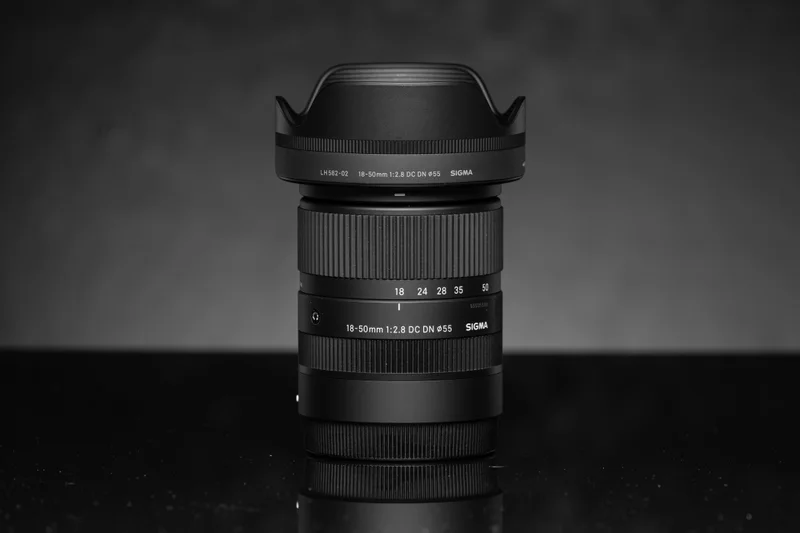
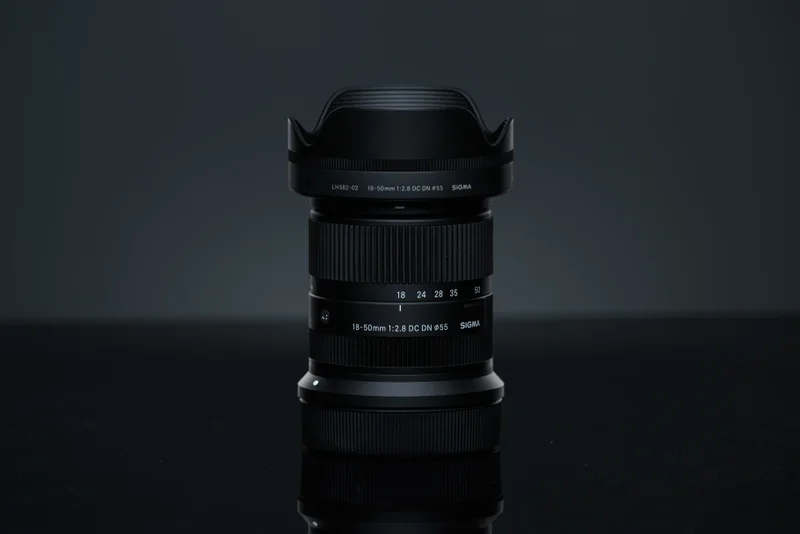
No. The credited photographs show the Sigma lens in two mount contexts. They are not matched size comparisons or evidence of a Lumacta review sample. The original reviewers’ sample galleries remain on their linked websites.
Buy now or wait?
Buy for a real deadline and verified offer. Waiting makes sense if the new lens solves a problem but you can keep working. Confirm delivery, the complete basket and returns; we do not predict discounts or resale.
Editorial analysis
Our verdict: remove the limitation that matters
The compact Tamron is interesting for buyers whose standard zoom is not wide enough. The Sigma remains a coherent choice for a very small general-purpose kit. The longer Tamron addresses reach and optical stabilization. None becomes irrelevant because another wins one row of a table.
Our provisional buying order is conditional: solve framing, decide whether lens stabilization is needed, check whether longer reach saves a meaningful change, then compare the complete local price. Inspect images at delivery size and test the actual video mode before treating a launch-day recommendation as a shortcut.
A guide can explain trade-offs, identify restrictions and contextualize reviews. It cannot replace a trial of your camera, subject and copy. If that trial shows your current lens is sufficient, you have made a successful decision without buying anything.
Evidence and independence
Sources, image rights and limitations
Specifications and prices checked October 14, 2026. Written reviews were read in full; embedded videos were not inspected. Official documents establish specified features, not independent performance. Educational pages explain concepts, not compatibility of every camera and lens. Historical review prices and mount lists are not reused as current facts.
- Tamron announcement, 14 October 2026
- Tamron B091 specifications
- Tamron B091 features and qualifications
- Tamron B070 specifications
- Tamron B070 features and qualifications
- Tamron B070 English manual, June 2026
- Sigma C021 specifications and mount options
- Sigma C021 features and close-focus qualification
- Sigma C021 English manual
- Tamron regional Lens Utility compatibility
- Tamron Netherlands distributor announcement
- Tamron Germany B091S offer
- Tamron Germany B070S offer
- Calumet Germany Sony E offer
- F64 Romania Sigma Sony E offer
- F64 Romania Tamron Sony E offer
- PetaPixel: B091 field review · Chris Niccolls
- CameraLabs: Sigma Sony review · Gordon Laing
- Abbott: Sigma Sony review · Dustin Abbott
- OpticalLimits: Sigma X lab review · Klaus
- Abbott: B070 Sony review · Dustin Abbott
- OpticalLimits: B070 Sony lab review · Klaus
- Amateur Photographer: B070 field review · Andy Westlake
- Edmund Optics: Understanding Focal Length and Field of View
- Nikon: DX NIKKOR Lenses
- Canon: EOS R6 cropping and aspect ratio
- Canon: Depth of field
- Edmund Optics: System Throughput, f/#, and Numerical Aperture
- Sony: What is a T-stop, or Transmission stop?
- Sony: Recommendations for shooting fast-moving action
- Canon: Camera-shake blur compensation
- Sony α6700: SteadyShot for movies
- Tamron: Macro-lens distance and magnification definitions
- Sony α7 V: Lens Compensation
- Sony FX5: Breathing Compensation
- Sigma: dust/splash resistance limitation
- Lensrentals: focus-field variation
- Edmund Optics: chromatic aberrations
- Tamron: flare and ghosting
- ZEISS: interpreting bokeh
- Edmund Optics: modulation transfer function
Photographs, not generated illustrations
Both archive photographs show the Sigma lens itself, not the new Tamron and not an optical test scene. No reviewer’s image or chart was copied. The images are not to a common scale.
- Sigma 18-50mm F2.8 DC DN Contemporary.jpg by Henry Söderlund, 2021-10-28, CC BY 2.0. Orientation normalized, proportionally resized and converted to WebP. No crop, retouching or generated alteration. No endorsement implied.
- Sigma 18-50mm F2.8 DC DN - Contemporary, Canon RF.jpg by Henry Söderlund, 2024-06-21, CC BY 2.0. Orientation normalized, proportionally resized and converted to WebP. No crop, retouching or generated alteration. No endorsement implied.
AI assisted source research, comparison design and drafting at the owner’s request. Tanasa Romeo Iulian retains editorial responsibility. The manufacturers, retailers and reviewers cited did not review or endorse this guide. No affiliate links are used in this guide; no payment or loan from these lens manufacturers was arranged for its preparation.
No new optical benchmark, direct three-way sample gallery, measured transmission, matched AF hit-rate test or long-term durability result is claimed. Recommendations remain conditional on the actual mount, body, firmware and use case.
Reviews & testing policy · Report a correction · Commercial policy