
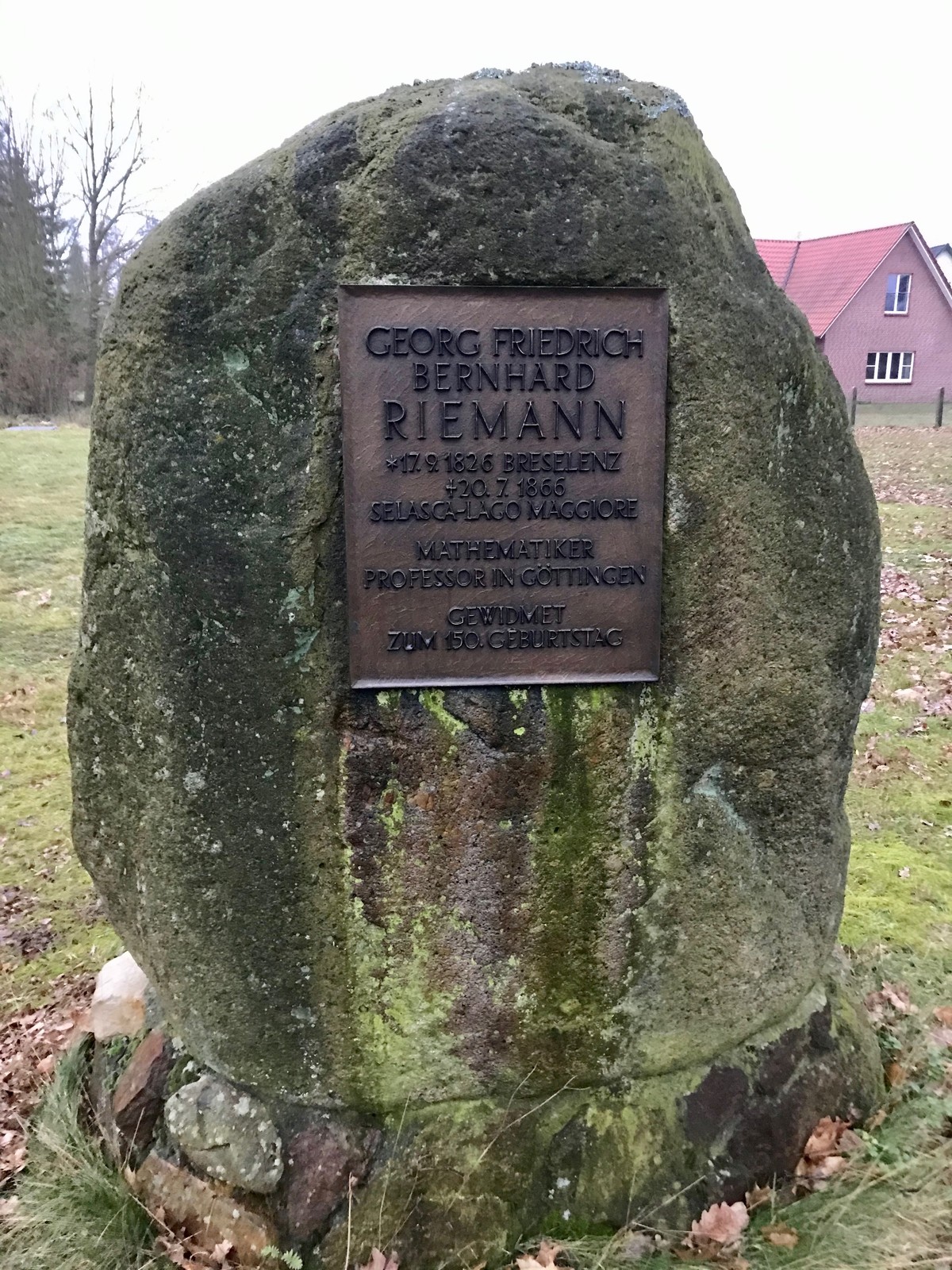
The proof and its target were both checked
The Lean and Mathlib communities said on November 21 that they had verified the Riemann hypothesis proof submitted by Levent Alpöge. The Anthropic mathematician had announced it the day before and credited Claude with helping develop the argument. He released a library of roughly 17 million lines of Lean code instead of a conventional paper. The review tested both what the library claimed to prove and whether the formal argument established it.
That distinction matters more than the size of the release. Alpöge’s note describes a collaboration and credits the system with useful mathematical ideas. The community’s statement adds evidence that people outside the submission could check the result. The Guardian separately reported the release and subsequent verification. The published records give readers a way to evaluate the proof itself. They give a much less precise account of how to divide the intellectual contribution between the researcher and the model.
Why counting primes leads to a line
Prime numbers are easy to define and hard to predict in aggregate. You can count how many occur below a cutoff, compare that total with an estimate and ask how large the gap might become as the cutoff grows. Bernhard Riemann’s 1859 work connected fluctuations in the count to the zeros of a function that now bears his name.
A zero is an input where the function returns zero. In this problem the inputs are complex numbers, with a real and an imaginary part. The hypothesis says all the nontrivial zeros have real part one half. They would line up on a vertical line in a coordinate plane. Computing zeros can rule out a counterexample among the points tested. The hypothesis is about every such zero, so a proof needs reasoning that applies however far out you look.
Source notes: 4.
The verification separated the statement from the proof
A successful build means Lean accepted the submitted files with the tools and settings used to build them. That is an important first result. It leaves a separate question. What did the library actually prove? An argument about a restricted set of zeros could compile perfectly and leave the original question open. It could also appear to finish the job while taking a disputed intermediate claim as an assumption.
The verification team used the theorem as defined in Mathlib, Lean’s shared mathematical library, as a separately specified target. It compared the submitted theorem against that target with two tools. Several checker implementations then examined the proof export. MIT mathematician Andrew Sutherland’s verification files also describe an audit that found only Lean’s standard axioms among the assumptions of the five headline theorems.
Those checks suggest three questions to ask about the next AI proof announcement. Who specified the target? Which assumptions did the proof actually use? Can a separate implementation validate the same artifact? A short record can answer the first two. The third takes people, time and, for a project of this size, enough computing resources to repeat the checks.
The generalized result has a defined scope
Alpöge’s announcement described a broader result. Sutherland’s verification files delimit it. The broader statements concern Dirichlet L-functions, a family that extends the setting behind the original hypothesis. The ledger explicitly distinguishes those statements from claims about more general classes of functions. Readers can inspect which theorems were tested before carrying the result into a different mathematical setting.
The record also distinguishes successful runs from work still in progress at its November 22 update. Multiple implementations had accepted the export or validated compiled modules by that point. Checking the theorem against a separate statement and checking the steps of the proof answer different questions. Repeating those checks with independent implementations matters more than seeing a long list of tools that all exercised the same component.
What mathematicians can do next
A mathematician who wants to apply an idea from this proof still needs to understand it. Which argument carries most of the weight? Which steps are long because they express a difficult idea, and which are long because they spell out bookkeeping that a paper could explain once? Alpöge says he intends to write the work up. A working guide posted by University of Waterloo mathematician Michael Rubinstein already separates sections it explains from inputs it still takes from the Lean development.
The Clay Mathematics Institute’s award is a separate process. Its rules require publication in a qualifying outlet, a waiting period and general acceptance in the mathematics community. The institute’s problem page still showed its existing unsolved label when Lumacta checked it. The development to watch now is whether researchers can explain the central steps in a form other mathematicians can reuse, or identify where the reasoning can be made shorter.
Sources & Methods
We compared the November 20 release with the November 21 joint statement and the verification ledger updated November 22. We checked the theorem’s scope and Clay’s separate prize process.
- Lean and Mathlib verification — Joint statement on the reproduced build, theorem comparison and proof checkers.
- Levent Alpöge’s release note — First-person account of the work with Claude and what he released.
- Andrew Sutherland’s verification files — Technical record of checked statements, assumptions, tool versions and individual results.
- Clay Mathematics Institute on the Riemann hypothesis — Problem statement and the institute’s displayed status.
- Clay Mathematics Institute prize rules — Separate publication and community-acceptance requirements.
- The Guardian’s November 21 coverage — Independent reporting on the release and verification timeline.
- Michael Rubinstein’s working exposition — A narrower AI-assisted working guide with explicit remaining gaps.
- Original memorial photograph — Creator’s record with location, capture date and attribution.
- CC BY-SA 4.0 — License for the photograph and resized copy.
