
The FAA isolated two remote sites
A surge of connection attempts unsettled radar and radio communications across much of the U.S. air traffic control system on Friday, November 13. In its Sunday update, the Federal Aviation Administration said the network was receiving about 1,000 attempts every four to five seconds and that 17 of its 22 regional control centers experienced instability. The FAA halted departures nationwide while controllers used the radar feeds and radio frequencies that were still reliable to guide aircraft already in the air.
The agency’s initial investigation identified two possible origins of the excessive traffic. One was a radar site in Amarillo, Texas. The other was a radio communications site in El Dorado, Arkansas, where network contractor L3Harris had been installing a new router. The network stabilized after the contractor blocked both locations. The FAA said it also disabled the same broadcasting function on about 60 similar routers as a precaution.
The agency dates the start of technical trouble to about 3:30 p.m. Eastern. A national ground-stop advisory followed shortly before 4 p.m. Eastern, and the FAA says flying resumed at 8:15 p.m. The cancellation advisory was signed four minutes later. Those are separate points in the incident: the onset of instability, the restriction on departures and the restoration of normal departure authority.
The chronology gives investigators an important clue: the traffic subsided after the two sites were isolated. It leaves the mechanism open. A connection attempt measures the rate at which something tried to establish a session, and it does not tell an outside reader how many devices were involved, how much bandwidth was in use or which component failed first. The FAA and L3Harris are still investigating, and the agency says available evidence gives it no indication of a cyberattack.
Why a remote fault affected distant airports
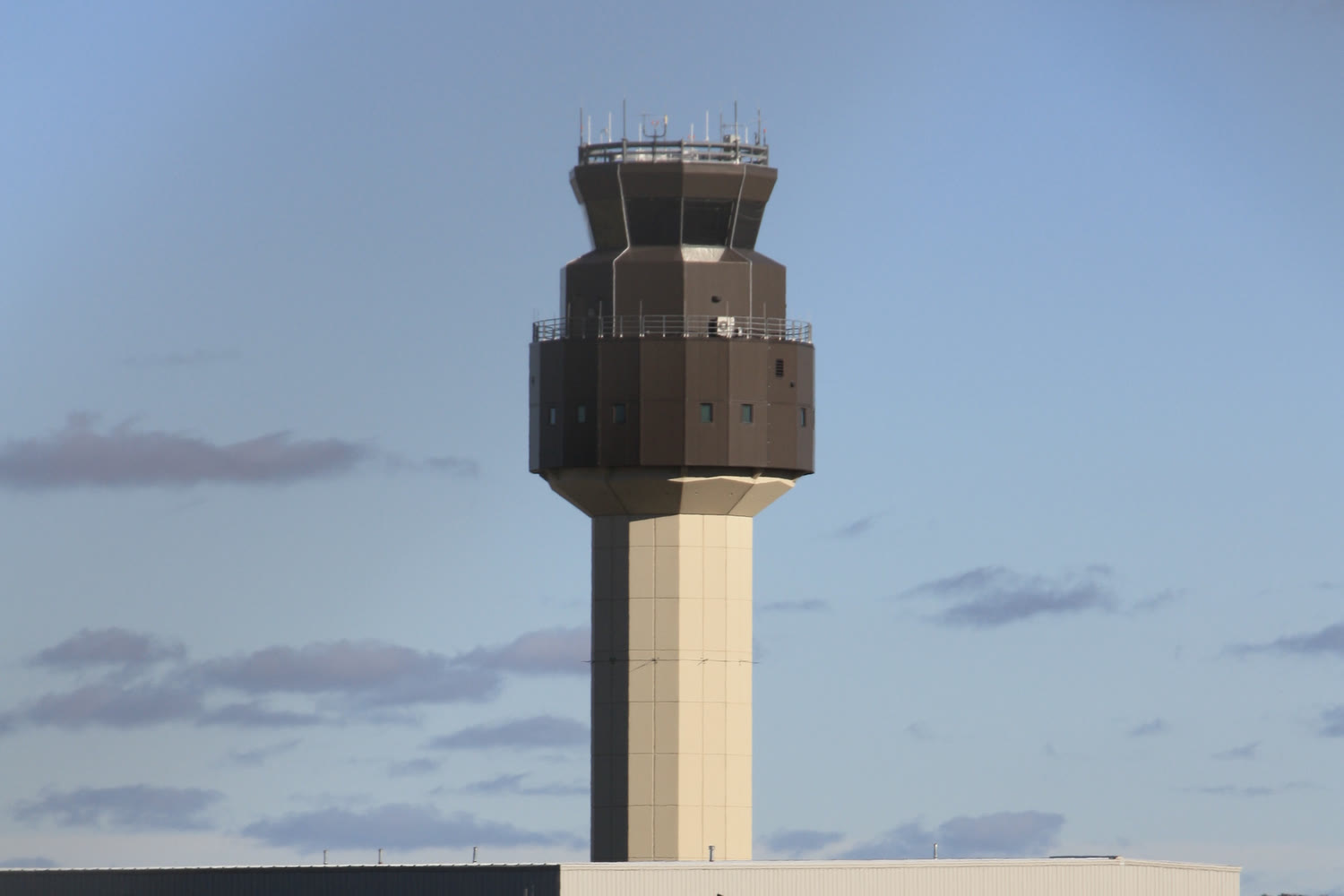
A flight passes through several layers of air traffic control. A local tower handles movements around an airport. Approach controllers take over during the climb and descent near busy airports. Regional centers manage the trip between those areas and hand the flight off as it enters a new region. The Associated Press spoke with former FAA airspace manager Michael McCormick, who explained that regional centers use telecommunications links to reach remote radios that can actually communicate with aircraft hundreds of miles away.
This is why the condition of the network matters to places far from the equipment under investigation. A controller can have a working workstation and a pilot can have a working radio, yet the path connecting them can still be unreliable. A center also needs to pass a flight to the next controller with a shared understanding of its position. A major airport can therefore face departure limits even when its own tower is working.
A ground stop gives controllers room to manage that imbalance. The command center’s order held departing traffic while aircraft already airborne continued to need instructions and runway space. Every additional takeoff would have added another aircraft that controllers had to track, communicate with and transfer. Holding that demand on the ground bought time to stabilize the network and work through the flights already in the system.
The restart and airline recovery ran on different clocks
Lifting the stop let departures resume. It left airlines with aircraft, crews and passengers out of position. A jet meant to operate a later flight could be at the wrong airport, and a crew delayed on one assignment might be unavailable for the next. The Friday evening disruption could therefore affect a traveler booked on Sunday who had never been near an airport during the stop.
The FAA estimates roughly 12,462 Friday cancellations and says some had other causes. In a Sunday snapshot, AP reported that Cirium counted just over 1,300 canceled flights out of more than 26,000 scheduled. AP also documented passengers whose Saturday connections were canceled and who were rebooked for Sunday. Those counts describe separate days and come from separate sources. Together they show why a stable air traffic network and an airline operating its full schedule are different recovery milestones.
What the repair still needs to prove
The FAA says it will reconsider when it performs this kind of work at remote facilities. Moving the work to quieter hours can give controllers more room to respond. The harder engineering question is how to contain abnormal traffic if it happens at any hour. That depends on what each remote site can send, whether a bad stream can be isolated without disabling essential traffic, and what happens to both radio and radar service while the network is switching paths.
Those questions matter during the larger modernization effort. A September Government Accountability Office audit found that the FAA still lacked an integrated schedule for its first modernization phase as of May. The audit described installations planned separately at the same facilities, making it harder to coordinate work and avoid disruption. That is an oversight finding about the program. Friday’s technical investigation is separate, and its conclusions will depend on the network evidence.
A useful follow-up would explain which behavior produced the repeated connections, what carried essential traffic during isolation, and how the FAA will verify that the next router change stays local if it fails. Counting replaced wires and installed routers tracks delivery. Testing whether a fault can spread during a cutover tracks the reliability that controllers and passengers depend on.
Sources & Methods
We read the FAA’s November 15 questions and answers, matched the stop and cancellation against the original FAA advisories, and used Associated Press reporting and GAO audit findings to distinguish passenger recovery and modernization risks from the preliminary network account.
- FAA: November 15 account of the nationwide ground stop — Primary · Agency incident update
- FAA Command Center: national ground-stop advisory 111 — Primary · Operations record
- FAA Command Center: ground-stop cancellation advisory 005 — Primary · Operations record
- Associated Press: how a communications failure grounds distant flights — Independent reporting · Aviation expert interviews
- Associated Press: air travel recovery and Cirium cancellation data — Independent reporting · Flight data and passenger interviews
- GAO: air traffic control modernization cost and scheduling audit — Independent government audit