
PRODUCT GUIDE · CINEMA CAMERAS
Blackmagic’s price cuts: which cinema camera is the best buy?
Full-frame raw filmmaking has become substantially cheaper. But the smartest purchase is not necessarily the camera with the biggest discount—or the most pixels. Here is what Blackmagic’s new prices actually change.
RESEARCHED BUYING GUIDE · NOT A HANDS-ON TEST
BEST BLACKMAGIC VALUE FOR A SMALL CINEMA BUDGET
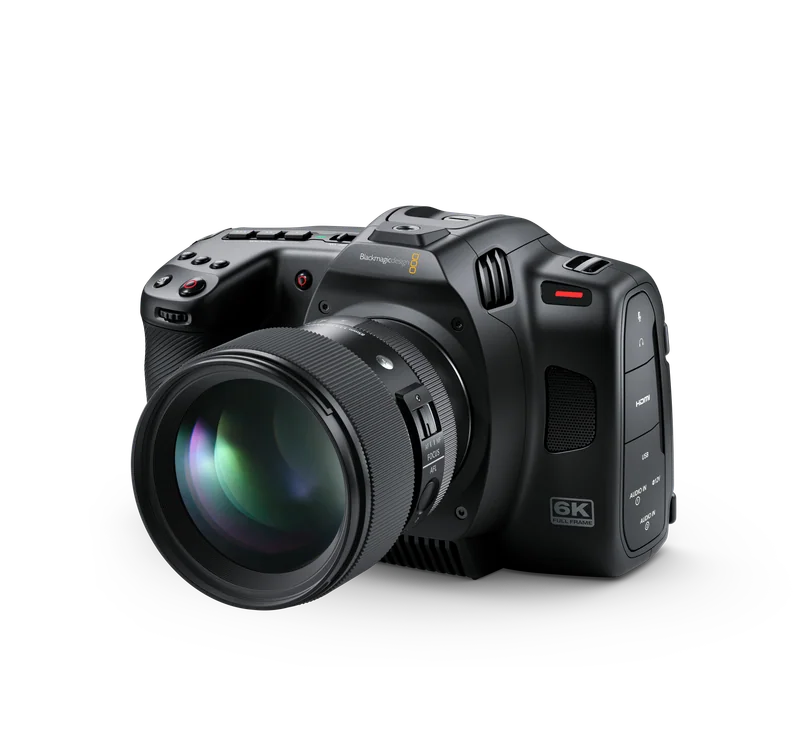
Cinema Camera 6K
US $1,755 / €1,375*
The lowest entry cost of these three, with a larger built-in screen and a strong case for spending the remaining budget on the shoot.
Why we chose it →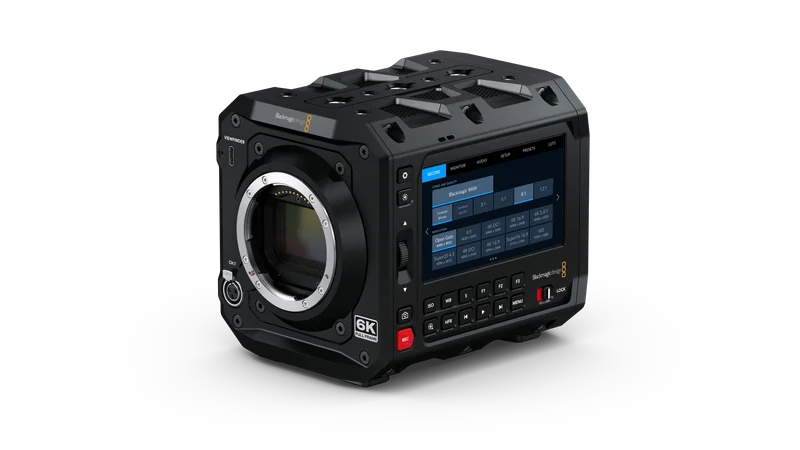
BEST VALUE FOR A RIGGED PRODUCTION
PYXIS 6K
US $2,245 / €1,725* · L / EF
Pay for SDI, modular mounting and a production-oriented body. Not for a leap from 6K to a different resolution class.
Why we chose it →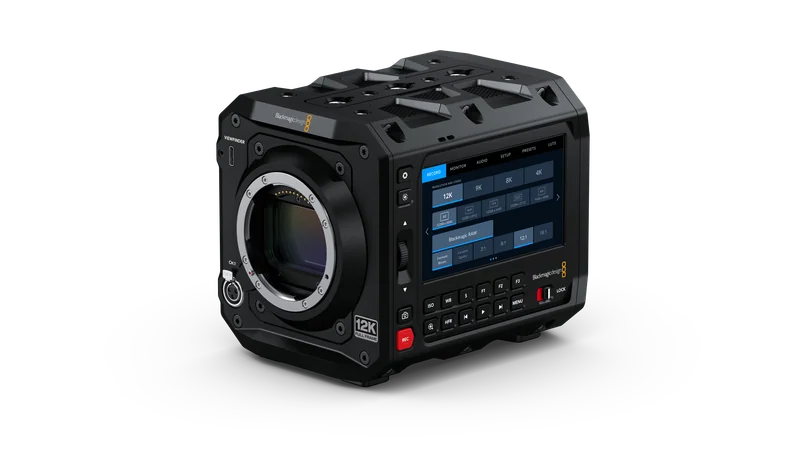
SPECIALIST UPGRADE
PYXIS 12K
US $4,665 / €3,555* · L
Worth considering for demanding reframing, visual effects and higher-frame-rate work. Only if the whole workflow can use it.
Why we chose it →* Dated official body-price references, not tax-inclusive checkout totals. US prices include duties but exclude sales tax/shipping; Italy EUR prices exclude sales tax/shipping. PYXIS 12K is a temporary offer. Product images: © Blackmagic Design, from its press library; not to scale or evidence of a Lumacta test.
WHAT CHANGED
The price cut is real. The headline price needs context.
On September 4, Blackmagic announced new lower prices for the Cinema Camera 6K and all three PYXIS 6K mount versions, attributing the reduction to better component pricing. On September 8, it announced a different offer: a temporary 20% promotion on selected Ultra HD equipment, including PYXIS 12K. These should not be folded into one permanent, across-the-range camera sale.
The distinction matters if you are deciding whether to buy now. The 6K announcement does not give an end date; that is different from a guarantee that its price will never change. The Ultra HD offer runs until the end of September 2026 or while stocks last. Neither announcement means every dealer has every mount in stock.
Sources: Blackmagic: September 4, 2026 price announcement · Blackmagic: September 8, 2026 Ultra HD promotion
On a narrow screen, scroll within the table to compare all columns.
| Camera | Previous | Announced new | Saving | Reduction |
|---|---|---|---|---|
| Cinema Camera 6K | $2,715 | $1,595 | $1,120 | 41.3% |
| PYXIS 6K · L-Mount | $3,080 | $1,995 | $1,085 | 35.2% |
| PYXIS 6K · EF | $3,070 | $1,995 | $1,075 | 35.0% |
| PYXIS 6K · PL | $3,265 | $2,195 | $1,070 | 32.8% |
Percentage reductions calculated by Lumacta from the announcement. These are not today's duty-inclusive US listings.
Those are the original announcement figures, not the current US checkout price. Blackmagic’s current US pages include duties in MSRP and exclude sales tax and shipping; the announcements exclude local duties and taxes. Mixing the lower announcement figure for one camera with a duty-inclusive listing for another produces a misleading comparison.
The table below keeps the two current reference markets separate. The EUR figures are Blackmagic’s Italy listings, excluding sales tax and shipping—not a Romanian dealer quote, a currency conversion or a promise of availability. Check the local tax-inclusive total, warranty arrangements and included accessories before paying.
Sources: Cinema Camera 6K — official specifications · PYXIS 6K and 12K — official specifications · Cinema Camera 6K — official Italy EUR reference · PYXIS — official Italy EUR reference
On a narrow screen, scroll within the table to compare all columns.
| Camera | US listing · USD | Italy listing · EUR | Price type |
|---|---|---|---|
| Cinema Camera 6K · L | $1,755 | €1,375 | New lower list price |
| PYXIS 6K · L / EF | $2,245 | €1,725 | New lower list price |
| PYXIS 6K · PL | $2,475 | €1,895 | New lower list price |
| PYXIS 12K · L | $4,665 | €3,555 | Temporary sale |
| PYXIS 12K · EF / PL | $4,659 | €3,545 | Temporary sale |
Announcement prices exclude local duties and taxes. Current US list prices include duties but exclude sales tax and shipping. The Italy EUR reference excludes sales tax and shipping; it is not a Romanian checkout quote. PYXIS 12K promotion: through September 30, 2026 or while stocks last.
Sources: Cinema Camera 6K — official specifications · PYXIS 6K and 12K — official specifications · Cinema Camera 6K — official Italy EUR reference · PYXIS — official Italy EUR reference · Blackmagic: September 8, 2026 Ultra HD promotion
The announced reduction is about 41.3% for Cinema Camera 6K and roughly 33–35% across PYXIS 6K. That changes the entry threshold substantially. It does not change the sensor, put a lens in the box or make the post-production work disappear.
SIDE-BY-SIDE
The specifications that change a purchase
The two 6K bodies share the headline full-frame resolution and native ISO pairing. The buying difference is therefore heavily about handling, monitoring, connectivity and media. PYXIS 12K is a different sensor proposition, not merely the same camera producing larger files.
Read every frame-rate number with its resolution and aspect ratio attached. A maximum obtained in a wide or windowed mode is not the maximum for the entire sensor. Output resolution also differs from recording resolution: a camera can record 6K internally without providing a 6K monitoring output.
Sources: Cinema Camera 6K — format and workflow overview · PYXIS — format and operating overview
On a narrow screen, scroll within the table to compare all columns.
| Specification | Cinema Camera 6K | PYXIS 6K | PYXIS 12K |
|---|---|---|---|
| Sensor | 36 × 24 mm | 36 × 24 mm | 35.64 × 23.32 mm RGBW |
| Maximum open gate | 6048 × 4032 / 36 fps | 6048 × 4032 / 36 fps | 12288 × 8040 / 40 fps |
| Wide 2.4:1 mode | 6K / 60 fps | 6K / 60 fps | 12K / 60 fps |
| 4K DCI 17:9 maximum | 60 fps · windowed | 60 fps · windowed | 90 fps · full-width scaling |
| Higher-speed option | 1080 / 120 fps · windowed | 1080 / 120 fps · windowed | 8K/4K 2.4:1 / 112 fps |
| Dynamic range (claimed) | 13 stops | 13 stops | 16 stops |
| Native ISO | 400 / 3200 | 400 / 3200 | 800 |
| Mount | L | Fixed L, EF or PL variants | Fixed L, EF or PL variants |
| Internal recording | 12-bit Blackmagic RAW | 12-bit Blackmagic RAW | 12-bit Blackmagic RAW |
| Proxy recording | H.264 1080p | H.264 1080p | H.264 1080p |
| Card slots | 1 × CFexpress Type B | 2 × CFexpress Type B | 2 × CFexpress Type B |
| External media interface | USB-C · 5 Gb/s | USB-C · 5 Gb/s | USB-C · 10 Gb/s |
| Built-in display | 5-inch 1080p · tilting | 4-inch 1080p · side | 4-inch 1080p · side |
| Display brightness | 1500 nits | 1500 nits | 1500 nits |
| Video output | HDMI · up to 1080p60 | 12G-SDI · up to 2160p60 | 12G-SDI · up to 2160p60 |
| Mini-XLR inputs | 2 | 1 | 1 |
| Wired networking | USB-Ethernet workflow | 1 Gb Ethernet | 10 Gb Ethernet |
| Battery family | NP-F570 | BP-U | BP-U |
| Resolve Studio key | Included | Included | Included |
Frame-rate limits are mode-specific, not full-sensor maxima in every aspect ratio. Dynamic range is manufacturer-claimed. AF and mount limitations are discussed separately below.
Sources: Cinema Camera 6K — official specifications · PYXIS 6K and 12K — official specifications · Cinema Camera 6K — format and workflow overview · PYXIS — format and operating overview
These are manufacturer specifications, not matched laboratory measurements. In particular, 13 versus 16 advertised stops does not establish an independently measured three-stop advantage under identical noise thresholds. We are not turning those claims into a numerical image-quality score.
The sensor’s optical low-pass filter is not an exposure-control ND filter. Nor is a lens-stabilization or motion-metadata workflow the same thing as sensor-shift IBIS. Treat external ND, physical support and a tested stabilization workflow as part of the purchase, not as capabilities implied by a cinema label.
Sources: Cinema Camera 6K — official specifications · PYXIS 6K and 12K — official specifications · Cinema Camera 6K — format and workflow overview · Pocket Cinema Camera — official specifications
THE BUDGET PICK
Why Cinema Camera 6K is our Blackmagic value pick
For someone building a modest raw-cinema kit, the strongest argument is what remains after buying the body. In the current US reference, Cinema Camera 6K is $490 below PYXIS 6K L/EF. In the separate EUR reference, the gap is €350. A production does not become better simply because that money is spent on a more industrial-looking camera.
Use the difference where your work is weakest: a suitable lens, a reliable microphone, controlled light, backup storage or an extra rehearsal. Those are editorial spending priorities, not a promise that every item fits inside that gap. A discounted body has value when it helps fund a complete, dependable production.
Sources: Cinema Camera 6K — official specifications · PYXIS 6K and 12K — official specifications · Cinema Camera 6K — official Italy EUR reference · PYXIS — official Italy EUR reference
The larger, tilting rear screen and integrated handgrip also reduce the immediate pressure to build a rig. The listed package includes an NP-F570 battery and charger. That does not make one battery an all-day power solution, but it is a different starting point from ordering a box-style body and then discovering the battery budget.
There are concrete constraints. You have one CFexpress slot, and the HDMI output is limited to HD even though the recording is much higher resolution. Anyone needing SDI monitoring, extended cable runs or a more configurable camera platform should evaluate PYXIS instead of trying to wish those requirements away.
Sources: Cinema Camera 6K — official specifications · Cinema Camera 6K — format and workflow overview
Our Blackmagic recommendation is deliberately scoped: best value among the three Blackmagic cinema options examined here, for a buyer who wants raw recording and accepts its workflow. It is not a claim that this is the best camera of any brand for weddings, sports, still photography or unattended filming. The cross-brand comparison below tests that buying logic against three relevant alternatives.
Equally, this is the full-frame Cinema Camera 6K, not the older Pocket Cinema Camera 6K, 6K G2 or 6K Pro. Those names are easy to confuse in shop listings. The Pocket 6K Pro uses a different Super 35/EF configuration and includes built-in ND; a lower price on one model does not make the others interchangeable.
Sources: Cinema Camera 6K — format and workflow overview · Pocket Cinema Camera — official specifications
THE PRODUCTION PICK
When paying more for PYXIS 6K is sensible
A camera body is also a place to attach things and a way to move images around a set. PYXIS 6K makes sense when the operator, focus puller, monitor and sound arrangement require a configurable setup. A connection that removes a fragile adapter or a mounting solution that makes the camera usable on your support system can matter more than another headline feature.
The SDI output, two CFexpress slots and Ethernet connection are useful distinctions. Two slots support a longer recording workflow with card changes; do not assume they guarantee simultaneous duplicate recording. Confirm the actual recording mode in the current manual before describing the setup as redundant.
Sources: PYXIS — format and operating overview · PYXIS 6K and 12K — official specifications
Its side screen is valuable for setup and an assistant’s view, but it may not land where an operator needs an image when shooting handheld or from behind the camera. Blackmagic lists a separate PYXIS Monitor and a more expensive Monitor Kit with mounting hardware. A bare monitor price and a mounted-monitor price are not equivalent.
The kit currently adds $515 in the US reference or €395 in the Italy reference. It is optional, not compulsory: existing compatible monitoring can change the calculation. But the person starting from nothing should compare a configured PYXIS with a configured Cinema Camera 6K, not an unfinished box with a ready-to-hold body.
Sources: PYXIS accessories · PYXIS — official Italy EUR reference
Mount choice is another lifetime-cost decision. L-Mount is the starting recommendation for a new, budget-conscious system because of its native photographic-lens options and adaptability. An owner of suitable EF lenses may sensibly choose the locking EF version instead. PL is the specialist choice when the lens inventory and working practice already justify it.
These are fixed mount variants, not a promise of user-swappable mounts. An adapter does not guarantee electronic communication, autofocus behaviour or full-frame image coverage. Check the exact lens, adapter and firmware combination; the cheapest camera body can become the most expensive route if it forces you to replace glass.
Sources: PYXIS 6K and 12K — official specifications · PYXIS — format and operating overview · Cinema Camera 6K — format and workflow overview
MORE THAN RESOLUTION
PYXIS 12K: the attractive upgrade that needs a reason
The case for PYXIS 12K is stronger than “12 is twice 6”. Its sensor architecture supports full-width scaled 8K and 4K recording as well as 12K; that matters when you need a lower-resolution output without the same windowing trade-off. Higher-frame-rate modes can also address a real creative requirement. The table gives the relevant format limits rather than one enormous, context-free fps number.
Potential users include productions that deliberately reframe, stabilize or composite their material, or deliver multiple versions from a carefully planned capture. Extra recorded detail can buy latitude in those workflows. It cannot rescue missed focus, motion blur, unsuitable lenses or a scene that was badly lit.
At the checked L-Mount prices, the 12K body is $2,420 above PYXIS 6K in the US reference, or €1,830 higher in the separate EUR reference. That remains a substantial step even during the sale. A percentage discount should not become an excuse to buy a capability that your clients never need.
The 12K model’s native ISO is 800, rather than the 6K models’ 400/3200 pairing. That is a specification difference, not permission to invent a low-light ranking. Without matched exposure, lenses, processing and an agreed noise criterion, we cannot tell you how many stops cleaner one camera is.
Sources: PYXIS 6K and 12K — official specifications · PYXIS — official Italy EUR reference
Our verdict: choose 12K when you can name the shot, delivery requirement or paid workflow that earns the premium. For a small filmmaker mostly finishing in 4K, the burden of proof is on the upgrade. “It might be useful someday” is a weak argument when the same money could improve this month’s production.
DON’T BUY FROM AN OUTDATED REVIEW
Autofocus is better specified now. Reliability still needs testing.
The current Cinema Camera 6K and PYXIS 6K L-Mount specifications explicitly list single-shot, continuous, object-tracking and face-tracking autofocus with compatible lenses. It would be wrong to repeat an old review’s blanket statement that these cameras have no tracking autofocus. For PYXIS EF, Blackmagic qualifies performance by lens; PL should not be bought on the assumption of electronic tracking AF.
The PYXIS 12K specification simply lists autofocus with compatible lenses, while the range’s overview explicitly associates the downloadable tracking features with PYXIS 6K. We do not treat that as confirmation of identical 12K tracking behaviour. Check the exact body’s current support notes before making autofocus the deciding feature.
Sources: Cinema Camera 6K — official specifications · PYXIS 6K and 12K — official specifications · PYXIS — format and operating overview
Feature availability and dependable performance are different questions. Before a one-person interview or an unrepeatable event, test face acquisition, a subject turning away, foreground obstructions, backlight, lens noise and focus transitions at the aperture you actually use. Review the recorded file, not just the focus box on screen.
For a filmmaker working slowly with controlled movement, a manual-focus plan may be entirely reasonable. For a solo operator who cannot monitor focus, one missed take can cost more than a body-price saving. This guide makes no claim that Blackmagic’s implementation matches or beats a particular Sony, Canon or Panasonic system; we have not performed that comparison.
BLACKMAGIC VS PANASONIC, SONY & NIKON
The strongest alternatives near the same budget
Being our best-value Blackmagic does not automatically make Cinema Camera 6K the best purchase across brands. The useful question is what a nearby budget buys elsewhere—and which limitations would actually cost you a shot. We selected S5IIX and FX30 as close-price video alternatives, and Z6III as a slightly dearer hybrid with internal RAW.
These are current US manufacturer references for new bodies, all shown before sales tax; shipping is not included in this comparison. They are not a lowest-dealer-price survey or a Romanian quote. The Blackmagic figure includes US duties. Sony’s displayed price is a reference rather than an available direct-store offer, and an XLR handle is not included. No trade-in, student discount, refurbished unit or lens bundle is counted.
Sources: Cinema Camera 6K — official specifications · Panasonic S5IIX — current US body listing · Sony FX30 — US body-only price reference · Nikon Z6III — current US body product page
On a narrow screen, scroll within the table to compare all columns.
| Camera | US reference | Premium over Cinema Camera 6K | Price basis / limitation |
|---|---|---|---|
| Blackmagic Cinema Camera 6K | $1,755 | Baseline | Official US listing; duties included; lens not included. |
| Panasonic LUMIX S5IIX | $2,099.99 | +$344.99 | Official US store, Body option; current sale listing. |
| Sony FX30 (ILME-FX30B) | $2,099.99 | +$344.99 | Official US body-only reference; XLR handle excluded. Sony says unavailable on its consumer store. |
| Nikon Z6III (1890 body) | $2,199.95 | +$444.95 | Current official US product-page body price; not the lower cached catalogue figure. |
USD before sales tax; shipping excluded. Not a dealer basket, a stock guarantee or a Romanian price comparison. Blackmagic listing includes duties. Promotional and reference prices may change.
Sources: Cinema Camera 6K — official specifications · Panasonic S5IIX — current US body listing · Sony FX30 — US body-only price reference · Nikon Z6III — current US body product page
The premiums are small enough to deserve serious consideration: $344.99 for the Panasonic or Sony reference and $444.95 for the Nikon. But different formats solve different problems. RAW gives you a different post-production workflow, not an automatic quality victory over a well-exposed 10-bit file. An autofocus feature list is also not a measured reliability ranking.
Compare actual recording modes, not sensor pixel counts. Sony’s 6K oversampling is not a 6K recorded file; Nikon’s 6K RAW frame is 16:9 rather than Blackmagic’s taller 3:2 open gate. And 4K120 does not imply an uncropped full-sensor view. The matrix keeps those distinctions visible.
Sources: Sony FX30 — US body-only price reference · Sony FX30 — official technical specifications · Nikon Z6III manual — video frame sizes and rates · Nikon Z6III manual — video image areas
On a narrow screen, scroll within the table to compare all columns.
| Specification | Cinema Camera 6K | LUMIX S5IIX | Sony FX30 | Nikon Z6III |
|---|---|---|---|---|
| Sensor / mount | Full-frame 36 × 24 mm / L | Full-frame 35.6 × 23.8 mm / L | APS-C / Super 35, 23.3 × 15.5 mm / E | Full-frame 35.9 × 23.9 mm / Z |
| Internal video workflow | 12-bit Blackmagic RAW | 10-bit H.264/H.265; ProRes in supported modes | 10-bit 4:2:2 XAVC in supported modes | 12-bit N-RAW / ProRes RAW; other compressed formats |
| 3:2 open-gate video | 6048 × 4032 up to 36 fps | 5952 × 3968 up to 30p | No 3:2 open-gate recording | No 3:2 open-gate recording; RAW is 16:9 |
| Higher-frame-rate trade-off | 4K DCI up to 60 fps, windowed; 1080p120 windowed | 4K/C4K up to 60p with APS-C crop; no 4K120 | 4K up to 120p with extra image crop | 6K N-RAW up to 60p FX; 4K120 uses DX crop |
| Sensor-shift stabilization | No IBIS | 5-axis IBIS | 5-axis IBIS; Active mode has extra crop | 5-axis IBIS |
| Autofocus | Continuous / face / object tracking with compatible lenses | Phase Hybrid AF / subject detection | Fast Hybrid AF / Real-time Eye AF | Hybrid phase/contrast AF / subject detection |
| Built-in electronic viewfinder | No; optional accessory | Yes | No | Yes |
| Recording cards | 1 × CFexpress Type B | 2 × UHS-II SD | 2 × CFexpress Type A / SD combination slots | 1 × CFexpress Type B / XQD + 1 × SD |
| Audio connections | 2 × mini-XLR with phantom power; 3.5 mm | 3.5 mm; optional XLR accessory | 3.5 mm; optional XLR handle on body-only version | 3.5 mm microphone / line input; XLR needs accessories |
| RAW-video extra hardware | No external recorder needed for BRAW | Compatible HDMI recorder needed for RAW | Compatible HDMI recorder needed for RAW | No external recorder needed for supported internal RAW |
Frame rates are nominal labels; actual rates and recording limits depend on mode. Crop, codec and media restrictions matter. AF support is not a measured reliability comparison; no dynamic-range ranking is inferred.
Sources: Cinema Camera 6K — official specifications · Panasonic S5IIX — official specification sheet · Sony FX30 — official technical specifications · Sony FX30 — US body-only price reference · Nikon Z6III — official global specifications · Nikon Z6III manual — video frame sizes and rates · Nikon Z6III manual — video image areas
None of these four bodies includes built-in ND. Media requirements depend on codec and frame rate, not just the card-slot label; two slots do not mean every format can be recorded to both or backed up simultaneously. Check the approved card, recording mode and heat limits before a paid job. No matched autofocus, thermal or image-quality testing was performed for this comparison.
Sources: Cinema Camera 6K — official specifications · Panasonic S5IIX — official specification sheet · Sony FX30 — official technical specifications · Nikon Z6III — official global specifications
THE PURCHASE, NOT THE SPECIFICATION CONTEST
Which rival is worth the extra money?
LUMIX S5IIX: the stronger all-round video package for a solo operator
At $2,099.99, the S5IIX adds sensor-shift stabilization, an electronic viewfinder and a hybrid stills/video design without leaving L-Mount. It also offers 3:2 open gate and fan-assisted cooling. For someone alternating handheld sequences, interviews and photographs, those are practical reasons to spend $344.99 more rather than assemble equivalent functions around the Blackmagic.
The cost is not feature parity in every mode: 4K60 uses an APS-C crop, and RAW requires a compatible external recorder. The high-resolution ProRes-to-SSD workflow is not internal Blackmagic RAW. If that recorder is essential, add its media, power and mounting to the basket; if ordinary 10-bit delivery is sufficient, do not buy it just to match a label.
Our choice for a new solo video-first kit would lean S5IIX when stabilization, open gate and an integrated hybrid body matter more than internal BRAW. Keep Cinema Camera 6K when deliberate, supported shooting and the Resolve/BRAW workflow are the point of the purchase.
Sources: Panasonic S5IIX — current US body listing · Panasonic S5IIX — official specification sheet · Cinema Camera 6K — official specifications
Sony FX30: pay for a compact video system, not a full-frame badge
The FX30 reference is also $2,099.99 without the XLR handle. It combines a Super 35 sensor with phase-detection autofocus, IBIS and video-oriented recording options. It is a sensible contender for someone who already owns useful E-mount glass or wants a smaller video rig. Super 35 is not a disqualification: match field of view and the intended shot rather than treating sensor size as a score.
Its 4K120 mode opens a slow-motion option the Cinema Camera 6K does not provide at 4K, but introduces an extra crop. It does not record 6K internally or offer internal RAW; the specified HDMI RAW output is 4672 × 2628 at up to 59.94p and needs compatible recording hardware. Do not confuse that 16-bit output specification with the bit depth of the final recorded codec.
Choose FX30 when the E-mount/video workflow is the advantage you will use. Choose Blackmagic when full-frame open gate, internal BRAW and built-in mini-XLR inputs are more valuable to your job than Sony’s alternative feature mix. We are not claiming a tested autofocus winner.
Sources: Sony FX30 — US body-only price reference · Sony FX30 — official technical specifications · Sony Professional — FX30 overview · Cinema Camera 6K — official specifications
Nikon Z6III: the hardest challenge to a blanket Blackmagic recommendation
The freshly checked body price is $2,199.95, $444.95 above Cinema Camera 6K. That buys a full-frame stills/video body with IBIS, an EVF and internal 6K N-RAW up to 60p; 6K ProRes RAW tops out at 30p. It is a serious alternative for a person who needs both photography and RAW video from one purchase.
There are still meaningful differences. Nikon’s RAW frame is 6048 × 3402, not 3:2 open gate. 4K120 uses the smaller DX area. Its two card slots are different types, and selecting an internal RAW mode does not mean any SD card can sustain it. Codec support also depends on the editing application and version: try a real sample through your entire workflow before buying.
For mixed professional photography and RAW-video work, we would shortlist Z6III ahead of Cinema Camera 6K despite the higher body price. For a controlled cinema setup already built around BRAW, a large rear display and direct mini-XLR sound, Blackmagic remains the more targeted—and cheaper—choice. Neither recommendation proves better measured dynamic range or autofocus.
Sources: Nikon Z6III — current US body product page · Nikon Z6III — official global specifications · Nikon Z6III manual — video frame sizes and rates · Nikon Z6III manual — video image areas · Cinema Camera 6K — official specifications
Compare the kit you will actually use
Start with the body and your existing lenses, then add only the missing functions. A Blackmagic owner may prioritize support, power and ND. A Panasonic or Sony buyer who insists on RAW must price the compatible recorder and its accessories. A Nikon buyer should budget suitable high-speed media and confirm the chosen RAW format in the editor. Those are different bills, so the same arbitrary accessory allowance would not be a fair cross-brand total.
The useful break-even question is personal: will the extra $345–445 remove a limitation you face on most shoots, or buy another capability you rarely use? If handheld versatility or photo work is essential, paying more can be better value. If those functions are irrelevant and BRAW is essential, the discounted Cinema Camera 6K keeps its advantage. Regional offers and owned lenses can reverse either decision.
Sources: Cinema Camera 6K — official specifications · Panasonic S5IIX — current US body listing · Sony FX30 — official technical specifications · Nikon Z6III manual — video frame sizes and rates
REAL-WORLD BUDGET
The body is only the first line of the bill
Add up the equipment you do not already own before comparing discounts. Lens coverage, recording media, power, ND, secure mounting, sound and support all belong in that calculation. An existing L-Mount lens collection changes the answer; an existing PL collection changes it in the other direction.
The following is deliberately an illustrative budget, not a priced shopping basket. It adds the same €1,500 planning allowance to each body, then an optional €395 Monitor Kit to the PYXIS examples. The allowance is a variable for your own lens/media/power/support choices—not a claim that €1,500 buys every necessary accessory, or that identical media will sustain every 12K mode.
On a narrow screen, scroll within the table to compare all columns.
| Camera | Body reference | Assumed common allowance | Optional Monitor Kit | Illustrative total |
|---|---|---|---|---|
| Cinema Camera 6K | €1,375 | €1,500 | Not added | €2,875 |
| PYXIS 6K · L | €1,725 | €1,500 | €395 | €3,620 |
| PYXIS 12K · L | €3,555 | €1,500 | €395 | €5,450 |
The €1,500 allowance is an assumption, not verified accessory pricing or a guarantee of a complete rig. Excludes tax, shipping, computer/archives and any further audio, lighting or production requirements.
Sources: Cinema Camera 6K — official Italy EUR reference · PYXIS — official Italy EUR reference
The exercise shows why the cheapest body can remain the cheapest system, and why the PYXIS premium grows if you need additional monitoring. It does not include tax, shipping, an editing computer, archive expansion or every sound and lighting requirement. Replace the assumptions with a real dealer basket before using the totals to make a decision.
All three include a Resolve Studio activation key according to the manufacturer. That has genuine utility for a new user, but do not subtract an imagined cash rebate from the body price. If you already own Studio, another key may do little for your immediate workflow.
Sources: Cinema Camera 6K — official Italy EUR reference · PYXIS — official Italy EUR reference · Cinema Camera 6K — official specifications · PYXIS 6K and 12K — official specifications
THE COST AFTER THE SHOOT
A lower camera price does not mean cheaper footage
Raw recording transfers some choices into post-production. That flexibility is useful only if you can ingest, back up, edit and retain the material reliably. A media card is not an archive, and a proxy is not a substitute for preserving the originals.
These estimates multiply Blackmagic’s published megabytes-per-second figures by 3,600 and divide by 1,000 for decimal GB. The 6K and 12K examples deliberately state their different frame rates; they are workload examples, not an equal-settings image-quality comparison. Audio, proxy files, formatting overhead and safety headroom add to the requirement.
Sources: Cinema Camera 6K — official specifications · PYXIS 6K and 12K — official specifications
On a narrow screen, scroll within the table to compare all columns.
| Camera | Recording mode | Listed MB/s | Calculated GB/hour |
|---|---|---|---|
| Cinema Camera 6K / PYXIS 6K | 6K open gate · 30 fps · BRAW 5:1 | 223 | 802.8 |
| Cinema Camera 6K / PYXIS 6K | 6K open gate · 30 fps · BRAW 8:1 | 140 | 504 |
| Cinema Camera 6K / PYXIS 6K | 6K open gate · 30 fps · BRAW 12:1 | 94 | 338.4 |
| PYXIS 12K | 12K open gate · 24 fps · BRAW 12:1 | 299 | 1,076.4 |
Formula: MB/s × 3,600 ÷ 1,000. 6K examples use 30 fps; 12K uses 24 fps. Not a matched-quality comparison. Add audio, proxies, overhead, free-space headroom and backups.
Sources: Cinema Camera 6K — official specifications · PYXIS 6K and 12K — official specifications
One hour at the 6K 8:1 example is roughly 504 GB before those extras. Keep an original and two full copies and you are planning for roughly 1.5 TB, not half a terabyte. The point is not to scare anyone away from raw: it is to include storage and backup time in the definition of affordability.
Nor does buying PYXIS 12K force every job to be shot at 12K. Choosing a suitable lower-resolution mode or compression setting can reduce the burden. Test a representative scene with movement, fine detail and grading, then choose the least demanding setting that still meets the delivery requirement. Do not select the heaviest option purely because it exists.
THE BIGGER PICTURE
Why this matters beyond Blackmagic
The important change is the cost of entering a particular way of filmmaking. A lower raw-camera price can let a small team own equipment it previously rented, keep a matched second body available, or direct more of a fixed budget toward people and production. Those are plausible consequences, not measured sales or employment outcomes.
It also makes comparisons more honest. At a high price, a box-style cinema body may be easy to dismiss against a hybrid camera. At a much lower price, the buyer has to ask what the extra money elsewhere actually purchases: stronger automation, a preferred mount, stabilization, codec convenience, service arrangements or an established workflow.
That does not prove rivals will cut prices or that more expensive cameras are poor value. Manufacturers compete on different combinations of support, reliability, workflow and image-making tools. This article has no evidence of a competitor’s internal cost or planned response.
Existing owners face another side of the bargain: a lower new price can put pressure on used asking prices. We have not measured completed used sales, so no resale-loss percentage is claimed. Before switching systems, compare the actual amount a buyer will pay for your old kit with the full amount needed for the new one. The sticker-price gap alone is not your switching cost.
Most importantly, affordable acquisition does not automatically produce affordable production. Time, sound, locations, lighting, performers, editing and data management remain real constraints. The useful democratization is having more room to solve those problems—not pretending the camera solves them.
LUMACTA VERDICT
The camera we would choose—and when we would walk away
- Starting a modest BRAW cinema kit for controlled shoots: Cinema Camera 6K. It is our targeted budget recommendation, provided you want that workflow and can budget beyond the body.
- Building a rig for repeat paid production: PYXIS 6K, usually L-Mount for a new system or EF if suitable lenses are already owned. Buy the connections and handling because you need them, not because a box shape looks professional.
- Doing planned reframing, effects or demanding higher-frame-rate work: consider PYXIS 12K while the offer lasts. First test the footage-to-delivery pipeline and confirm the required autofocus behaviour.
- Working alone on handheld video, interviews and occasional stills: LUMIX S5IIX is our all-round video pick if 10-bit capture meets the job. Its stabilization, open gate and integrated hybrid functions can justify the premium.
- Combining serious photography with internal RAW video: shortlist Nikon Z6III. It costs more but combines capabilities Blackmagic does not replace in one body. Confirm media, codec support and recording limits.
- Already invested in E-mount or needing compact 4K slow-motion production: consider Sony FX30. Include the crop, any XLR handle and external RAW hardware in the comparison; verify an actual dealer offer.
- Already owning a camera that delivers reliably: keeping it can be the best-value option. Upgrade only when the new system removes a specific limitation worth the complete switching cost.
Before ordering, confirm the exact mount and model name; whether the quote includes tax, shipping, a lens and a battery; whether the monitor price includes its mount; the media approved for your recording mode; and the return/warranty terms. For the 12K promotion, also confirm remaining stock and the seller’s actual deadline.
The final answer is therefore conditional, not evasive: buy Cinema Camera 6K for the least expensive BRAW-centred cinema system here; favour S5IIX for a more integrated solo-video kit, or Z6III for photo-plus-RAW versatility. Existing E-mount equipment can make FX30 the better system purchase. Within Blackmagic, PYXIS 6K is the production-platform buy and PYXIS 12K the specialist option. Value is the usable setup, not the discount percentage.