
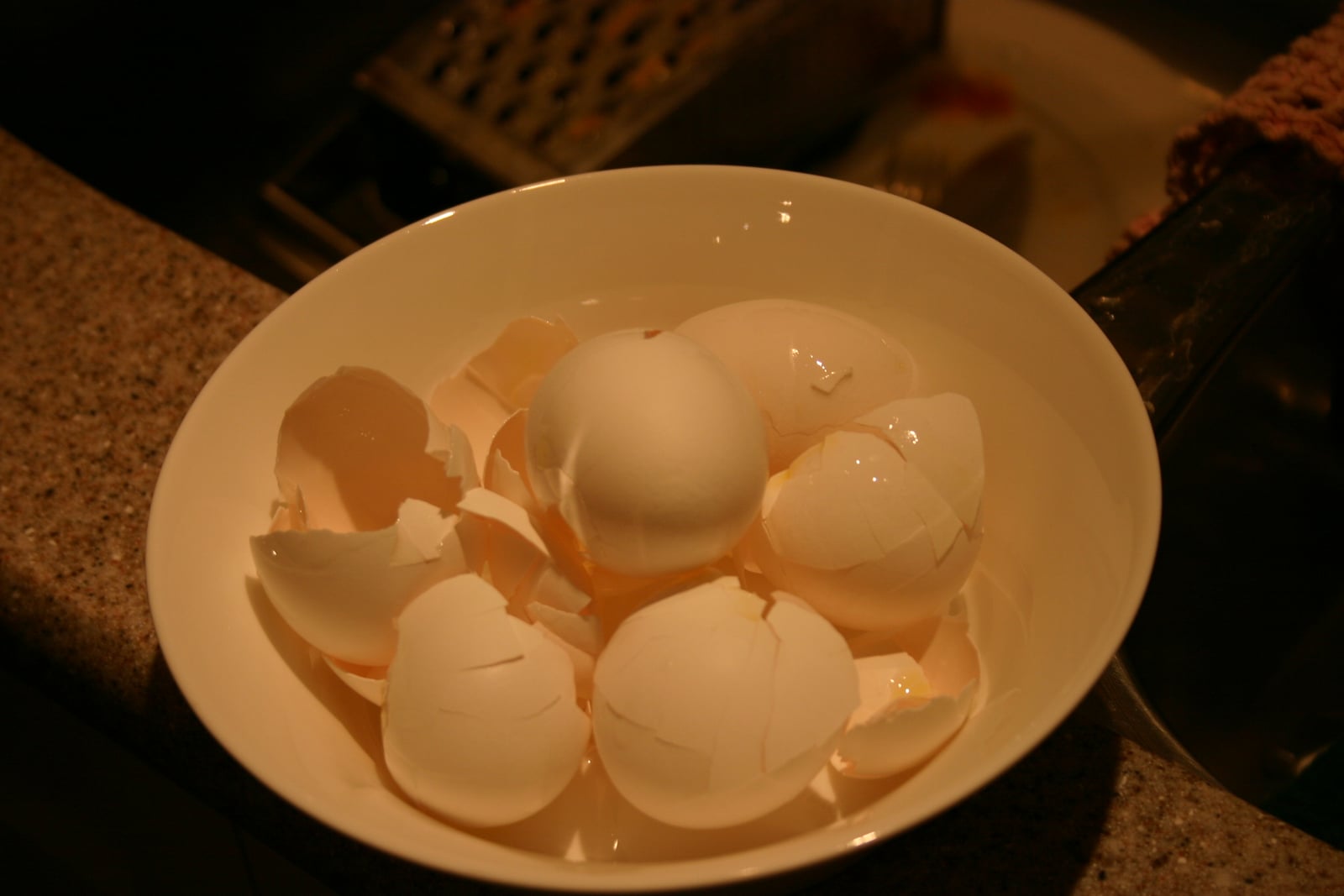
A waste ingredient becomes part of a metal-processing experiment
NC State’s October 1 report describes magnesium rods made with eggshell powder. Its engineering-college republication followed October 2; the paper is dated September 30.
The interesting manufacturing question is whether an unwanted material can become a controlled input. Calling something waste tells us where it came from, not whether it meets a factory’s specification. Our engineering reading is that a useful process must control both the incoming material and the product it produces.
That gives this experiment a clear practical relevance without assuming immediate adoption. A promising route offers manufacturers something to investigate: a different combination of ingredients and processing. It becomes an operational alternative when repeatable performance and a complete production comparison support the intended use.
Source notes: 1, 2, 5. Editorial interpretation and illustrative calculations are identified separately.
Rotation and pressure do different jobs
NC State reports pressing a powder-filled magnesium block through a rotating tool to form a rod. PNNL’s documentation of the related ShAPE extrusion approach explains how friction softens material while rotation and forward pressure work together. That background is not a claim that the two implementations have identical performance.
A useful mechanical distinction is between moving material and changing its condition. The forward load drives an extrusion; rotational deformation changes how material flows and mixes. Consider a hypothetical process adjustment: increasing rotation while keeping forward travel fixed changes how much shearing occurs along a given length. Whether that helps requires measurement, rather than an assumption that faster is always better.
Our interpretation is that the recipe includes motion and thermal history as well as ingredients. Reporting a powder concentration alone would leave out parameters that can determine whether particles disperse, material consolidates and the resulting rod is consistent.
Source notes: 1, 3. Editorial interpretation and illustrative calculations are identified separately.
The material’s internal structure is part of the result
The reproduced author abstract reports grain refinement, particle fragmentation and calcium and magnesium oxides associated with improved bonding and stability. We read this abstract, not the inaccessible full journal article.
Our scientific reading is that a composite’s behaviour depends on relationships between its parts. Particles distributed through a metal do more than add their own properties: the surrounding material and the boundaries between them matter. An ingredient that works in one processing route may behave differently when its distribution or bonding changes.
To assess a follow-up, ask whether microscopy and mechanical measurements tell a consistent story across repeated specimens. Where were samples taken, and do surface and centre behave similarly? These are proposed reading questions. Lumacta did not prepare specimens, inspect original microscopy data or reproduce the experiment.
Source notes: 1, 3. Editorial interpretation and illustrative calculations are identified separately.
A strong rod still needs a specification for the finished part
A separate PNNL report from December 2021 examined ShAPE-produced ZK60 magnesium tubing subsequently made into sheet. More severe rolling reduced strength and elongation in the reported comparison. This was a different alloy and experiment, not a result from the new eggshell study.
The transferable lesson is that later manufacturing can change the evidence. A promising feedstock measurement does not automatically describe a formed, joined or coated component. Our proposed evaluation should follow the material through the operations its intended product requires and then test that product’s relevant loading conditions.
It should also keep properties separate. Resistance to indentation, resistance to pulling apart and the amount of deformation before fracture answer different questions. A designer may need several simultaneously. A useful improvement is one that fits the part’s requirement, with its comparison material and test conditions clearly stated.
Source notes: 4. Editorial interpretation and illustrative calculations are identified separately.
Measure savings per acceptable product
NC State proposes avoiding conventional calcium-supply steps. The checked announcement does not quantify an industrial energy or carbon saving. PNNL’s reported advantages for its own extrusion technology do not supply that missing measurement for this formulation.
Our proposed accounting unit is one kilogram of acceptable finished material. Include collection, preparation, processing, rejected output and any later treatment. This connects a process claim to the quantity a customer can actually use, instead of comparing one favourable operation while omitting the rest.
For a hypothetical arithmetic example, consuming 100 energy units to produce 10 kilograms means 10 units per kilogram if all output qualifies. If only eight kilograms qualify, it becomes 12.5 units per acceptable kilogram: 100 ÷ 8. These invented numbers illustrate why production yield belongs in the comparison; they are not this study’s measurements.
Source notes: 1, 3. Editorial interpretation and illustrative calculations are identified separately.
The next evidence should connect preparation, production and use
Our practical next step would be a bounded production trial with specified inputs, repeated batches and an agreed acceptance standard. Record preparation effort, throughput, tool wear and rejected material alongside the finished properties. Compare the complete route with a defined existing process at the same product requirement.
That would test whether a low-value input becomes a dependable material rather than merely an interesting specimen. It would also identify where the process is most useful: a route need not fit every application to have value. That conclusion should follow the trial, not precede it.
The demonstrated direction is worth following because it combines resource reuse with material processing. The evidence available to us supports reporting that direction and explaining what to measure next. It does not establish a factory-wide saving or a qualified automotive, aerospace or medical component.
Source notes: 1, 2, 4. Editorial interpretation and illustrative calculations are identified separately.
Sources & Methods
Prepared October 3, 2026. We read NC State’s announcement and reproduced author abstract, its engineering-college republication, the publisher’s listing and two PNNL background sources. The new full paper returned an access error; no full-paper or raw-data review is claimed. We distinguish announcement, republication and paper dates. The older PNNL alloy is explicitly separate. The accounting example and proposed evaluation are Lumacta’s analysis. No experiment, independent benchmark, expert interview or site visit was performed.
- NC State: making metal alloys with eggshells — University announcement dated October 1, 2026; reproduced author abstract
- KeAi: Journal of Magnesium and Alloys recent articles — Primary publisher listing and highlights checked October 3; lists this article under November 2026. Full article DOI 10.1016/j.jma.2026.102290 could not be accessed; the listing is not a full-paper read
- PNNL: Shear Assisted Processing and Extrusion (ShAPE) — Primary institutional process documentation; background on friction, rotation and extrusion, not measurements of the eggshell formulation
- PNNL-32477: hot rolling of ZK60 magnesium sheet from ShAPE tubing — Primary technical report dated December 2021; abstract and summary document changes after rolling in a different magnesium alloy
- NC State College of Engineering: researchers use eggshells to make metal alloys — University republication dated October 2, 2026; links the original announcement