
TECH REVIEW · CREATOR TECHNOLOGY
DJI Pocket 4 After 6 Months of Heavy Use: We Expected More
Our production experience shows useful grading and workflow gains, a modest upgrade from Pocket 3, and a strong low-light rival in Luna Ultra.
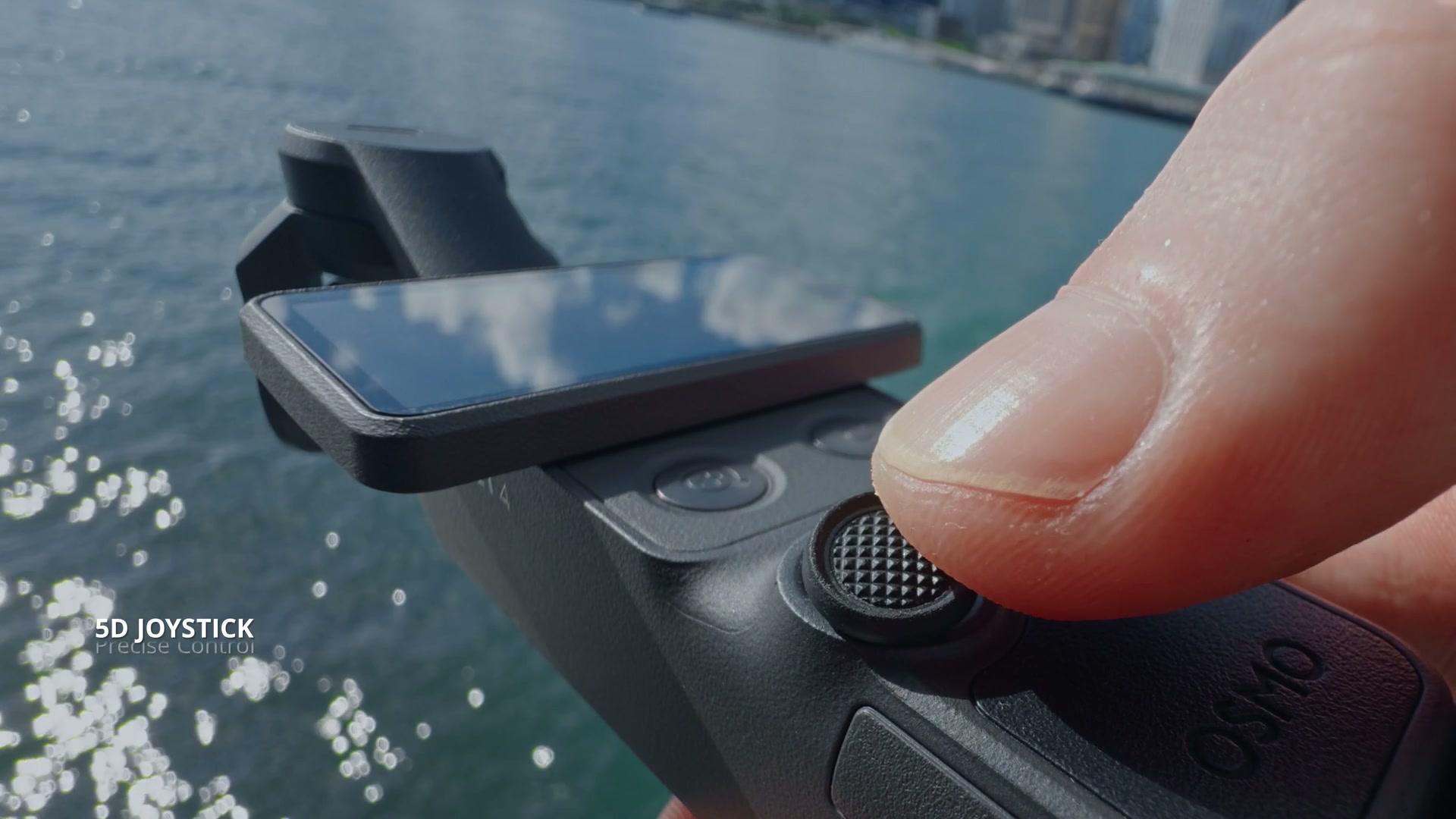
We bought the Osmo Pocket 4 Creator Combo hoping for a substantial step forward from the Pocket 3 we already own. After using it for Lumacta content, we appreciate several improvements. The graded image can look excellent, internal storage makes production easier, and tracking feels more responsive. Yet the overall upgrade is less convincing than we expected.
Our reservation is strongest in two places: the difference in stabilized footage, and the low-light material we edit alongside footage from our Insta360 Luna Ultra. The Pocket 4 remains a useful production camera. It simply has to justify its place beside an already capable predecessor and increasingly ambitious alternatives.
This review draws on our equipment and production experience, checked manufacturer specifications and separately attributed outside reports. These are production-use impressions rather than matched laboratory measurements.
Image quality: the strongest argument is in the grade
With good light, the Pocket 4 produces footage we are very happy to use for Lumacta. In our editing, D-Log gives us a particularly pleasing result: richer-looking blacks, satisfying tonal separation and noise that is well controlled in many of the situations we shoot. For a camera this small, the finished image can be impressive. For our graded work, this is one of the clearest improvements over Pocket 3.
There is a technical distinction worth preserving. Pocket 3 offers 10-bit D-Log M; Pocket 4 offers 10-bit D-Log. These are different profiles, so the same transform or LUT should not be assumed to suit both. DJI describes a new sensor in Pocket 4, but both cameras retain the 1-inch format and a 20mm-equivalent f/2.0 lens. The upgrade is not a move to a larger sensor. [1] [14] [17]
The pleasing blacks we describe are the result of our footage and grading choices, rather than a universal promise made by the word “log.” Exposure, the correct color transform and the grade still matter. Buyers who want to publish immediately should also judge the normal color output they will actually use.
Storage and transfers: an upgrade we appreciate every day
The built-in storage is one of the Pocket 4 changes we value most. We have transferred our files using Windows 11, Windows 10, macOS and Linux, as well as the DJI Mimo workflow on iOS and Android. In those transfers, our experience has been fast and trouble-free. That flexibility matters when footage has to move between the systems we actually use.
Pocket 4 has 107GB internally and also accepts microSD cards. Pocket 3 relies on microSD for recording. DJI advertises up to 800MB/s from Pocket 4’s internal storage with an appropriate USB 3.1 cable and compatible host; this is a conditional manufacturer ceiling, not a speed we measured. [15] [16] [14]
Successful copying is also different from effortless editing in every application. Playback and editing performance still depend on the decoder, hardware and software. Our positive transfer experience should not be read as a guarantee for every editing setup.
The Creator Combo earns its place
We bought the Combo, and the microphone and light have been worthwhile additions. The microphone has been reliable in our use and delivers sound we rate highly. A compact camera becomes substantially more useful when clear speech and a little extra illumination are already part of the setup.
Do not confuse its contents with the older Pocket 3 Creator Combo: that included Mic 2 and a battery handle. [1]
Tracking improves; the stabilization leap is harder to feel
Subject tracking feels faster and more dependable to us than on Pocket 3. The quicker response makes a practical difference when working without someone permanently behind the camera. DJI’s named generation changes from ActiveTrack 6.0 to 7.0, although the actual benefit remains scene- and mode-dependent. [1] [14]
Our reaction to stabilization is more restrained. We do not think the Pocket 4 is badly stabilized; we expected a more obvious improvement from an upgrade built around a gimbal. In the footage we use, the difference has not met that expectation.
A three-axis gimbal corrects angular movement in pan, tilt and roll. It does not mechanically cancel the camera’s up-and-down travel while walking. Technique and movement still matter. That explains a limit of the design without removing our central criticism: the improvement over the camera we already owned feels modest. [14]
Low light: where we currently prefer Luna Ultra
In the dimmer conditions we have actually filmed, Pocket 4 has been less satisfying than we hoped. The footage is usable, but when we compare the material during editing, we clearly prefer what we get from Luna Ultra. For our low-light work, that is a meaningful difference.
This does not contradict liking Pocket 4’s grading flexibility or its noise handling in many other shots. The difficult conditions are where our preference becomes clearer. We would describe the resulting image and our editing experience, rather than claim that sensor size alone proves the cause.
Luna Ultra also uses a 1-inch main sensor, paired with a 20mm-equivalent f/1.8 lens, and adds a separate 60mm-equivalent f/2.0 telephoto camera on a smaller sensor. Its detachable display and second focal length are structural differences, not just another set of picture presets. It is also larger and heavier: approximately 233g in black against Pocket 4’s 190.5g. [7] [8] [2]
We would not turn our preference into a claim that Luna wins every dark scene or every recording mode. Exposure, motion, processing and the grade all affect the result. The useful conclusion is narrower: for the low-light material we make and edit, Luna Ultra currently gives us the image we prefer.
The card problem deserves precision
We also encountered a card-related problem with a 128GB Lexar card. That belongs in our review, but it does not establish that Lexar cards as a brand are incompatible. We have not yet identified our card’s exact series or documented the failure mode, so we cannot responsibly assign a cause.
Pocket 4P makes the upgrade decision more awkward
Our frustration is partly about timing and expectations. At the Pocket 4 launch, we were aware of talk about a higher-end model. Looking back, we wish we had waited for a clearer picture of the 4P before deciding how much of an upgrade the standard camera represented.
The public timeline gives that feeling context. DJI announced Pocket 4 on 16 April 2026. Pocket 4P was unveiled at Cannes on 14 May, with pricing and configurations left for later; its subsequent launch release was dated 30 July. A preview was not the same as a camera available to buy in every market. [3] [4] [5]
With its separate 20mm- and 60mm-equivalent cameras, the 4P changes the available framing options more fundamentally. Our opinion is that this is closer to the generational step we wanted from a new Pocket. That is a judgment about the product lineup; we are not claiming hands-on 4P performance we have not reported. [6]
Other reviewers and owners add useful perspective
TechRadar’s Timothy Coleman praised the refinement and practical additions, while finding the image-quality upgrade modest. His favorable low-light impression was not based on matched Pocket 3 footage. The review disclosed a DJI loan. [9]
Peter Wolinski at Tom’s Guide likewise struggled to distinguish a stabilization improvement over Pocket 3. He praised the camera overall, while noting loss of detail in very dark scenes. [10]
For Luna Ultra, PetaPixel’s Jordan Drake liked low-light results and the detachable controller, but also found awkward controls and recording-mode trade-offs. His review supports considering Luna seriously without treating it as flawless. These reports describe their reviewers’ tested setups, not a shared controlled comparison. [11]
Public owner reports show another distinction. One Pocket 4 buyer describing a Greece trip valued D-Log, internal storage and transfers, while reporting handling irritations. Another first-time Pocket owner liked the built-in memory, but knew Pocket 3 through videos rather than ownership. These are self-reported experiences, not verified purchases or a representative customer survey. [12] [13]
Our verdict: buy for a specific improvement
For our Lumacta production, Pocket 4 delivers excellent good-light footage, a grading workflow we enjoy, useful internal storage, reassuring transfers and a capable microphone-and-light package. Those are real benefits.
For someone who already owns Pocket 3, the question is whether those benefits solve a recurring problem. Internal storage, the newer workflow and 4K/240fps slow motion can justify an upgrade for some creators. They are less persuasive if the main expectation is a dramatic leap in stabilized everyday footage. [14]
The higher frame-rate option is for slow motion, rather than normal recording. Battery life is another advertised gain, but the 240-minute Pocket 4 and 166-minute Pocket 3 figures use 1080p/24fps laboratory conditions with the screen and Wi-Fi off. They are not our measured 4K runtime. [14] [16]
If low light and the extra focal length matter most, we would weigh Luna Ultra seriously, accepting its different size, controls and workflow. If the preference is to stay within DJI’s system while gaining that second camera, Pocket 4P belongs in the comparison. [7] [6]
We like using Pocket 4. We are less enthusiastic about what buying it delivered over Pocket 3. Its strongest case is as a practical production upgrade, and we would buy it for the specific capabilities we need—not on the assumption that the next model number transforms everything.
How this review was prepared
Prepared with AI-assisted research and editing. The personal judgments are based on the Lumacta owner’s reported production experience; no controlled test was performed for this article.
The exact owner firmware version and the series and failure mode of the reported Lexar 128GB card were not established. The Pocket 4P discussion is based on manufacturer information, not our hands-on use of that model. Customer posts are self-reported experiences, not verified purchase records or a survey.